Barn Owl
Tyto alba
Print fact sheet (PDF)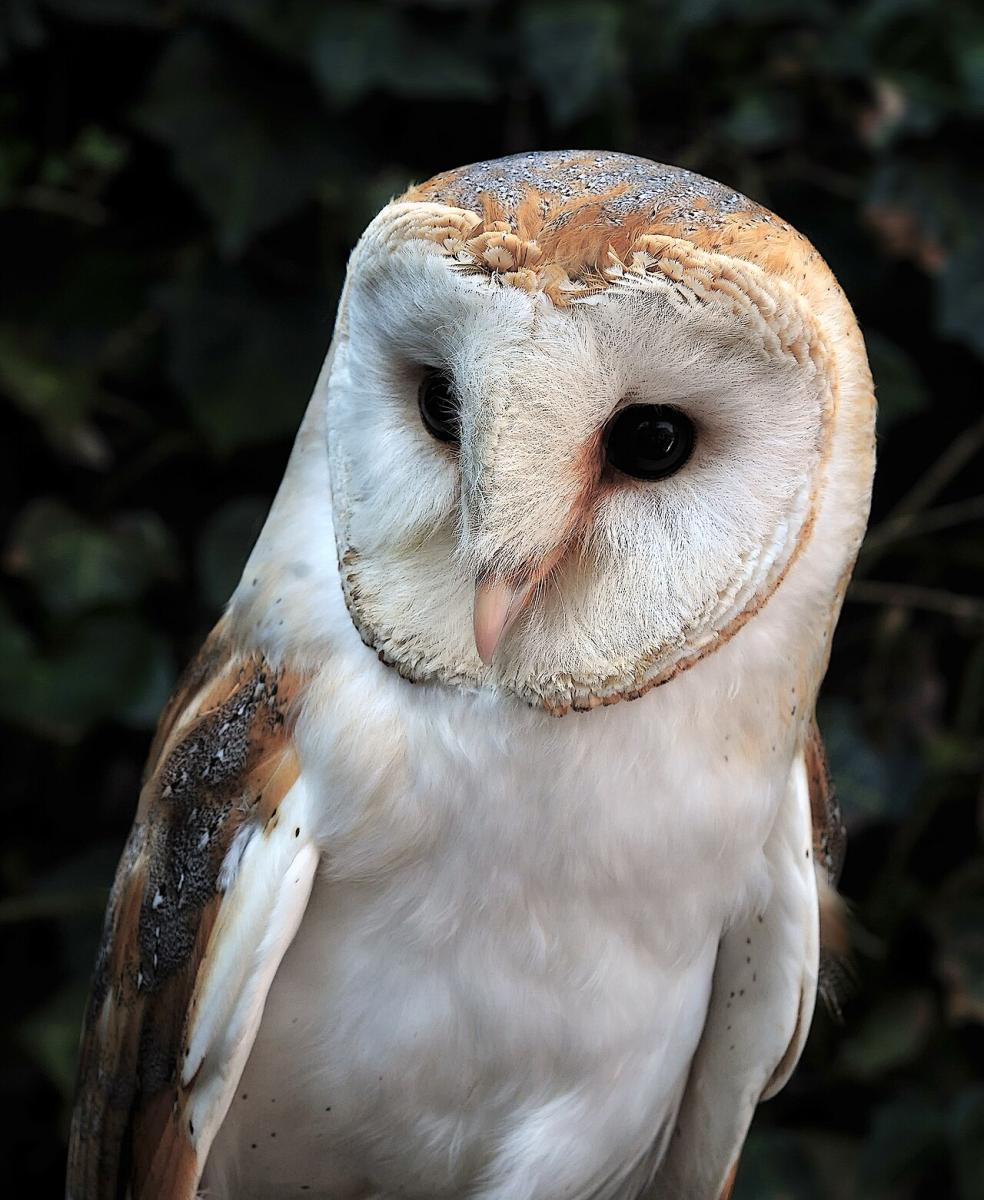
A ghost-pale hunter that quarters rough grassland at dusk on silent wings, and often by day in hard winters.
Few sights in Dumfries and Galloway's countryside match a barn owl quartering low over rough grassland at dusk, pale and silent against the fading light. The heart-shaped white face, golden-buff back and pure white underparts make it unmistakable, and its flight is genuinely silent — soft-edged feathers muffle every wingbeat so voles never hear it coming. Barn owls are resident and largely sedentary, hunting rough field margins, verges and river corridors close to their nest, which is typically a hole in an old tree or barn, or a purpose-built box. They hunt mostly by sound, tilting that dish-shaped face to pinpoint prey under grass or snow. In hard winters, when cold nights make hunting harder, barn owls are pushed to hunt by day as well as at dusk — genuinely the best chance of a daylight sighting, often along a quiet farm track or riverside path.
Behaviour
A barn owl hunts by quartering low and slow over rough grassland, head tilted down, using hearing so acute it can catch a vole under snow or thick vegetation without ever seeing it. Feathers with soft, comb-like edges make its flight almost silent. It swallows small prey whole, later coughing up neat pellets of fur and bone below a favourite roost or fence post.
When to see it
Quick facts
- Family
- Barn owls (Tytonidae)
- Size
- 33–39cm · wingspan to around 95cm
- UK status
- Green-listed
Photo by Michael Gäbler, CC BY 3.0, via Wikimedia Commons