About
Our far-flung visitors
Many of the animals you see around Dumfries spend only part of the year here. The rest of the time they are thousands of kilometres away — and the journeys they make to reach us are some of the most remarkable feats in the natural world.
Animals migrate for one simple reason: to stay ahead of the seasons. Dumfries in summer offers almost endless daylight and a huge flush of insects — perfect for raising young — but it's no place to be when winter closes in and the food runs out. So birds like the swallow and swift arrive in spring to breed, then leave for warmer, insect-rich Africa before autumn. Others do the opposite: ducks and waders that nest in the frozen north come south to our mild, ice-free estuaries to sit out the winter. A few, like the painted lady butterfly, make the journey in relays, no single insect living to complete the round trip.
Summer visitors — here to breed
They arrive in spring from the south, raise their young through the long northern summer, and leave before the cold returns.
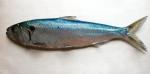
Allis Shad
A rare visitor to Solway rivers in spring
Allis shad live in coastal Atlantic waters and enter rivers in spring to spawn. Historic British runs have largely collapsed, so fish appearing in Solway rivers may well originate from populations elsewhere in Europe.
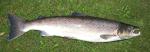
Atlantic Salmon
Runs the Nith spring–autumn · spawns Nov–Jan
Nith salmon feed in the North Atlantic, off the Faroes and West Greenland, before returning to their natal river. Numbers have fallen sharply across their range, and every stage of that journey — river, estuary and ocean — matters to whether the run holds up.
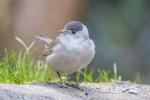
Blackcap
Summer migrant · Apr–Sep · some overwinter
Breeding blackcaps winter around the Mediterranean and in North Africa. Separately, birds from Germany and Austria have in recent decades started migrating north-west to winter in Britain instead of south — a genuinely new migration route, thought to be sustained by garden feeding.
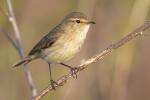
Chiffchaff
Summer migrant · Mar–Sep
Most chiffchaffs winter around the Mediterranean and in West Africa, and they are among the earliest migrants to return — the short crossing means they can risk arriving in March, weeks before willow warblers, and claim the best territories.
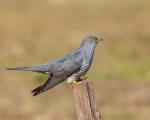
Common Cuckoo
Summer migrant · Apr–Jul
Satellite tagging has transformed what is known about this: British cuckoos cross the Sahara to the Congo rainforest, and adults depart in June and early July, months before the young they never meet make the same journey unguided on instinct alone.
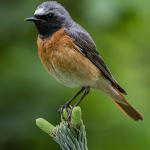
Common Redstart
Summer migrant · Apr–Sep
Redstarts winter in the Sahel savannah south of the Sahara and return through April. Like whitethroats, their numbers here have historically risen and fallen with rainfall in that African wintering belt.
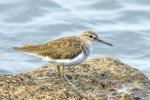
Common Sandpiper
Summer visitor
Common sandpipers winter in Africa, south of the Sahara. They return to breed along fast, stony rivers and loch shores, bobbing constantly at the water's edge — here for the summer, gone again by early autumn.
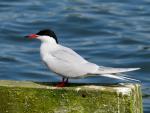
Common Tern
Summer migrant · Apr–Sep
Common terns winter off West Africa and some travel as far as southern Africa. They arrive back on the Solway in late April, and young birds may stay in African waters for a full year or two before returning to breed.
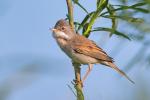
Common Whitethroat
Summer migrant · Apr–Sep
Whitethroats winter in the semi-arid Sahel belt on the southern edge of the Sahara. The population crashed catastrophically after drought there in the late 1960s, and numbers in Britain still track rainfall in that region — an unusually direct link between African weather and a Dumfries hedgerow.
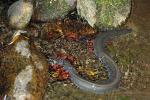
Eel
Here all year · spawns in the Sargasso Sea
European eels spawn in the Sargasso Sea, in the western Atlantic. The leaf-shaped larvae drift on ocean currents for a year or more before reaching European coasts as transparent glass eels and running up rivers like the Nith. Adults make the return journey of some 4,000 miles to spawn once and die.
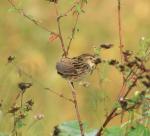
Grasshopper Warbler
Summer migrant · Apr–Aug
Grasshopper warblers spend the winter in West Africa, south of the Sahara, and come north to Dumfries for the long summer days and the flush of insects in rough, damp grassland — ideal cover for a bird that skulks low and reels out its insect-like song.
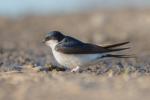
House Martin
Summer migrant · Apr–Sep
House martins winter in Africa, but remarkably little is known about exactly where — they are thought to spend much of the winter feeding high above the forest canopy, which is why they are so rarely seen there. They return to Dumfries from mid-April and are usually gone by the end of September.
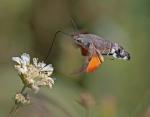
Hummingbird Hawk-moth
A migrant · most likely Jul–Sep
Hummingbird hawk-moths breed around the Mediterranean and migrate north each summer, some reaching Scotland. Warm southerly airflows produce the best years, and numbers vary enormously from one summer to the next.
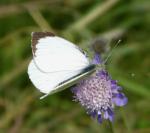
Large White
On the wing Apr–Sep · two broods
Resident populations are supplemented in some summers by migrants crossing from continental Europe, which is why large white numbers can vary sharply from one year to the next.
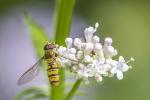
Marmalade Hoverfly
Active Mar–Nov
Resident numbers are boosted every summer by very large migrations from continental Europe, and in some years marmalade hoverflies arrive in enormous quantities.
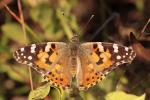
Painted Lady Butterfly
Migrant · on the wing May–Oct, peaks Aug
The painted lady can't survive a British winter in any form. Each year's butterflies descend from migrants that set out from North Africa and the Sahel, breeding in relays as they push north — a multi-generational journey of thousands of kilometres, with the autumn generation heading back south at high altitude.
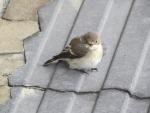
Pied Flycatcher
Summer migrant · Apr–Aug
Pied flycatchers winter in West Africa and arrive in the oakwoods from late April. Their breeding season is tightly tuned to the spring flush of oak caterpillars, and warming springs have been pulling that flush earlier — a mismatch that is one of the clearest local examples of climate change affecting a bird's food supply.
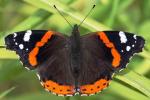
Red Admiral
On the wing May–Nov · increasingly overwinters
Red admirals migrate north from the Mediterranean and North Africa each spring, arriving in Scotland from May, and their offspring head south again in autumn. Milder winters mean a growing number now overwinter here as adults instead of making the journey.
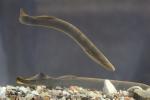
River Lamprey
Runs the Nith in winter · spawns in spring
River lampreys move between the Solway and fresh water on an annual cycle, entering the Nith from autumn and moving up to spawn in spring. Weirs and barriers are a particular problem for them, as they are far weaker swimmers than salmon.
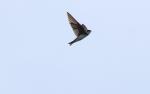
Sand Martin
Summer migrant · Mar–Sep
Sand martins winter in the Sahel, the dry belt south of the Sahara. Often the first summer migrant back, they return to breed in colonies tunnelled into sandy riverbanks, timing their arrival to the emergence of flying insects over the water.
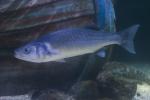
Sea Bass
Summer visitor to the estuary · May–Oct
Sea bass move inshore and north with warming summer water and retreat to deeper offshore grounds to spawn in late winter and spring. Their increasing presence in the Solway is one of the more visible local signs of a warming sea.
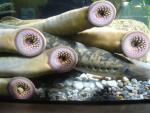
Sea Lamprey
Runs the Nith in late spring · spawns in summer
Sea lampreys spend their adult life in the Atlantic and coastal waters, returning to fresh water in late spring to spawn once and die. Solway rivers, including the Nith, carry regular runs.
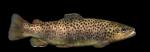
Sea Trout
Runs the Nith in summer · spawns Oct–Jan
Sea trout from the Solway rivers stay far closer to home than salmon, feeding in coastal waters and the Irish Sea rather than crossing the Atlantic. They enter fresh water from spring onwards, with the main runs in summer.
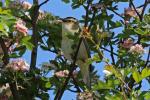
Sedge Warbler
Summer migrant · Apr–Sep
Sedge warblers winter in sub-Saharan Africa. Before the return journey they gorge on aphids to lay down fat, then cross the Sahara in a single non-stop flight. They breed here in wet reed and scrub, where insects are abundant through the northern summer.
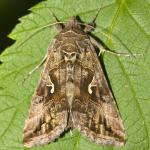
Silver Y
A migrant · seen May–Oct, peaks Aug
Silver Y moths breed in southern Europe and North Africa and migrate north each spring and summer, some reaching Scotland. Their offspring attempt a return migration in autumn; none survive the winter here, so the population resets every year.
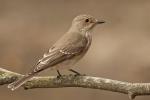
Spotted Flycatcher
Summer migrant · May–Sep
Spotted flycatchers winter in sub-Saharan and southern Africa. They arrive later than almost any other summer visitor because their food — big flying insects — is not reliably available in a Scottish spring until well into May.
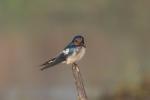
Swallow
Summer migrant · Apr–Oct
Swallows winter in southern Africa, some reaching South Africa — a round trip of around 20,000 km. They make the journey to exploit the northern summer's glut of flying insects and its long daylight, giving them time to raise two or three broods before heading south again in autumn.
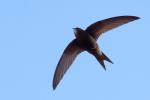
Swift
Summer migrant · May–Aug
Swifts winter in central and southern Africa and spend almost their entire lives on the wing — feeding, sleeping and even mating in the air. They visit Dumfries for barely three months, just long enough to nest under the eaves and raise their young before screaming off south again.
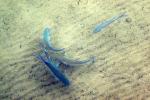
Thick-lipped Grey Mullet
Summer visitor to the estuary · May–Oct
Thick-lipped grey mullet move inshore into estuaries such as the Solway as the water warms in late spring, and retreat to deeper offshore water for the winter — so they are a genuinely seasonal presence here.
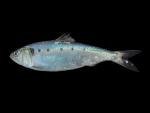
Twaite Shad
Runs the Solway rivers in late spring
Twaite shad spend most of their lives in coastal waters and the Irish Sea, entering fresh water only briefly in May and June to spawn before dropping back downstream.
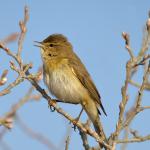
Willow Warbler
Summer migrant · Apr–Sep
Willow warblers winter in sub-Saharan Africa and arrive in Dumfries through April. Birds breeding in Scotland travel further than most European populations — some to southern Africa — and the round trip for a bird weighing under ten grams runs to many thousands of miles.
Winter visitors — here to escape the freeze
They breed in the far north and come to our milder coast and rivers when their own waters freeze over.
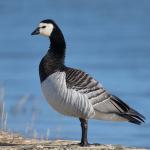
Barnacle Goose
Winter visitor · Oct–Apr
These birds breed on Svalbard, deep inside the Arctic Circle, and travel down the Norwegian coast to the Solway each autumn — a route so consistent that the Svalbard population is treated as effectively separate from the Greenland and Russian barnacle geese wintering elsewhere in Britain.
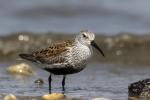
Dunlin
Winter visitor · Aug–Apr
Dunlin wintering on the Solway come from breeding grounds spread from Britain and Iceland to Scandinavia and arctic Russia, with different populations passing through at different times of year — which is why the flocks are largest on passage in autumn and again in spring.
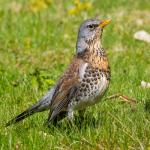
Fieldfare
Winter visitor · Oct–Apr
Fieldfares breed across Scandinavia, Finland and Russia and move south and west in autumn to escape frozen ground. Dumfries sits in comfortable wintering country — mild, damp and hedged — and the size of the influx each year depends largely on how the northern berry crop has fared.
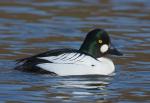
Goldeneye
Winter visitor · Oct/Nov–Mar
Goldeneye breed on wooded lakes across Scandinavia and northern Russia, and come to the Nith and the Solway for winter when their northern waters freeze over. Our milder, ice-free estuaries offer open water and food through the coldest months.
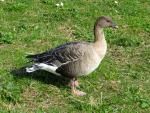
Pink-footed Goose
Winter visitor · Sep–Apr
Pink-footed geese breed in Iceland and eastern Greenland and cross the Atlantic in autumn. The entire Iceland–Greenland population winters in Britain, with the Solway one of its most important destinations — which is why disturbance and habitat change here matter far beyond the region.
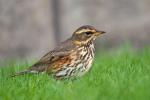
Redwing
Winter visitor · Oct–Mar
Redwings breed in Iceland, Scandinavia and Russia, and the birds wintering in Dumfries are a mixture of both populations. They travel by night and can shift hundreds of miles mid-winter if the weather turns, so a flock feeding in a hedge one week may be replaced by different birds the next.
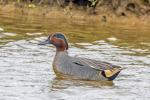
Teal
Mostly a winter visitor · Sep–Apr
Teal breeding across northern Europe and Russia move west and south for the winter, and the Solway's mild, shallow, food-rich marshes hold them in numbers that make the estuary nationally important for the species.
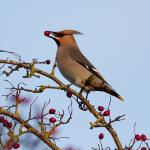
Waxwing
Winter visitor · Nov–Mar (irregular)
Waxwings breed in the northern forests of Scandinavia and Russia. They only reach Dumfries in 'irruption' winters, when the berry crop fails up north and hunger drives flocks west and south in search of rowan and hawthorn — which is why some winters bring hundreds and others none at all.
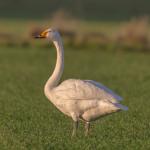
Whooper Swan
Winter visitor · Oct–Apr
Almost all whooper swans wintering here breed in Iceland, and they cross the open North Atlantic in a single flight — one of the longest sea crossings of any swan, undertaken by whole families including the young of that year.
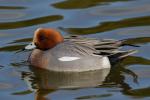
Wigeon
Winter visitor · Sep–Apr
Wigeon wintering here breed in Iceland, Scandinavia and northern Russia. Numbers on the Solway rise and fall through the winter as birds move on or arrive ahead of hard weather further east.