Black-headed Gull
Chroicocephalus ridibundus
Print fact sheet (PDF)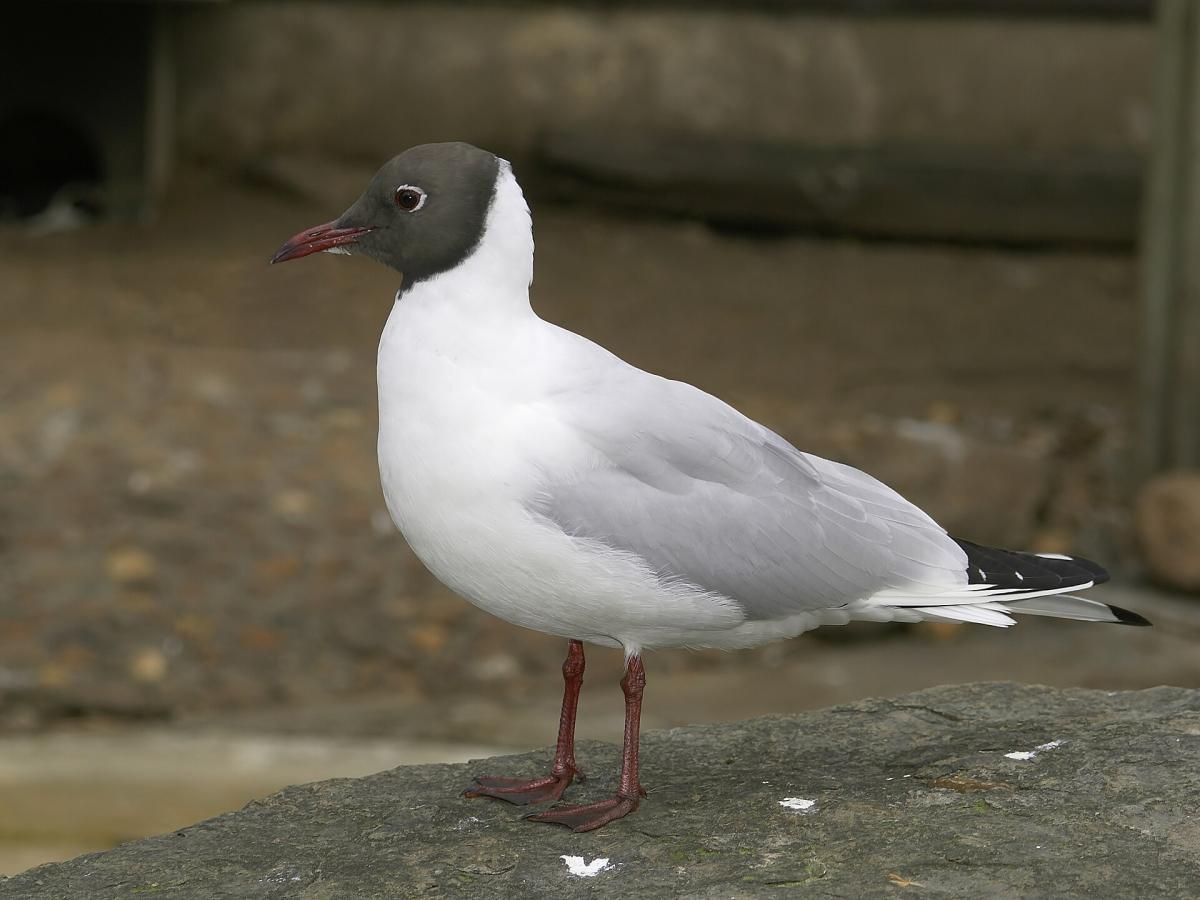
The small gull whose hood is actually dark chocolate-brown, and only there for half the year.
Our commonest small gull: pale grey above, white below, with red legs and bill and a bright white leading edge to the wing that flashes in flight. In summer the head is a dark chocolate-brown hood; in winter this reduces to a dark smudge behind the eye. Black-headed gulls are everywhere around Dumfries — playing fields, car parks, the Nith, ploughed land and the estuary.
Behaviour
Agile and opportunistic, they hunt insects on the wing, follow the plough for worms and grubs, paddle on wet grass to bring worms up, and scavenge readily in town. They nest colonially in noisy, quarrelsome gatherings on marsh, loch islands and wet moorland. The 'black' head begins to appear in late winter, so birds are often part-hooded in February and March.
When to see it
Quick facts
- Family
- Gulls and terns (Laridae)
- Size
- 34–37 cm
- UK status
- Amber-listed
Photo by Hans Hillewaert, CC BY-SA 3.0, via Wikimedia Commons