Blackbird
Turdus merula
Print fact sheet (PDF)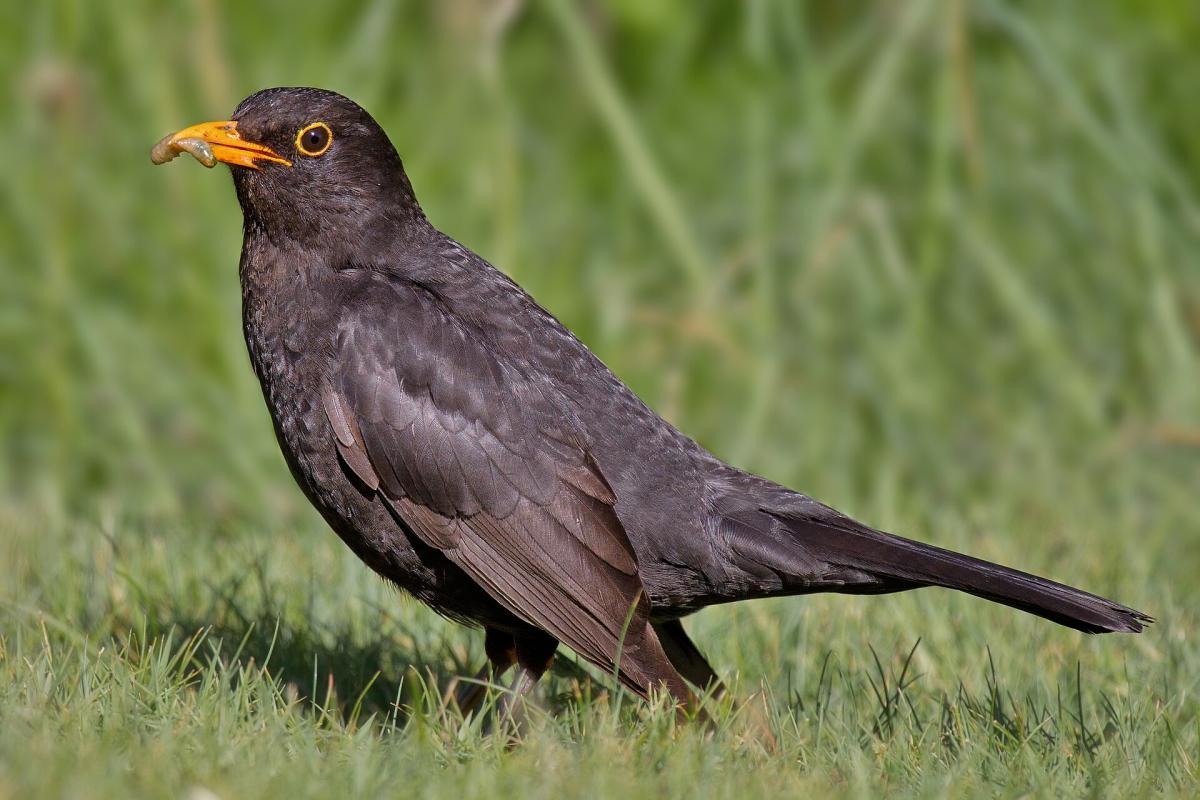
The rich, unhurried song from a rooftop at dusk — the sound of a Dumfries spring evening.
Males are glossy black with a bright orange-yellow bill and eye-ring; females are warm dark brown with a paler, streaked throat and are often mistaken for a different species entirely. Blackbirds are in virtually every garden, park and hedgerow in town, feeding on lawns and leaf litter. Numbers swell in winter when birds from Scandinavia arrive, so the blackbirds on a frosty January lawn may not be the ones that nested there.
Behaviour
The classic feeding action is a run, an abrupt stop, and a head-cocked pause listening and looking for worms, followed by a quick pull. In autumn they switch heavily to fruit — rowan, hawthorn, windfall apples — and will defend a good berry tree noisily. The song is fluty, leisurely and improvised, given from a high perch at dawn and again at dusk; the alarm is a hysterical rattling chatter as it dives into cover.
When to see it
Quick facts
- Family
- Thrushes (Turdidae)
- Size
- 24–25 cm · starling-sized
- UK status
- Green-listed
Photo by Andreas Trepte, CC BY-SA 2.5, via Wikimedia Commons