Blackcap
Sylvia atricapilla
Print fact sheet (PDF)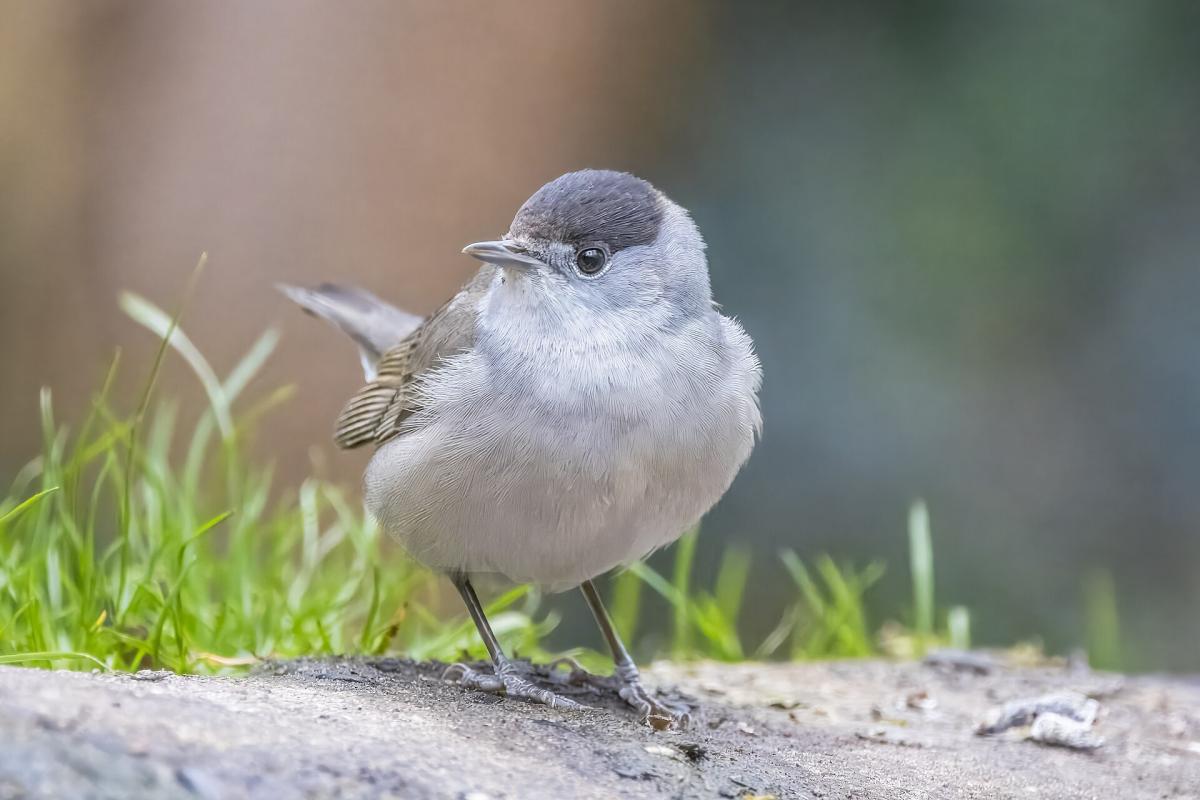
A rich, tumbling song from deep in the scrub, and a cap that is black on males and warm brown on females.
A neat grey warbler with a sharply defined cap — glossy black on the male, russet-brown on the female, which regularly gets it mistaken for a different bird. Blackcaps breed in Dumfries woodland with a good understorey, in mature gardens and along scrubby riverbanks. They arrive in April, but confusingly a separate population from central Europe now spends the winter in British gardens, so a blackcap at a feeder in January is entirely possible.
Behaviour
The song is one of the finest of any British warbler — a scratchy start that builds into a loud, clear, flute-like tumble, delivered from cover rather than an open perch. Blackcaps feed on insects through the breeding season and switch to berries and fruit in autumn; wintering birds take suet, fat and apples in gardens and can be aggressive towards other birds at a feeder.
Migration
Breeding blackcaps winter around the Mediterranean and in North Africa. Separately, birds from Germany and Austria have in recent decades started migrating north-west to winter in Britain instead of south — a genuinely new migration route, thought to be sustained by garden feeding.
When to see it
Quick facts
- Family
- Typical warblers (Sylviidae)
- Size
- 13 cm · smaller than a sparrow
- UK status
- Green-listed
Photo by Charles J. Sharp, CC BY-SA 4.0, via Wikimedia Commons