Canada Goose
Branta canadensis
Print fact sheet (PDF)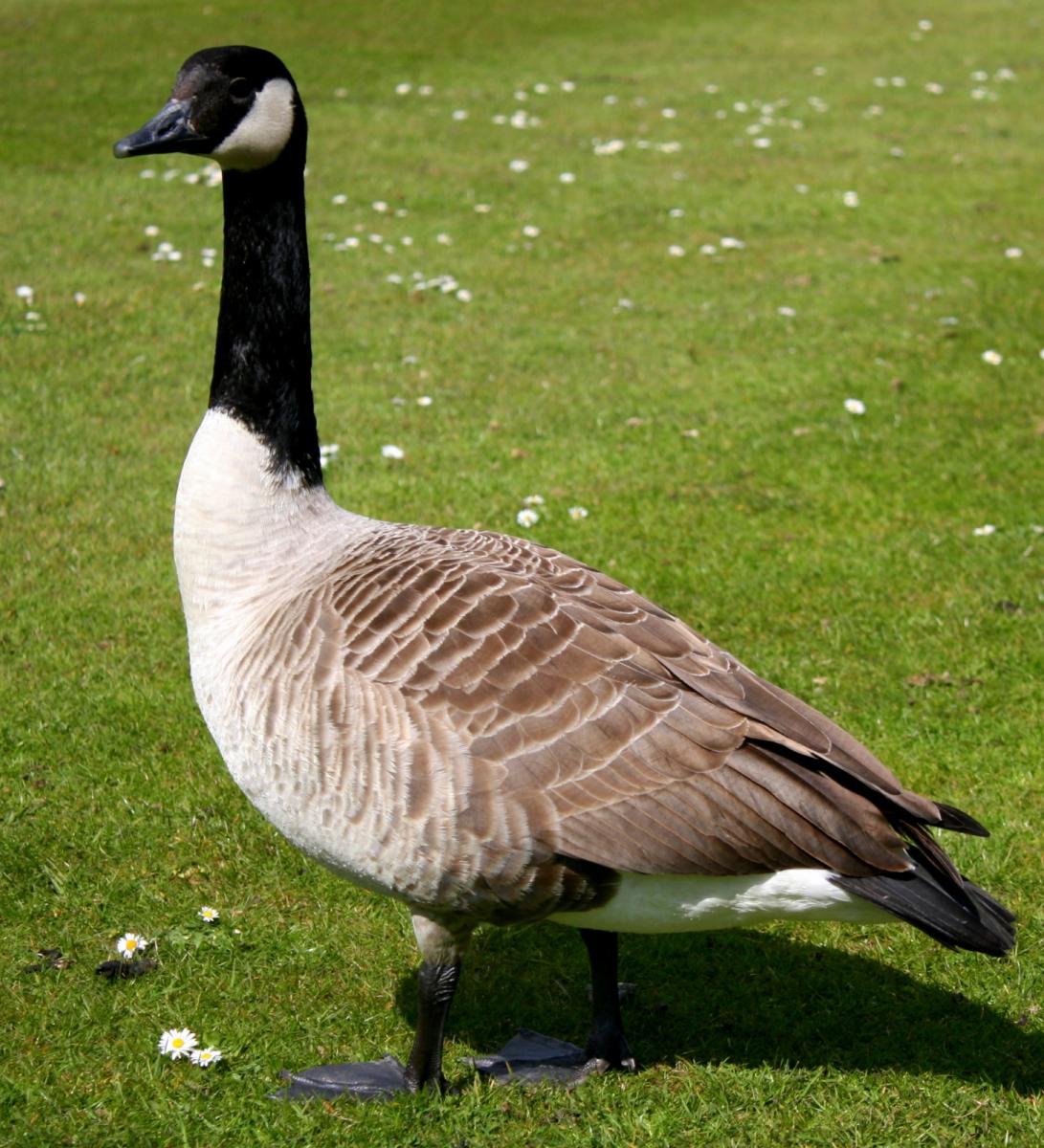
Introduced from North America three centuries ago, and now thoroughly at home on the town pond.
A large, long-necked goose with a black head and neck broken by a broad white chinstrap, a brown body and pale underparts. Canada geese were brought to Britain as ornamental wildfowl in the seventeenth century and have since established a large feral population. Around Dumfries they are resident on lochs, ponds, playing fields and the quieter reaches of the Nith all year.
Behaviour
Canada geese graze grass in flocks and are bold around people, which makes them both familiar and, in parks and on playing fields, unpopular. The call is a loud, resonant two-note honk. Pairs are strongly territorial and defensive when they have goslings. In midsummer adults moult all their flight feathers at once and are flightless for several weeks, which is when they stay closest to open water.
When to see it
Quick facts
- Family
- Ducks, geese and swans (Anatidae)
- Size
- 90–110 cm
- UK status
- Introduced · not assessed
Photo by Rror, CC BY-SA 3.0, via Wikimedia Commons