Common Kestrel
Falco tinnunculus
Print fact sheet (PDF)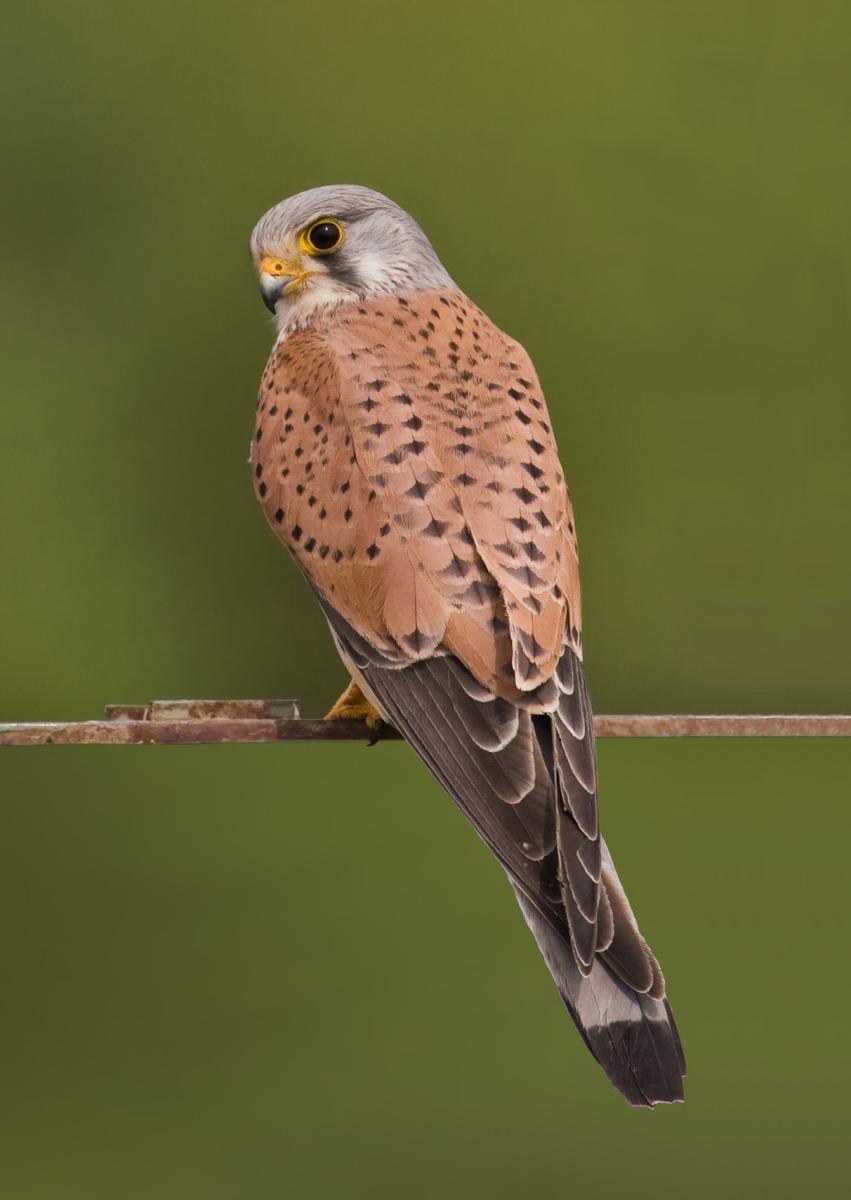
Holds its head perfectly still while the rest of it works hard to hang in the wind.
A slim, long-tailed, pointed-winged falcon. Males have a blue-grey head and tail with a chestnut back; females and young are barred rusty brown throughout. Kestrels hunt the rough grassland, road verges and field margins around Dumfries and are the falcon most people see. Their national decline has been sharp enough to put them on the amber list, largely through loss of the tussocky grassland their prey needs.
Behaviour
The hovering is the signature — wings beating hard, tail fanned, head locked absolutely motionless while the body adjusts to every gust, before a steep drop onto a vole. Kestrels can see ultraviolet, and voles mark their runs with urine that reflects UV, so a hunting kestrel is reading trails invisible to us. They nest in tree holes, cliff ledges, old crow nests and buildings.
When to see it
Quick facts
- Family
- Falcons (Falconidae)
- Size
- 32–35 cm
- UK status
- Amber-listed
Photo by Andreas Trepte, CC BY-SA 2.5, via Wikimedia Commons