Common Woodpigeon
Columba palumbus
Print fact sheet (PDF)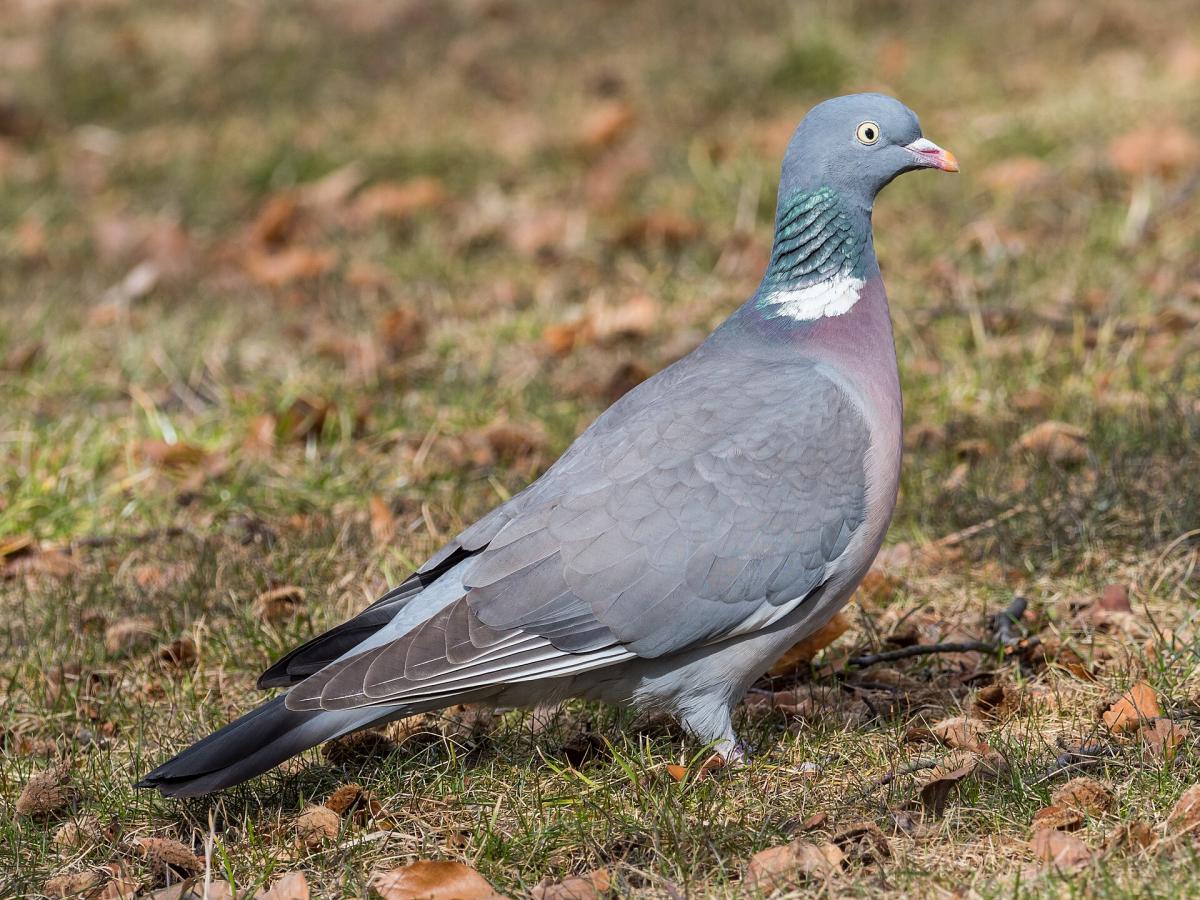
The heavy clatter of wings from a hedge, and a five-note coo that always seems to stop one note early.
Our largest and commonest pigeon: blue-grey with a pink breast, a bold white patch on each side of the neck and a broad white bar across the wing that is obvious in flight. Woodpigeons are everywhere around Dumfries — woodland, farmland, gardens and town centre trees — and have become steadily more numerous as oilseed rape and winter cereals have spread.
Behaviour
They feed heavily on crops, buds, seeds and berries, and can strip a brassica bed in a morning. The display flight is distinctive: a steep climb, a sharp wing-clap at the top and a stiff-winged glide down. The song is a soft, muffled five-note phrase, repeated and then cut off abruptly. Like all pigeons they feed their young on 'crop milk', which lets them nest in almost any month.
When to see it
Quick facts
- Family
- Pigeons and doves (Columbidae)
- Size
- 40–42 cm
- UK status
- Green-listed
Photo by Bengt Nyman from Vaxholm, Sweden, CC BY 2.0, via Wikimedia Commons