Cormorant
Phalacrocorax carbo
Print fact sheet (PDF)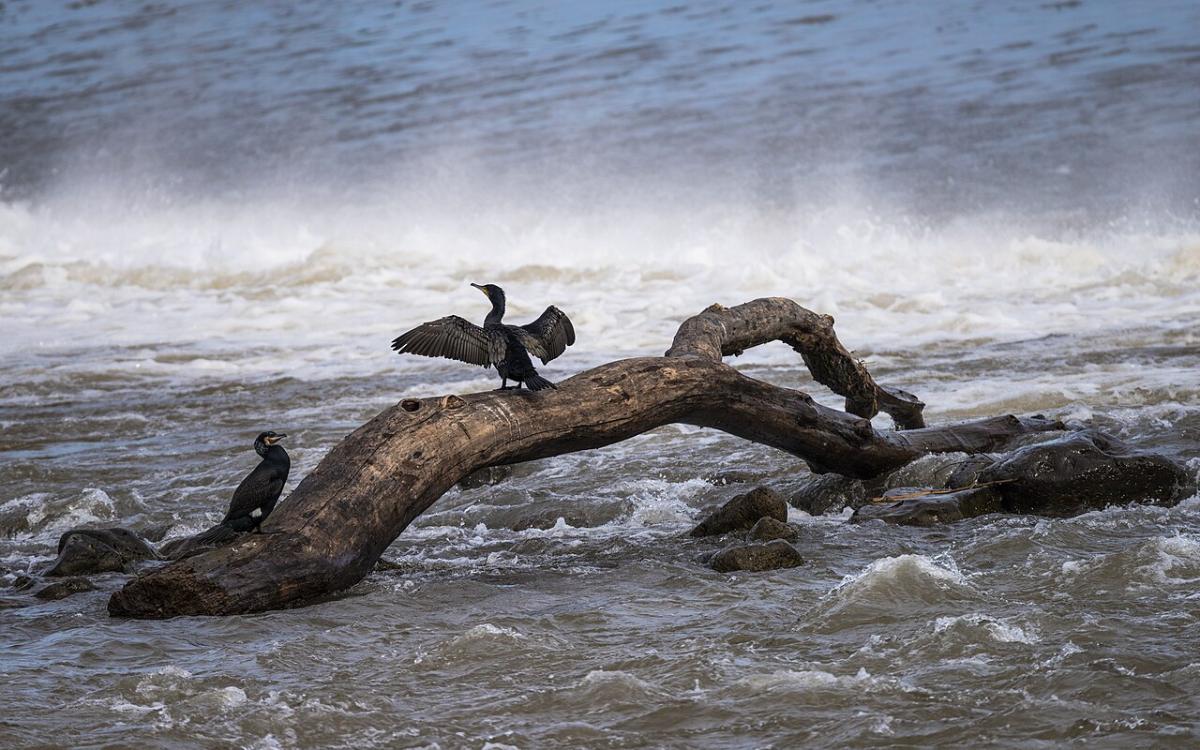
A big, black, primeval-looking fisher often seen holding its wings out to dry.
Unmistakable on a river snag or harbour wall, the cormorant is a large, long-necked waterbird with glossy black plumage, a hooked bill and, in breeding condition, a white patch on the thigh and flecks of white around the head. It's equally at home on the tidal Nith, inland lochs or open sea, diving from the surface and swimming low, often with just head and neck showing. Because its feathers aren't fully waterproof, it needs to dry off after fishing, and the sight of one perched with wings spread wide — heraldic, almost reptilian — is one of the most recognisable poses in British birdwatching. Resident throughout the year, cormorants become more numerous inland and around the estuary in winter as birds move off exposed coasts to feed in sheltered water. Colonies nest in trees or on sea cliffs, building bulky stick nests reused year after year.
Behaviour
Hunts by diving from the surface and pursuing fish underwater with powerful, webbed-foot propulsion, often staying submerged for close to a minute. Comes ashore regularly to perch upright with wings outstretched to dry, since its plumage lacks the oils that waterproof most waterbirds. Often seen flying low over water in loose lines between fishing spots.
When to see it
Quick facts
- Family
- Cormorant (Phalacrocoracidae)
- Size
- Length around 90cm, wingspan 130–160cm
- UK status
- Amber list
Photo by Christian Ferrer, CC BY-SA 4.0, via Wikimedia Commons