Curlew
Numenius arquata
Print fact sheet (PDF)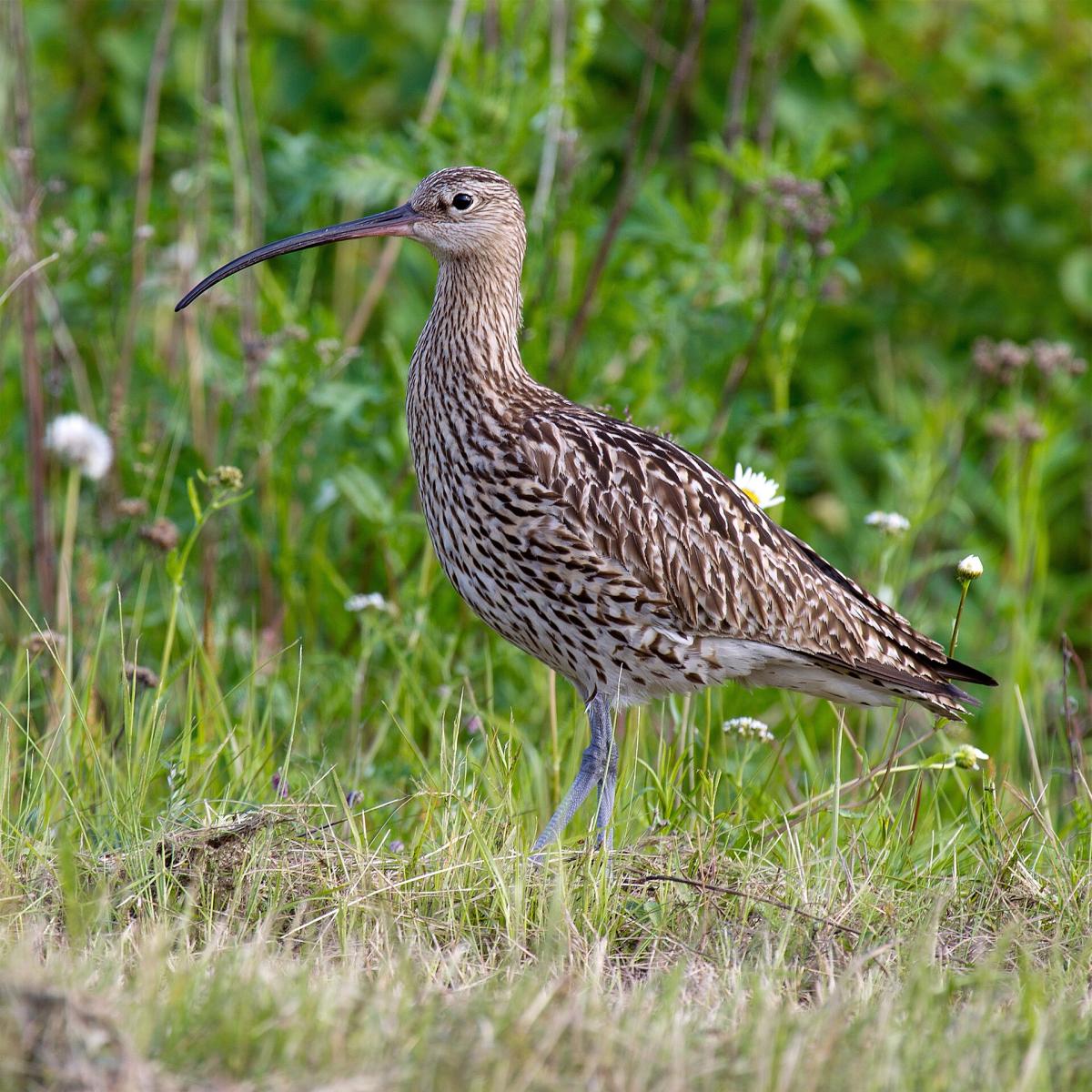
The bubbling song over spring moorland, and the long downcurved bill — Britain's biggest wader, and in serious trouble.
A large, streaky grey-brown wader with very long legs and an unmistakable long, smoothly downcurved bill. Curlews winter on the Solway mudflats in good numbers and move up to rough grassland and moorland edge in Galloway to breed. The UK holds a substantial share of the world population, and the species has declined so steeply that it is now among the highest conservation priorities in Britain.
Behaviour
That curved bill probes deep into soft mud for lugworms and ragworms — females have longer bills than males and so feed slightly differently. The song is the sound of spring on the hill: a long, accelerating bubbling trill delivered in a gliding display flight, plus the plaintive rising 'cur-lee' that gives the bird its name. Nests are on the ground and highly vulnerable to grazing, mowing and predation.
When to see it
Quick facts
- Family
- Sandpipers and allies (Scolopacidae)
- Size
- 50–60 cm · Europe's largest wader
- UK status
- Red-listed
Photo by Andreas Trepte, CC BY-SA 2.5, via Wikimedia Commons