Dunlin
Calidris alpina
Print fact sheet (PDF)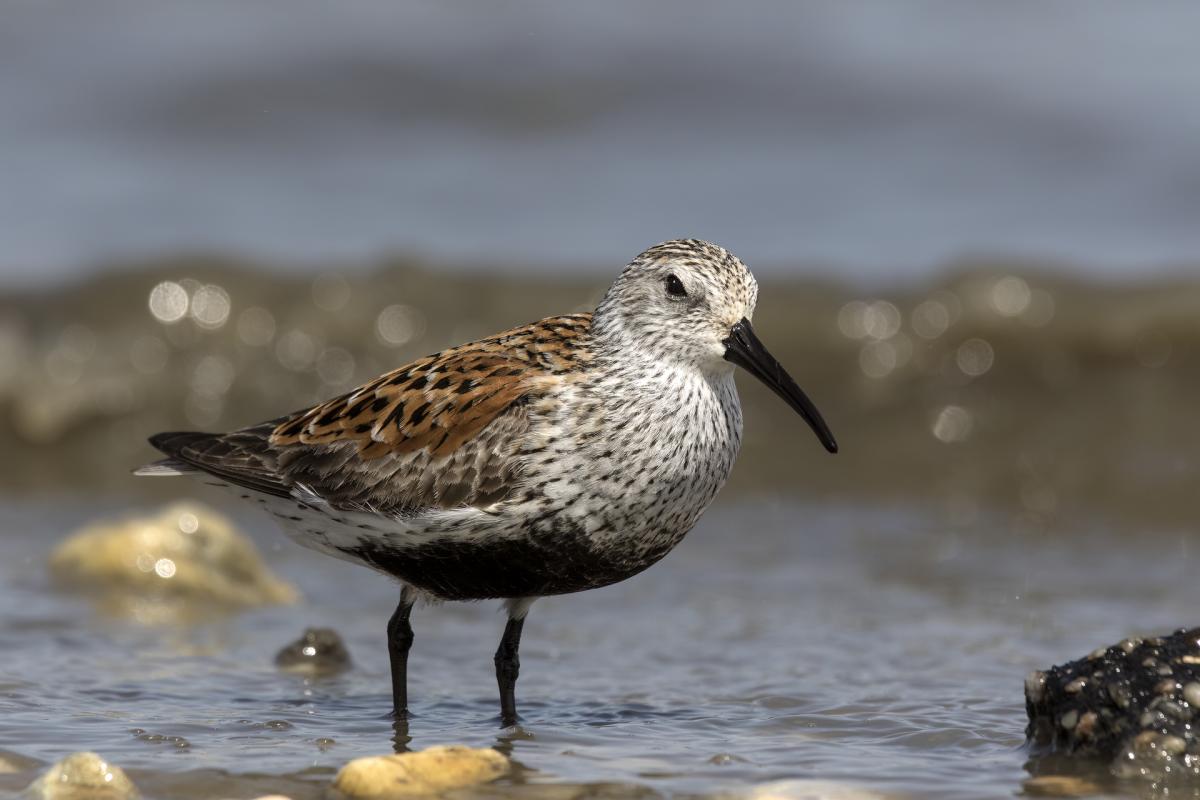
Flocks that turn as one over the mudflats, flashing dark then silver-white in the same second.
A small, dumpy wader with a slightly downcurved black bill — the standard against which other small waders are judged. In winter it is plain grey-brown above and white below; in summer plumage it has a bright chestnut back and a distinctive black belly patch. Dunlin winter on the Solway mudflats in very large numbers, and passage birds pass through in spring and autumn.
Behaviour
Dunlin feed in busy, tightly packed flocks, working the tideline with a fast 'sewing machine' probing action. Their flight is the spectacle: several thousand birds wheeling in unison ahead of the rising tide or a hunting peregrine, flickering dark and then white as the whole flock turns. Only small numbers breed in Britain, mostly on northern moorland; the winter birds are visitors.
Migration
Dunlin wintering on the Solway come from breeding grounds spread from Britain and Iceland to Scandinavia and arctic Russia, with different populations passing through at different times of year — which is why the flocks are largest on passage in autumn and again in spring.
When to see it
Quick facts
- Family
- Sandpipers and allies (Scolopacidae)
- Size
- 17–21 cm · starling-sized
- UK status
- Red-listed
Photo by Charles Homler d/b/a FocusOnWildlife, CC BY-SA 4.0, via Wikimedia Commons