Goldeneye
Bucephala clangula
Print fact sheet (PDF)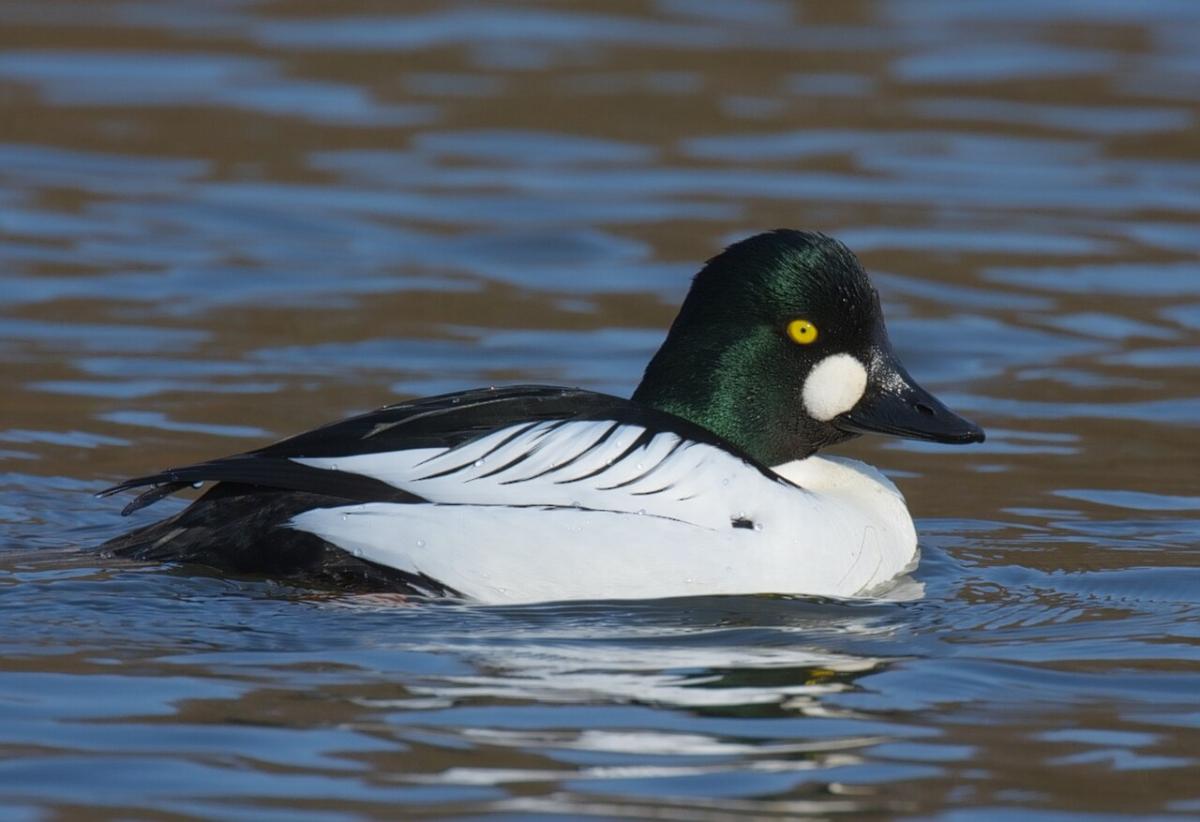
A dapper diving duck with a golden eye and a Nith estuary and loch address, but only for the winter.
Goldeneye are winter-only visitors to Dumfries and Galloway, arriving on the Nith estuary and the region's larger lochs from October or November and gone again by spring. The drake is strikingly smart — a dark, glossy green head with a neat round white cheek patch, set against a black-and-white body — while the female is grey-bodied with a chocolate-brown head. Both have the piercing golden eye that gives the species its name. They're diving ducks, disappearing underwater for long stretches to feed on molluscs, crustaceans and aquatic insects on the loch or estuary bed, then popping up unexpectedly some distance away. As winter draws on, drakes perform an odd, jerky courtship display — flinging the head back to touch the rump — worth watching for on a calm winter's day before the birds head off to breed on lakes and tree-hole nests much further north.
Behaviour
Goldeneye dive to feed, disappearing underwater for up to a minute at a time to pick molluscs, crustaceans and insect larvae off the loch or estuary bed, then resurfacing well away from where they went down. In late winter, drakes perform a jerky, theatrical courtship display — head thrown back to the rump, followed by a sudden forward kick — usually watched by an unimpressed-looking group of females.
Migration
Goldeneye breed on wooded lakes across Scandinavia and northern Russia, and come to the Nith and the Solway for winter when their northern waters freeze over. Our milder, ice-free estuaries offer open water and food through the coldest months.
When to see it
Quick facts
- Family
- Ducks, geese and swans (Anatidae)
- Size
- 42–50cm · a compact diving duck
- UK status
- Red-listed
Photo by https://www.flickr.com/photos/sbern/, CC BY 2.0, via Wikimedia Commons