Grey Heron
Ardea cinerea
Print fact sheet (PDF)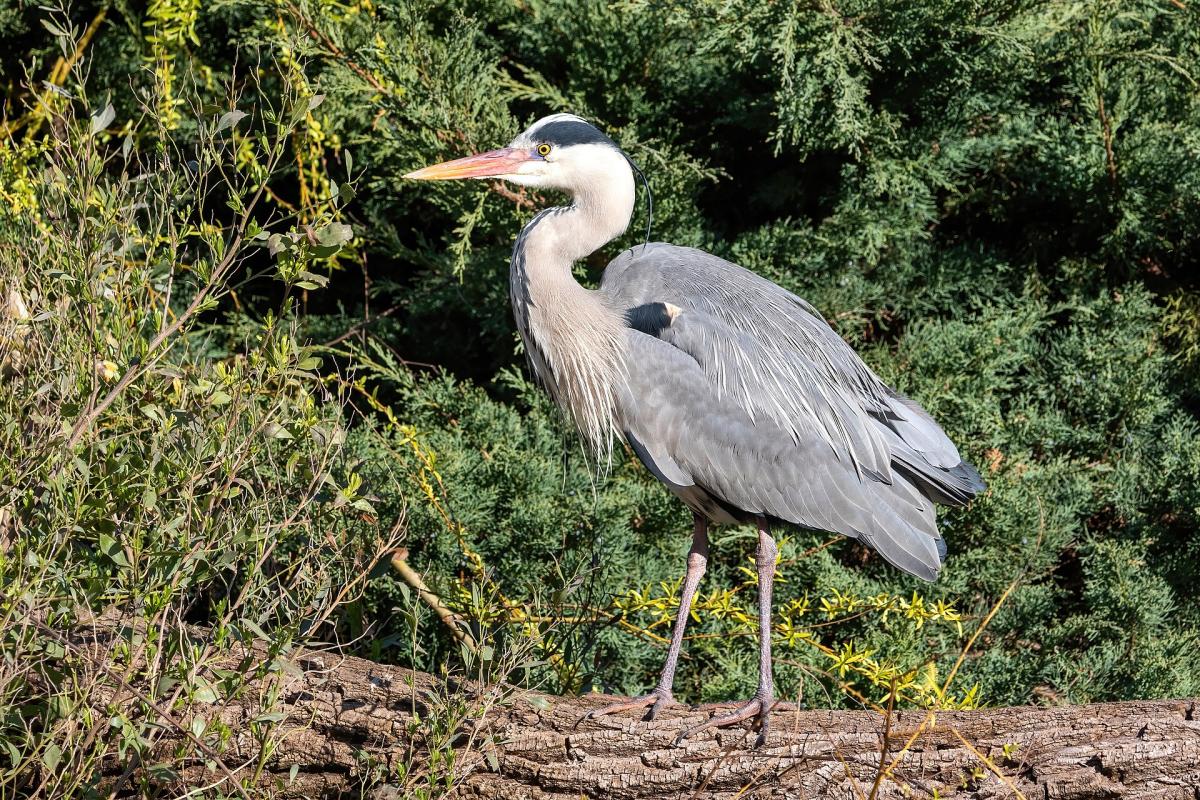
Stands in the shallows without moving for twenty minutes, then strikes faster than you can follow.
A tall, long-legged, dagger-billed grey bird — one of the largest and most conspicuous birds along the Nith and the Solway shore. Adults have a white head with a black eye-stripe extending into a drooping crest, and fly with the neck folded back into an S and the legs trailing, on slow, deeply bowed wings. Herons are present all year and can turn up on any pond, ditch or garden fishpool.
Behaviour
Hunting is a study in patience: the heron stands motionless in shallow water, or stalks with exaggerated slowness, then straightens its neck in a strike too fast to see clearly, taking fish, eels, frogs, voles and even ducklings. Herons nest colonially in treetop heronries, building bulky stick nests and laying very early — eggs are often in the nest by February, well before the leaves.
When to see it
Quick facts
- Family
- Herons (Ardeidae)
- Size
- 90–98 cm · wingspan up to 1.95 m
- UK status
- Green-listed
Photo by Alexis Lours, CC BY 4.0, via Wikimedia Commons