Grey Wagtail
Motacilla cinerea
Print fact sheet (PDF)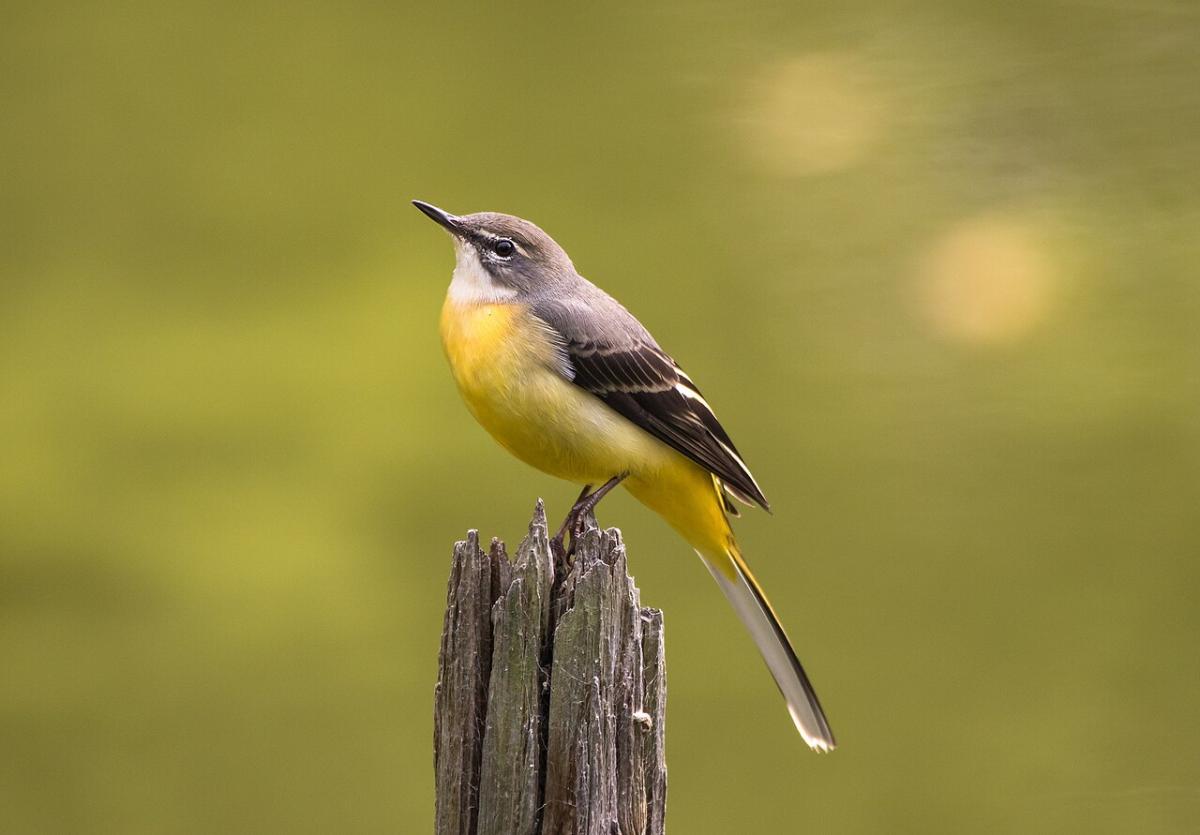
A slim, tail-bobbing bird of fast water that flashes lemon-yellow underneath, despite the drab-sounding name.
Don't let the name fool you — grey wagtails wear far more colour than their name suggests, with lemon-yellow underparts that flash bright even on a dull day. Look for a slim, long-tailed bird bobbing on a rock in the middle of a fast-flowing burn, weir or mill lade, tail pumping constantly as it watches for passing insects. Dumfries and Galloway's fast, well-oxygenated rivers suit them well, and a pair will often hold the same short stretch of water year after year. They're resident here all year, though some birds drift downstream or into towns in hard winter weather, turning up on roofs and car parks far from the nearest river. Nests are tucked into crevices in bridges, walls and weirs close to the water, and a pair will often raise two broods across the spring and summer.
Behaviour
Constantly on the move, a grey wagtail forages by wading along the water's edge and making short, darting flycatcher-style sallies after midges and mayflies, tail pumping the whole time. Pairs are fiercely territorial along their stretch of river, chasing off rivals with sharp calls in flight. Outside the breeding season birds often roost communally, sometimes alongside pied wagtails, in reedbeds or town-centre trees.
When to see it
Quick facts
- Family
- Wagtails and pipits (Motacillidae)
- Size
- 18–19cm · longer-tailed than a Pied Wagtail
- UK status
- Amber-listed
Photo by Laitche, CC BY-SA 4.0, via Wikimedia Commons