Herring Gull
Larus argentatus
Print fact sheet (PDF)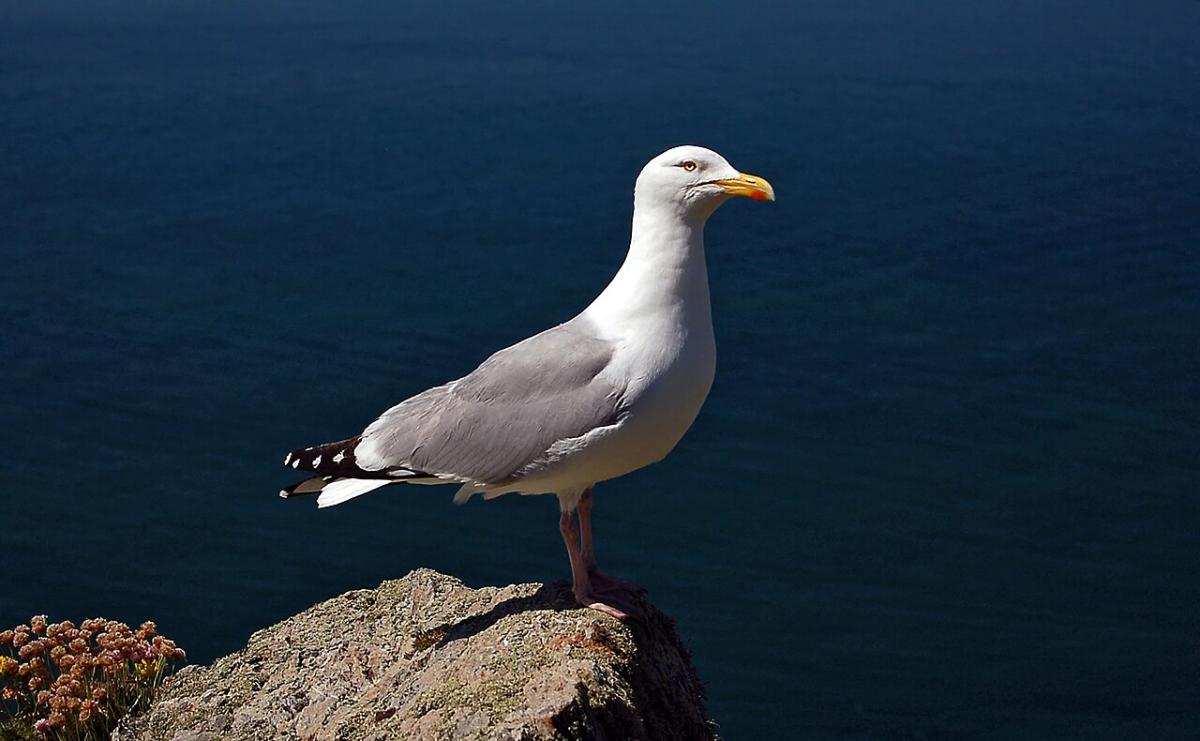
The classic 'seagull' — a bulky, silver-backed gull equally at home on cliffs, harbours and rooftops.
Large, powerful and pale grey above with black-and-white wingtips, a heavy yellow bill marked with a red spot, and pink legs, the herring gull is the gull most people picture when they think of the word 'seagull'. It's resident year-round in Dumfries and Galloway, nesting on coastal cliffs and increasingly on the flat roofs of coastal and market towns, where nests, eggs and boisterous, food-stealing adults are now a familiar summer sight. Despite being so visible and often considered a nuisance around chip shops and bins, the UK breeding population has declined steeply enough that the species is now Red-listed for conservation concern — its everyday abundance in town centres masks losses at traditional cliff and island colonies. Juveniles take four years to reach full adult plumage, passing through a series of mottled brown intermediate stages that can make young birds tricky to identify.
Behaviour
An opportunistic and adaptable feeder, taking fish, shellfish, carrion, and increasingly scavenged food from bins, boats and townscapes; will drop shellfish onto hard surfaces to break them open. Highly vocal, with a loud, laughing call used in territorial and social displays. Nests in loose colonies on cliffs, rooftops and islands, aggressively defending young against intruders.
When to see it
Quick facts
- Family
- Gull (Laridae)
- Size
- Length 54–60cm, wingspan 130–158cm
- UK status
- Red list
Photo by Lukasz Lukomski, CC BY-SA 3.0, via Wikimedia Commons