House Martin
Delichon urbicum
Print fact sheet (PDF)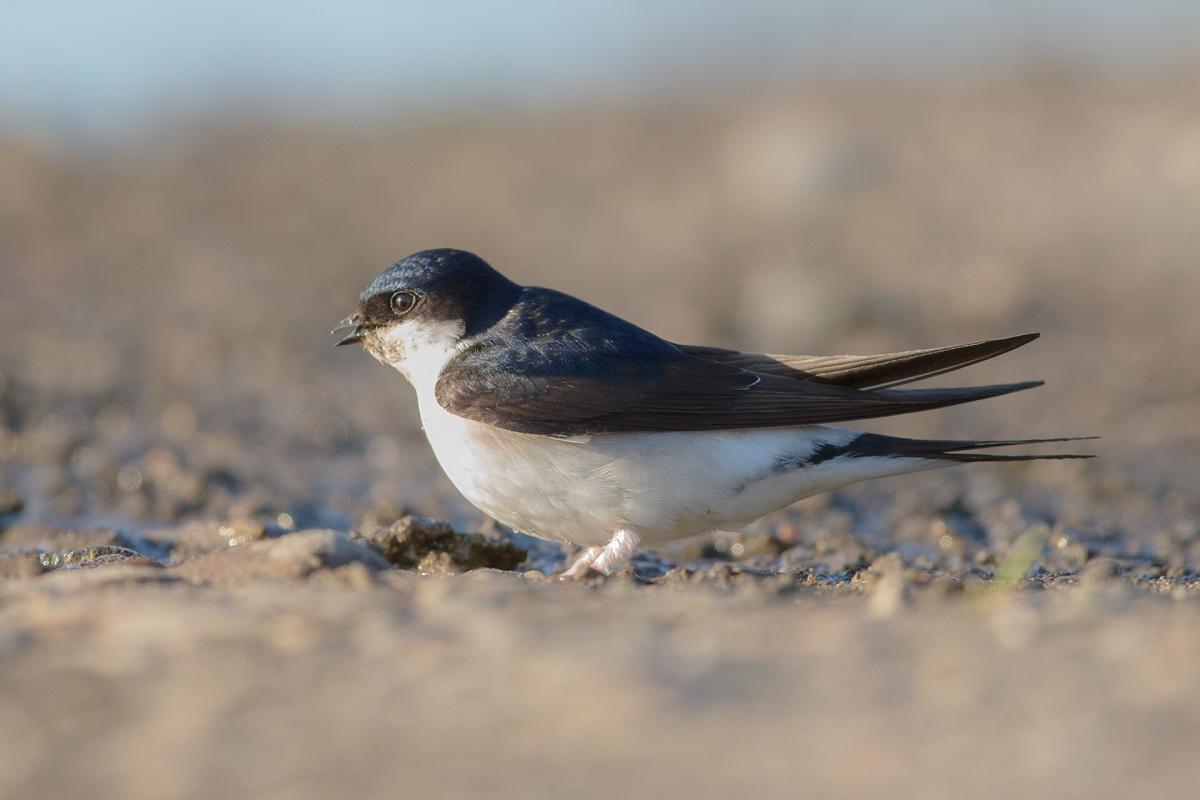
The mud cup under the eaves — built one beakful at a time, and often reused for years.
A small, neat aerial bird: glossy blue-black above, pure white below, with a brilliant white rump that separates it instantly from a swallow, and a short forked tail with no long streamers. House martins nest colonially under the eaves of Dumfries houses and bridges, and hawk for insects overhead all summer. They are red-listed following a marked national decline.
Behaviour
The nest is an enclosed cup of mud pellets, up to a thousand of them, stuck under an overhang with only a small entrance at the top — which requires wet mud nearby, so puddles and pond margins matter to them. Both parents feed the young on insects caught on the wing, and last year's nest is often repaired and reused. Families gather on wires in late summer before departure.
Migration
House martins winter in Africa, but remarkably little is known about exactly where — they are thought to spend much of the winter feeding high above the forest canopy, which is why they are so rarely seen there. They return to Dumfries from mid-April and are usually gone by the end of September.
When to see it
Quick facts
- Family
- Swallows and martins (Hirundinidae)
- Size
- 12.5 cm · smaller than a swallow
- UK status
- Red-listed
Photo by Andreas Trepte, CC BY-SA 2.5, via Wikimedia Commons