House Sparrow
Passer domesticus
Print fact sheet (PDF)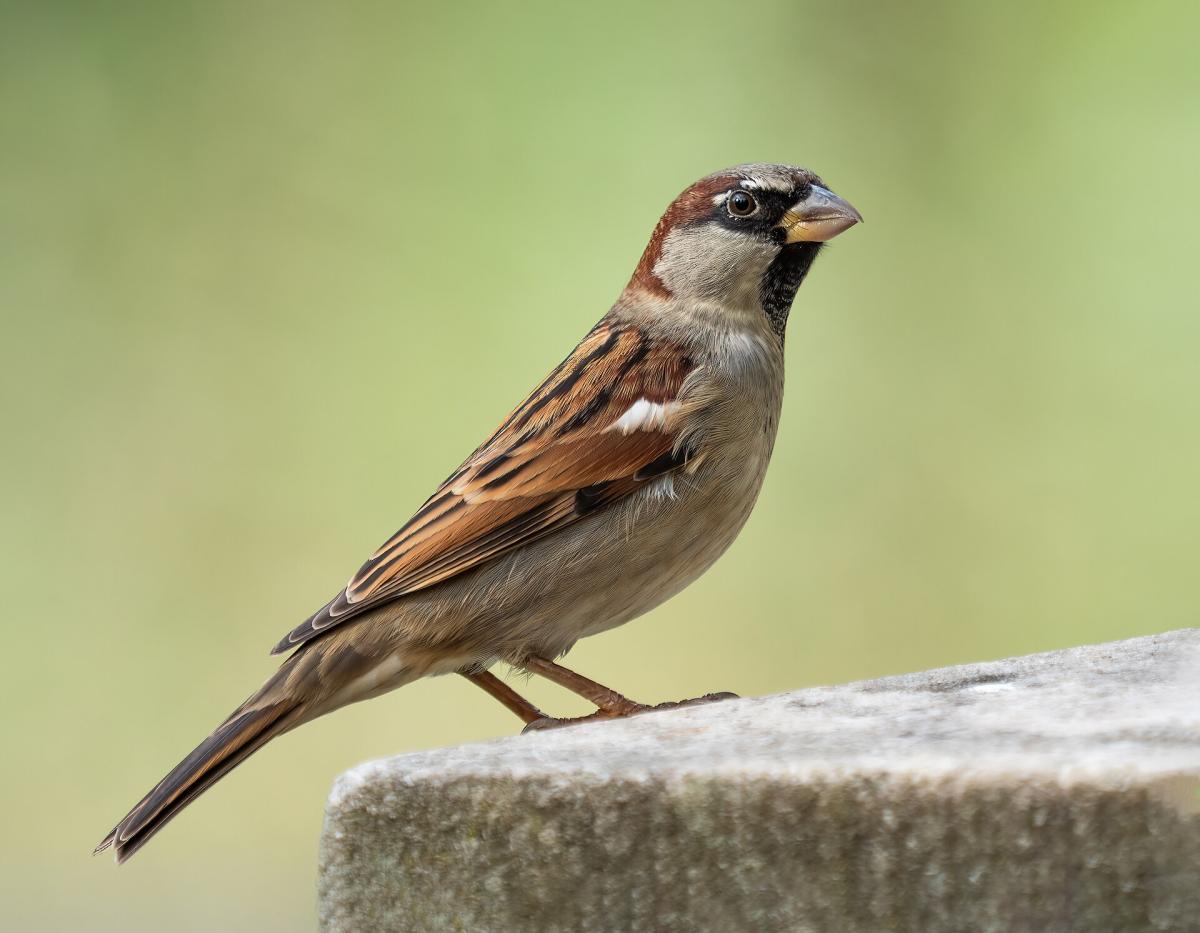
The noisy, squabbling bird of hedges and eaves that we only noticed once it started disappearing.
Males have a grey crown, chestnut nape, black bib and a streaked brown back; females are plainer buff-brown with a pale stripe behind the eye. House sparrows live alongside people — eaves, hedges, farmyards, town gardens — and are almost never far from buildings. Still a familiar bird in Dumfries, but the British population has fallen by tens of millions since the 1970s, and it is now red-listed.
Behaviour
House sparrows are intensely social: they nest in loose colonies under roof tiles and in wall cavities, feed in flocks and gather to chirp communally in a dense hedge or shrub — the 'sparrow bush' that many streets still have. Adults eat mostly seed and scraps, but chicks need insects in their first days, and the shortage of insects in tidied modern towns is one likely cause of the decline.
When to see it
Quick facts
- Family
- Old World sparrows (Passeridae)
- Size
- 14–15 cm
- UK status
- Red-listed
Photo by Rhododendrites, CC BY-SA 4.0, via Wikimedia Commons