Lapwing
Vanellus vanellus
Print fact sheet (PDF)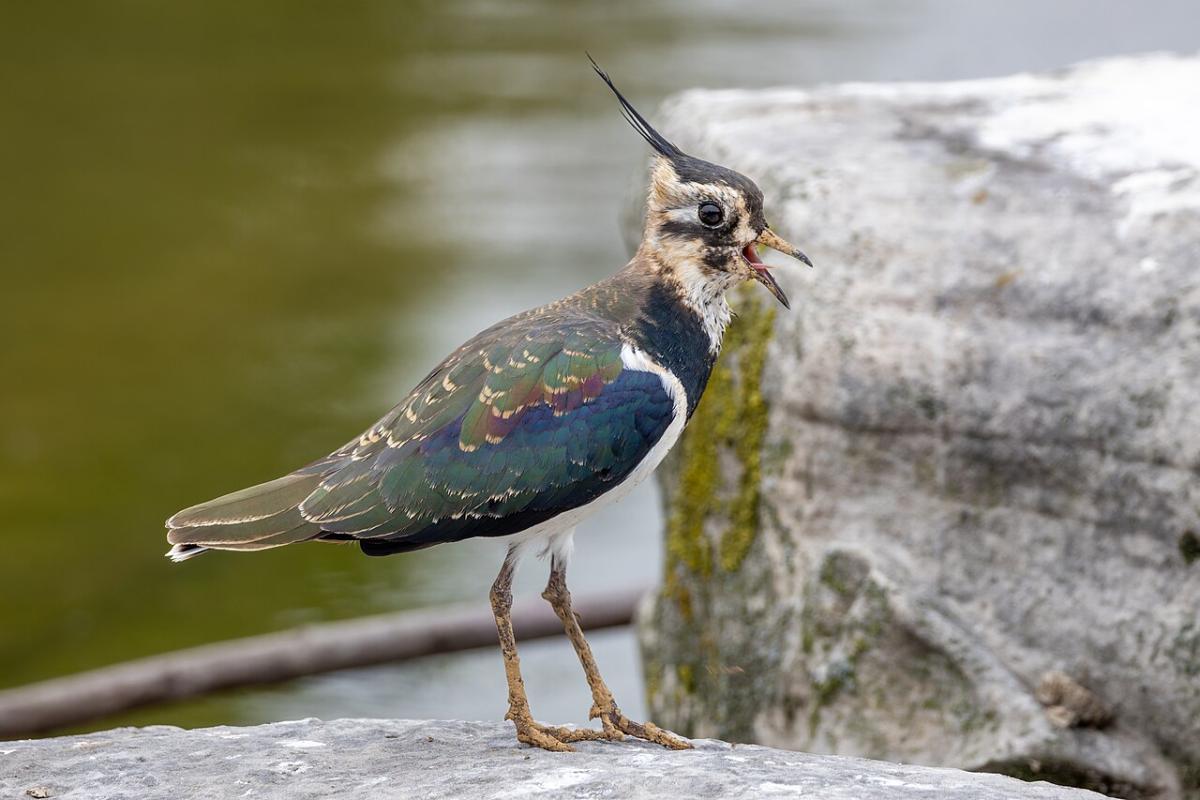
A crested farmland plover famed for its tumbling display flight and huge winter flocks.
With its iridescent green-black back, sweeping black crest and broad, rounded wings, the lapwing (or peewit, after its wailing call) is one of Britain's most striking waders. It breeds on rough pasture, arable fields and damp grassland across Dumfries and Galloway, though numbers have fallen sharply as farming has intensified and nests are lost to early cutting and predation. Spring brings the species' famous display: tumbling, wing-beating flights over the breeding fields accompanied by that unmistakable wheezy, whooping call. Outside the breeding season, resident birds are swelled by large numbers arriving from continental Europe, and the Solway coast becomes one of the best places in Scotland to see them — winter flocks numbering into the thousands gather on the Nith estuary and surrounding farmland, often alongside golden plover, to feed and roost on the open mudflats and fields.
Behaviour
Feeds by running, pausing and pecking for worms and insect larvae on open ground, much like a giant plover-shaped robin. In spring, males perform rolling, acrobatic display flights over the breeding territory, twisting and diving while calling. In winter, forms large, tightly packed flocks that wheel together over the estuary in a shimmer of black and white.
When to see it
Quick facts
- Family
- Plover (Charadriidae)
- Size
- Length 28–31cm, wingspan 67–76cm
- UK status
- Red list
Photo by Alexis Lours, CC BY 4.0, via Wikimedia Commons