Lesser Black-backed Gull
Larus fuscus
Print fact sheet (PDF)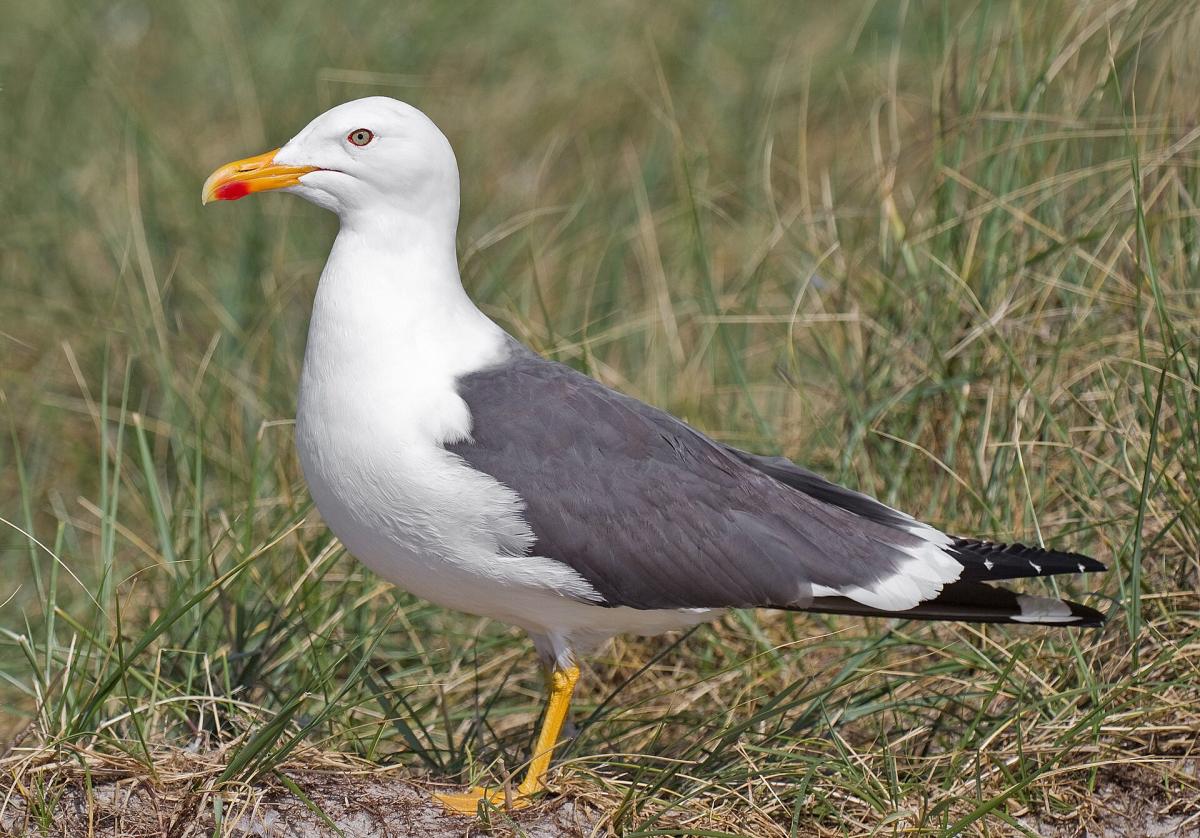
Slate-grey back and yellow legs — the herring gull's darker cousin, and once a bird that always left for winter.
A large gull with a dark slate-grey back and upperwings, yellow legs and a yellow bill with a red spot — distinguished from the herring gull by the much darker back and the leg colour, and from the great black-backed gull by size. Lesser black-backs breed on the Solway coast and increasingly on rooftops, and feed on the estuary, farmland and refuse sites around Dumfries.
Behaviour
Opportunistic feeders, taking fish, invertebrates, carrion, refuse and the eggs and young of other seabirds. Historically almost all British breeders migrated to Iberia and North Africa for the winter, but many now stay, and the species is present here in every month — a change linked to milder winters and reliable food from towns and landfill. Roof-nesting pairs are strongly defensive of their young.
When to see it
Quick facts
- Family
- Gulls and terns (Laridae)
- Size
- 48–56 cm
- UK status
- Amber-listed
Photo by Andreas Trepte, CC BY-SA 2.5, via Wikimedia Commons