Little Grebe
Tachybaptus ruficollis
Print fact sheet (PDF)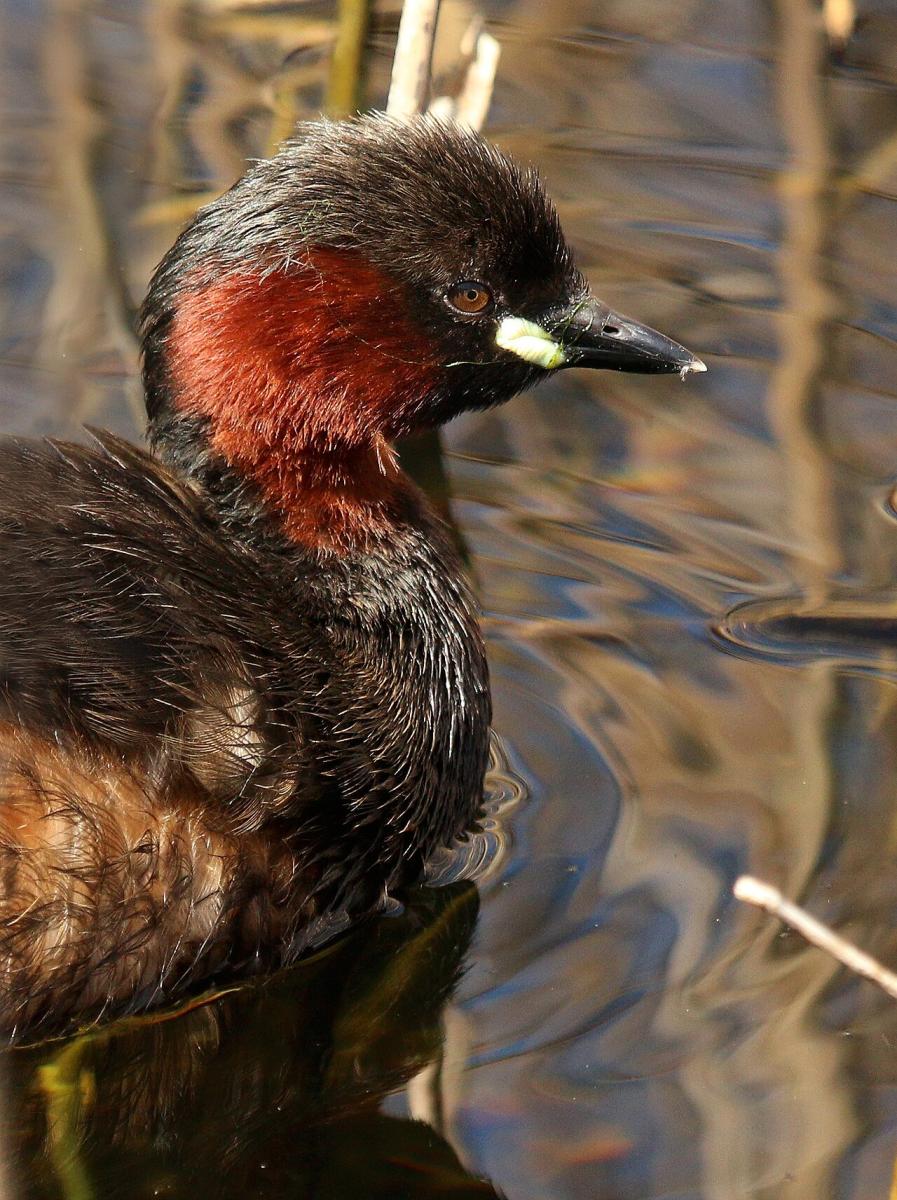
A tiny, dumpy diving bird that vanishes underwater at the first sign of trouble.
The little grebe is Britain's smallest grebe — a compact, round-bodied waterbird barely bigger than a starling, often overlooked as it hugs the reeds on ponds, canals and slow stretches of the Nith. In summer it wears rich chestnut cheeks and throat with a pale yellow gape spot; by winter this fades to a duller buff-brown, and birds gather on larger, ice-free lochs and estuary pools once smaller breeding waters freeze over. Its old country name, dabchick, nods to its constant bobbing and sudden disappearing act — it dives at the least disturbance and can stay under for surprising lengths, resurfacing yards away. Nests are floating platforms of waterweed anchored to reeds, covered with vegetation whenever the sitting bird slips away. Resident and present year-round across the area, it's a bird best found by ear as much as eye — a distinctive whinnying trill carrying across still water.
Behaviour
Feeds by diving repeatedly for small fish, tadpoles, insect larvae and freshwater shrimps, often surfacing with prey visibly swallowed. When alarmed it sinks low in the water like a submarine before diving outright, rather than flying off. Highly vocal for its size, pairs duet with a rippling, whinnying call that carries well beyond the reedbed, especially in spring.
When to see it
Quick facts
- Family
- Grebe (Podicipedidae)
- Size
- Length 25–29cm, wingspan 40–45cm
- UK status
- Green list
Photo by Charles J. Sharp, CC BY-SA 4.0, via Wikimedia Commons