Mallard
Anas platyrhynchos
Print fact sheet (PDF)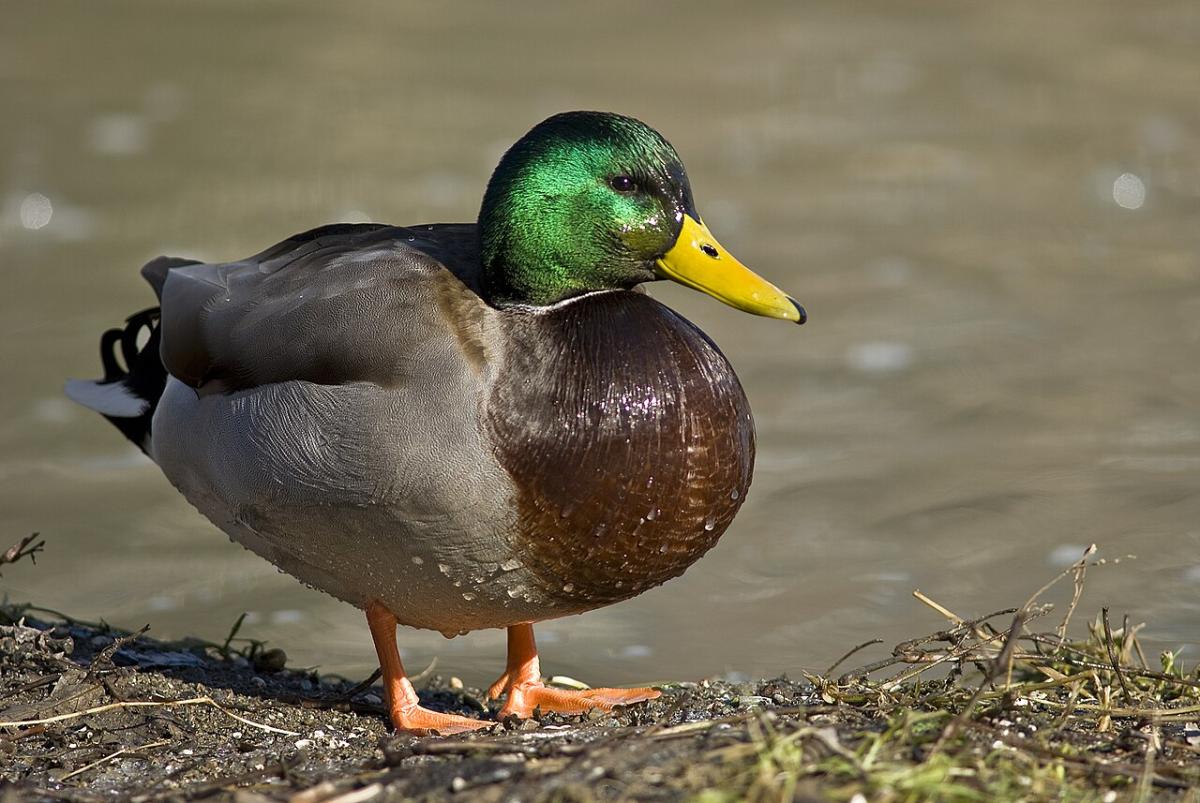
The everyday duck of ponds and rivers everywhere, and the ancestor of nearly every domestic duck breed.
The mallard is the duck everyone knows, and for good reason — it's the ancestor of nearly every domestic duck breed and the default sighting on almost any pond, river or loch in Dumfries and Galloway. The drake's glossy bottle-green head, white collar and curled tail feather are unmistakable in autumn and winter; come summer he moults into a scruffy, female-like brown 'eclipse' plumage that catches out a lot of birdwatchers. Females are mottled brown year-round, best told by their orange-and-black bill and the loud, familiar quack. Mallards are resident here all year, with local numbers boosted by birds arriving from further north and east in winter. They're dabbling ducks, tipping tail-up to graze plants and invertebrates in shallow water rather than diving, and pairs raise broods of fluffy ducklings through spring and early summer on almost any patch of water going.
Behaviour
Mallards feed by dabbling — tipping tail-up to reach plants and invertebrates just below the surface — or upending in slightly deeper water, rarely diving fully. Drakes gather in loose bachelor groups once ducklings hatch, moulting out of their bright plumage into drab eclipse feathers for a few flightless weeks in summer before regaining their smart winter look by autumn.
When to see it
Quick facts
- Family
- Ducks, geese and swans (Anatidae)
- Size
- 50–65cm · our largest common dabbling duck
- UK status
- Green-listed
Photo by Acarpentier, CC BY 3.0, via Wikimedia Commons