Pied Flycatcher
Ficedula hypoleuca
Print fact sheet (PDF)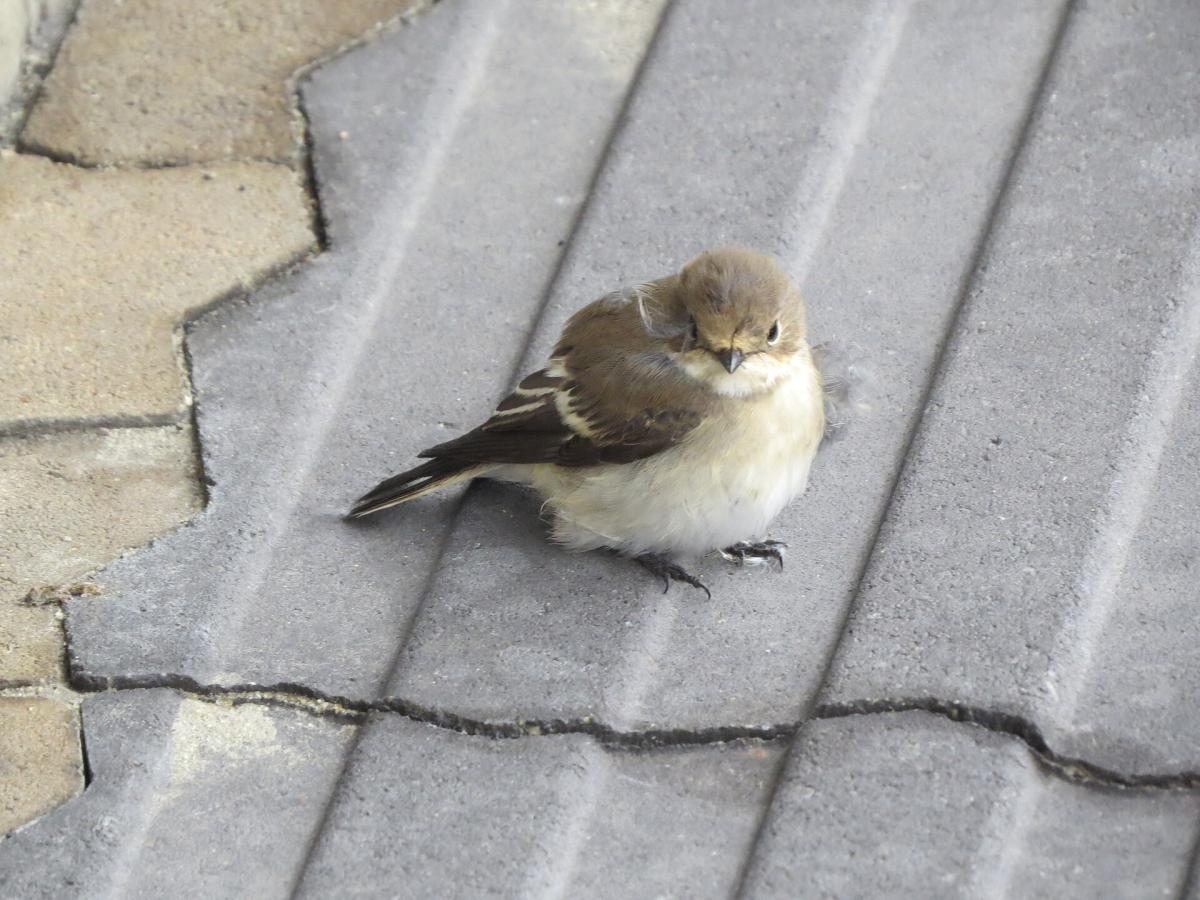
A crisp black-and-white summer visitor to the oakwoods — and a reliable taker of nest boxes.
Males in spring are striking: black above and white below with a bold white wing patch and a small white forehead spot. Females are a soft brown version of the same pattern. Pied flycatchers are birds of western oak woodland, and the Galloway valleys are within their British stronghold — they are scarce in the town itself but reachable in the hanging oakwoods not far from Dumfries.
Behaviour
Like the spotted flycatcher it hunts by sallying from a perch, but it is more restless, moving perch frequently and often taking prey from foliage or the ground as well as in flight. Pied flycatchers nest in tree holes and take very readily to boxes, which is why long-running nest box schemes in western oakwoods have made them one of Britain's most closely studied birds.
Migration
Pied flycatchers winter in West Africa and arrive in the oakwoods from late April. Their breeding season is tightly tuned to the spring flush of oak caterpillars, and warming springs have been pulling that flush earlier — a mismatch that is one of the clearest local examples of climate change affecting a bird's food supply.
When to see it
Quick facts
- Family
- Old World flycatchers (Muscicapidae)
- Size
- 13 cm · smaller than a sparrow
- UK status
- Red-listed
Photo by GT1976, CC BY-SA 4.0, via Wikimedia Commons