Redshank
Tringa totanus
Print fact sheet (PDF)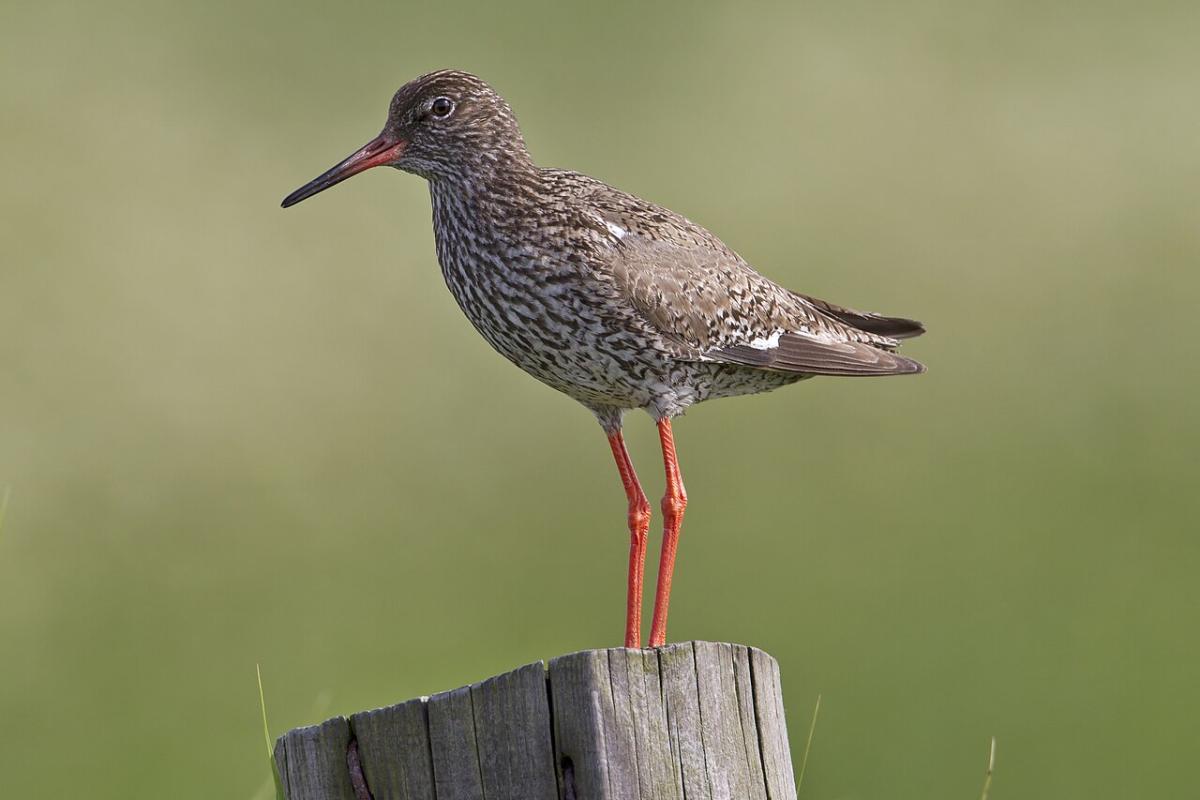
The noisy 'sentinel of the marsh' whose alarm call sets every wader on the mudflat to flight.
A medium-sized wader with bright orange-red legs and a matching base to its bill, the redshank earns its nickname as sentinel of the marsh for its habit of being first to spot danger and first to fly, yelping a piercing alarm that sends every other bird on the mudflat airborne with it. In flight it shows a broad white trailing edge to the wing, useful for picking it out among mixed wader flocks. A handful breed on damp grassland and saltmarsh fringes locally, but the species is far better known here as a winter visitor: the Nith estuary and wider Solway are internationally important for redshank, with birds arriving from Iceland and northern Europe to join home-grown breeders on the mudflats from autumn through to spring. Numbers peak between October and March, when hundreds can be found probing the tideline at low water.
Behaviour
Probes soft estuary mud with its long bill for worms, small molluscs and shrimps, working the tideline as it falls. Extremely wary — usually the first bird to take alarm, bursting upward with a loud, yelping call that flushes the whole flock. Often feeds and roosts in loose company with curlew, oystercatcher and dunlin.
When to see it
Quick facts
- Family
- Sandpiper (Scolopacidae)
- Size
- Length 27–29cm, wingspan 59–66cm
- UK status
- Red list
Photo by Andreas Trepte, CC BY-SA 2.5, via Wikimedia Commons