Reed Bunting
Emberiza schoeniclus
Print fact sheet (PDF)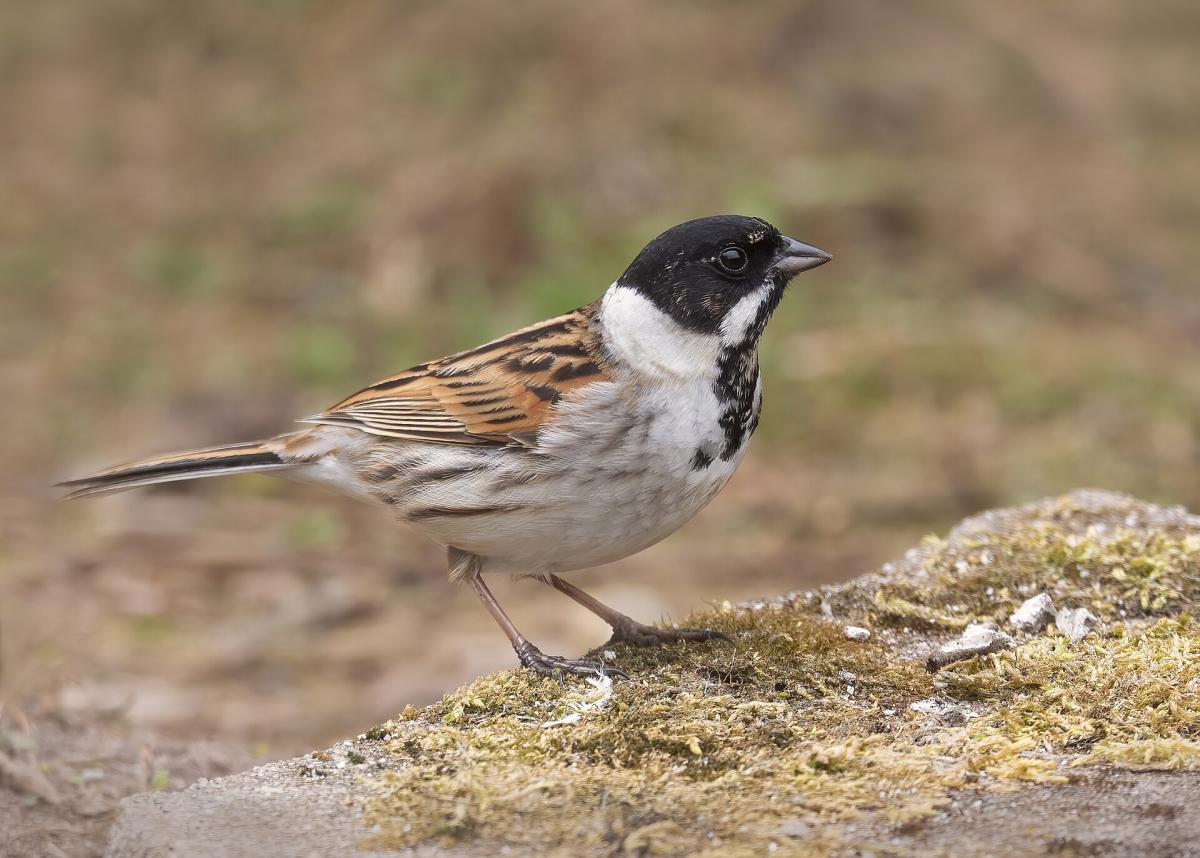
Black hood, white collar and a song so unhurried it sounds like the bird has forgotten how it ends.
A streaky brown bunting of wet ground. Breeding males are distinctive — a black head and throat set off by a clean white moustache and collar; females and winter males are streaky and much plainer, with a pale stripe over the eye. Reed buntings breed in the reedbeds, damp rough grassland and ditch margins around Dumfries and along the Nith, and are one of the characteristic birds of the Solway merse.
Behaviour
The male sings from the top of a reed or a low bush with a laboured, halting phrase — a few separate notes and then a hurried scramble, repeated with long gaps. In winter reed buntings leave the wettest ground and join finch and bunting flocks on farmland and stubble, and increasingly visit garden feeders in cold weather, which is when many people see their first one.
When to see it
Quick facts
- Family
- Buntings (Emberizidae)
- Size
- 15–16.5 cm · sparrow-sized
- UK status
- Amber-listed
Photo by caroline legg, CC BY 2.0, via Wikimedia Commons