Robin
Erithacus rubecula
Print fact sheet (PDF)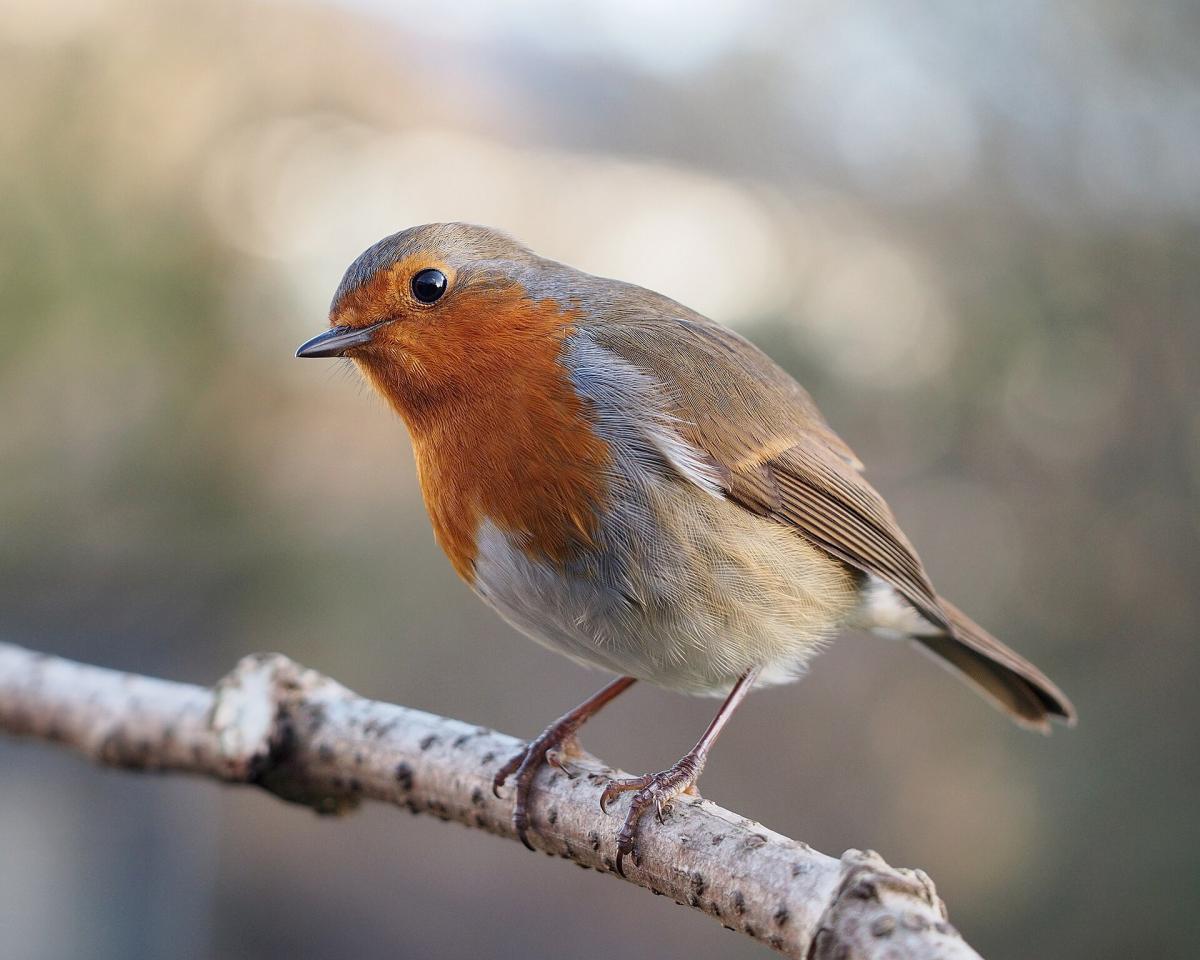
The gardener's shadow — bold, orange-breasted and singing on the darkest days of the year.
Almost everyone in Dumfries knows the robin, and it is one of the few birds that will come to you rather than the other way round. Turn over a border and one will drop onto the fork handle within a minute, watching for worms. Adults have the familiar orange face and breast bordered with soft grey; young birds are speckled brown with no orange at all, which catches people out every summer. It holds a territory in almost every garden, churchyard and hedge in town.
Behaviour
Robins are far fiercer than their reputation suggests. Both sexes hold territory in winter, and both sing to defend it — which is why you hear robin song in December when almost nothing else is calling. Disputes between neighbours can be violent. They feed mostly on the ground, hopping and pausing, and follow anything that turns the soil over: a fork, a mole, or in older woodland a rooting badger or deer.
When to see it
Quick facts
- Family
- Chats and flycatchers (Muscicapidae)
- Size
- 14 cm · smaller than a sparrow
- UK status
- Green-listed
Photo by Francis C. Franklin, CC BY-SA 3.0, via Wikimedia Commons