Sand Martin
Riparia riparia
Print fact sheet (PDF)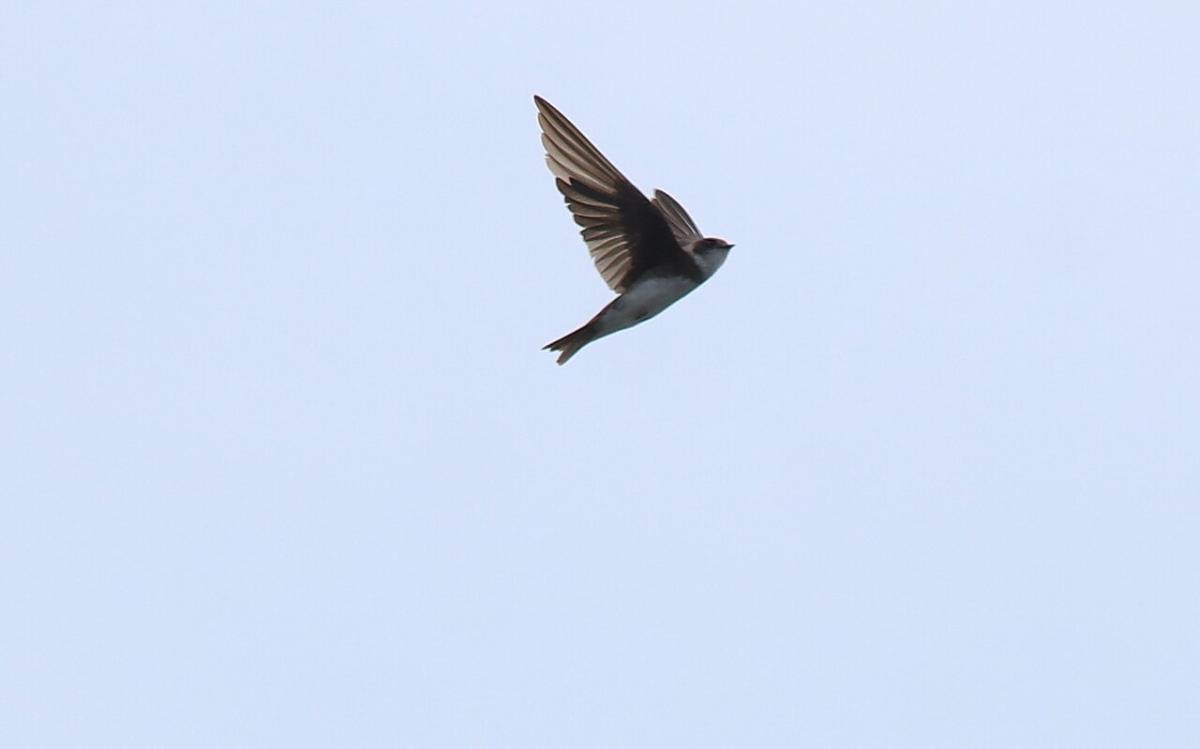
The first summer migrant back each spring, nesting in noisy colonies of burrows dug straight into the riverbank.
The smallest of Britain's swallow family, the sand martin is usually the very first migrant to return each spring, sometimes appearing over the Nith as early as March. It's a compact, sandy-brown bird with white underparts and a distinctive brown breast band, quite different from the glossy swallow it's often confused with. Sand martins are colonial nesters, excavating burrows up to a metre deep into soft, vertical riverbanks and sand quarries, where whole neighbourhoods of birds can be seen constantly flying in and out. Along the Nith and other local rivers, active colonies are one of the best wildlife spectacles of spring, with dozens of birds wheeling low over the water catching insects to feed themselves and their growing young. By late summer the colonies empty as birds head back to Africa, leaving the riverbank pocked with abandoned nest holes until the following year.
Behaviour
Sand martins feed on the wing over open water and riverside meadows, snatching midges and other small insects in fast, low, flickering flight. They dig their nest burrows with bill and feet working together, excavating a tunnel that opens into a small chamber where eggs and chicks stay safe from most predators. Colonies are noisy and constantly active, with birds streaming in and out all day to feed young.
Migration
Sand martins winter in the Sahel, the dry belt south of the Sahara. Often the first summer migrant back, they return to breed in colonies tunnelled into sandy riverbanks, timing their arrival to the emergence of flying insects over the water.
When to see it
Quick facts
- Family
- Swallows and martins (Hirundinidae)
- Size
- 12 cm · sparrow-sized, slimmer
- UK status
- Amber-listed
Photo by Afsarnayakkan, CC BY-SA 4.0, via Wikimedia Commons