Sedge Warbler
Acrocephalus schoenobaenus
Print fact sheet (PDF)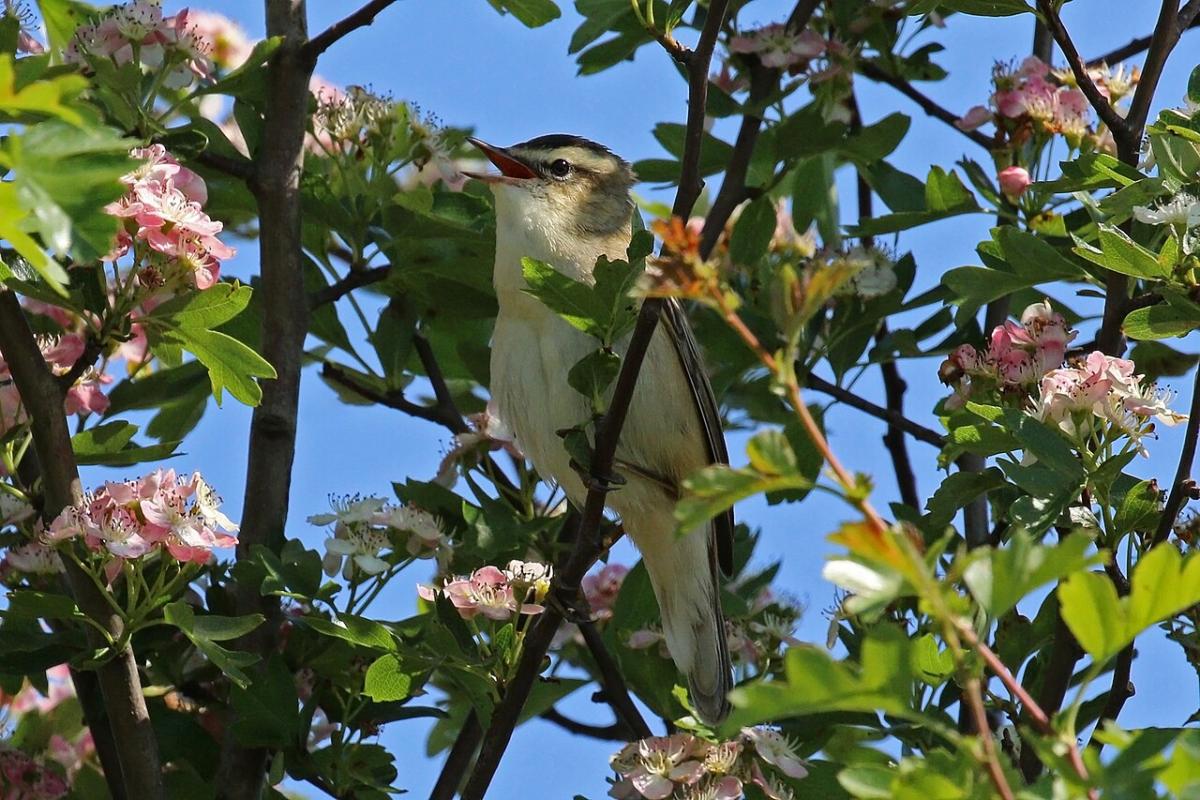
A scratchy, never-repeating song pouring out of the reeds — one of the surest signs that a wetland has come back to life for summer.
The sedge warbler spends winter in sub-Saharan Africa and returns to Dumfries and Galloway's wetlands each spring, arriving in April to claim territory among reeds, willow scrub and rank waterside vegetation. It's a small, streaky brown warbler with a pale stripe over the eye that helps separate it from its reed-loving cousins. Unlike many warblers it doesn't stick to one song — it improvises, stringing together scratchy, chattering phrases that rarely repeat, sometimes weaving in snatches of other birds' calls. Males often deliver this scrambled performance from an open perch, or launch into a brief, fluttering song-flight before dropping back into cover. Once paired, the birds turn far more secretive, threading through dense stems to raise a single brood before heading south again in late summer, feeding heavily on insects first to fuel the long return journey.
Behaviour
Its song is unmistakable once learned — an unpredictable jumble of chirps, trills and buzzes that can run on for a minute or more without repeating itself. It feeds low in waterside vegetation, gleaning insects, midges and small caterpillars from stems and leaves, rarely straying far from the wet ground it nests in. Birds put on significant fat reserves before their long flight back to Africa.
Migration
Sedge warblers winter in sub-Saharan Africa. Before the return journey they gorge on aphids to lay down fat, then cross the Sahara in a single non-stop flight. They breed here in wet reed and scrub, where insects are abundant through the northern summer.
When to see it
Quick facts
- Family
- Reed warblers (Acrocephalidae)
- Size
- 13 cm · sparrow-sized
- UK status
- Green-listed
Photo by Charles J. Sharp, CC BY-SA 4.0, via Wikimedia Commons