Spotted Flycatcher
Muscicapa striata
Print fact sheet (PDF)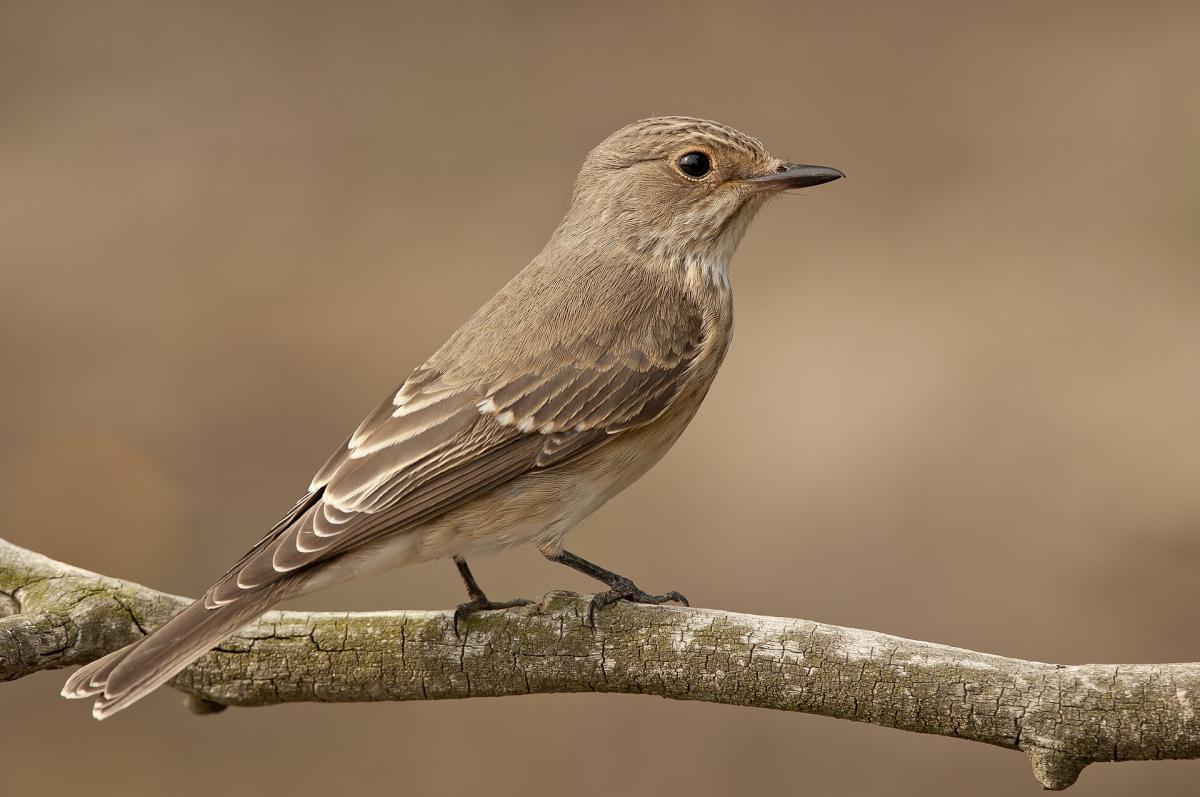
Sits bolt upright on a fence post, flies out, snaps up a fly, and returns to exactly the same perch.
A plain, slim, upright grey-brown bird with a streaked crown and breast — easy to overlook until it starts hunting, at which point it is unmistakable. Spotted flycatchers are among the last migrants to arrive, rarely before mid-May, and favour churchyards, large gardens, parkland and woodland edge around Dumfries where there are open perches and plenty of flying insects. They have declined steeply and are now a real find.
Behaviour
The hunting method defines the bird: it perches motionless and very upright, watches, then sallies out in a fast twisting flight to take an insect on the wing — often with an audible snap of the bill — and returns to the same perch to wait again. Nests are built in creepers, wall crevices and open-fronted boxes, and the late arrival is timed to the peak of large flying insects.
Migration
Spotted flycatchers winter in sub-Saharan and southern Africa. They arrive later than almost any other summer visitor because their food — big flying insects — is not reliably available in a Scottish spring until well into May.
When to see it
Quick facts
- Family
- Old World flycatchers (Muscicapidae)
- Size
- 14.5 cm · sparrow-sized
- UK status
- Red-listed
Photo by Бусел В.А., CC BY-SA 4.0, via Wikimedia Commons