Stock Dove
Columba oenas
Print fact sheet (PDF)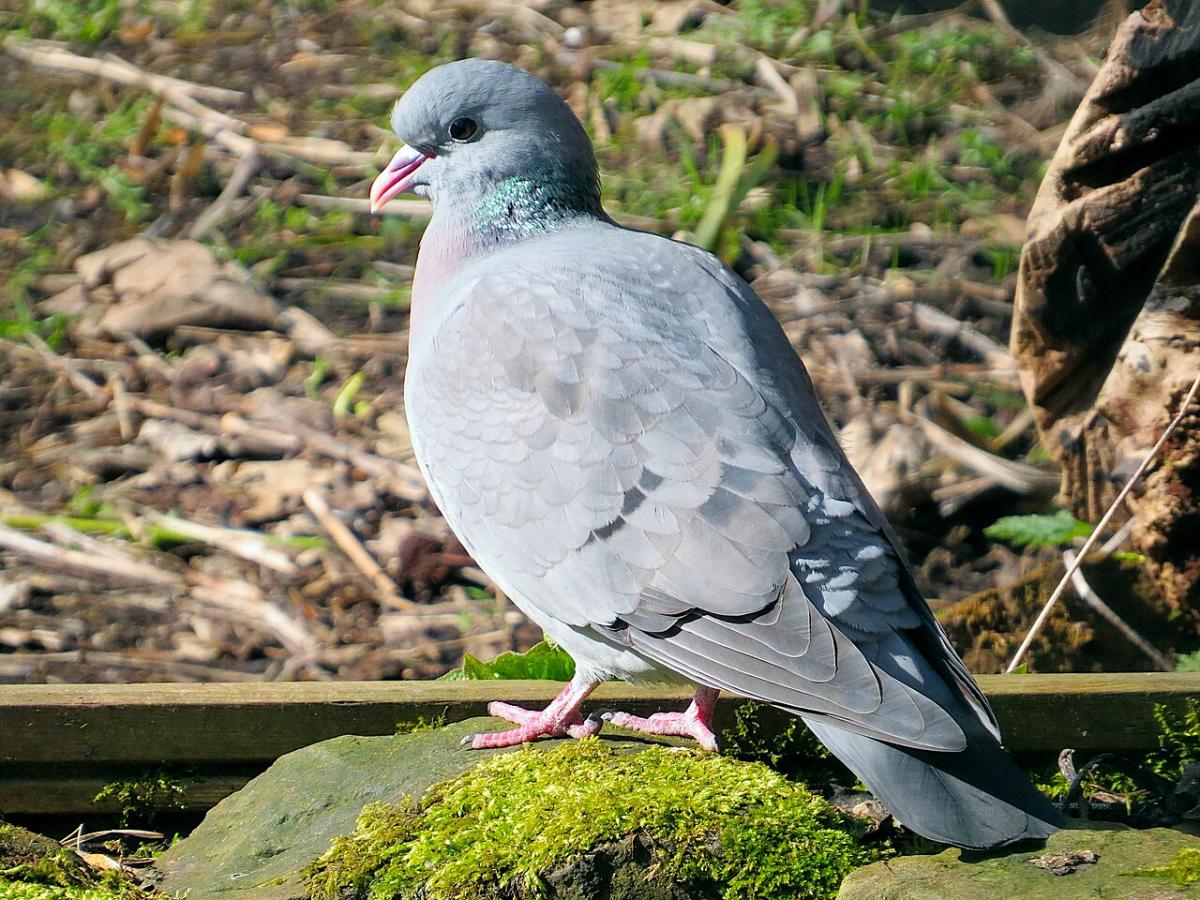
A tidy, iridescent-necked pigeon that nests in tree holes and old buildings, easily overlooked next to its brasher cousins.
Stock doves are the quiet, understated pigeon of the trio you'll find across Dumfries and Galloway — smaller and neater than a woodpigeon, without that bird's white neck patch and wing flashes, and lacking the variable patchwork plumage of a feral pigeon. Look instead for an all-round soft blue-grey bird with a dark eye, an iridescent green sheen on the neck, and two short dark bars on the closed wing. They're birds of parkland, farmland edges and mature trees, nesting in holes in old trunks, quarries and farm buildings, competing for the best sites with jackdaws. Resident here all year, stock doves keep a low profile, feeding quietly on the ground on seeds, grain and clover, and often mix into wintering flocks of woodpigeons without drawing much attention. Listen for their soft, repetitive cooing song, less strident than a woodpigeon's.
Behaviour
Stock doves feed almost entirely on the ground, walking steadily through stubble fields and pasture picking up seeds, grain and clover shoots rather than perching to feed. The display flight is a slow, stiff-winged glide over the nest site. Their song is a soft, repeated two-note coo, given from a perch near the nest hole through a long breeding season.
When to see it
Quick facts
- Family
- Pigeons and doves (Columbidae)
- Size
- 32–34cm · between a Feral Pigeon and a Woodpigeon
- UK status
- Amber-listed
Photo by MPF, CC BY-SA 4.0, via Wikimedia Commons