Swift
Apus apus
Print fact sheet (PDF)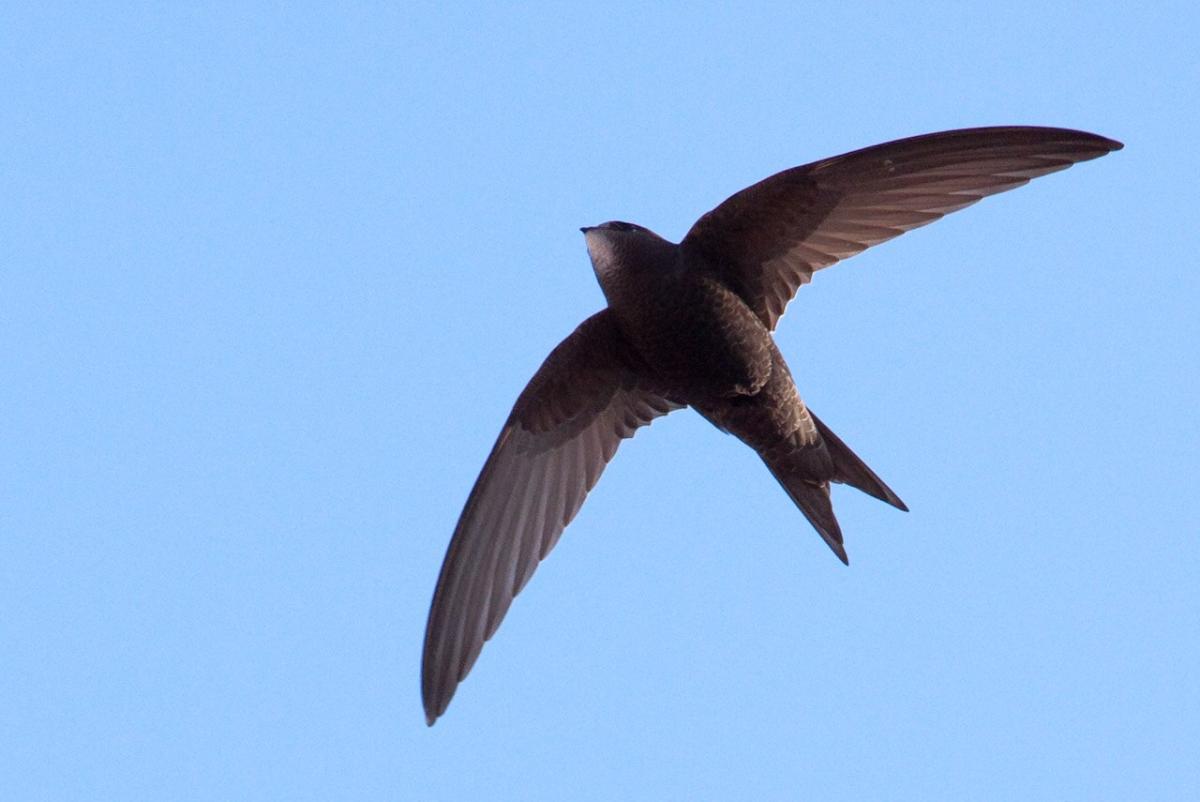
A sooty, scythe-winged flier that eats, sleeps and even mates in the air — and is only ever seen for a few frantic summer weeks.
Few British birds live as extreme a life as the swift. After wintering in Africa, it arrives late — usually in May — and leaves early, often by August, spending barely three months here before an astonishing existence resumes: swifts eat, sleep and even mate entirely in the air, only ever landing to nest. Sooty brown all over with a pale throat and long, scythe-shaped wings, it's built purely for flight, and its screaming parties chasing each other around rooftops on warm summer evenings are one of the most thrilling sounds of the Dumfries and Galloway summer. Swifts nest in small gaps under roof tiles and in old stonework, squeezing into the same crevice year after year, but modern building repairs have closed off many traditional sites, making the birds increasingly reliant on nest boxes and dedicated swift bricks to keep breeding locally.
Behaviour
Swifts spend almost their entire life on the wing, even sleeping in flight by shutting down half the brain at a time while circling at altitude. They feed by trawling the sky for airborne insects and spiders, sometimes climbing thousands of feet to exploit a rich layer of prey. Screaming parties of birds chasing low around buildings in a tight, fast group are a familiar and much-loved midsummer display.
Migration
Swifts winter in central and southern Africa and spend almost their entire lives on the wing — feeding, sleeping and even mating in the air. They visit Dumfries for barely three months, just long enough to nest under the eaves and raise their young before screaming off south again.
When to see it
Quick facts
- Family
- Swifts (Apodidae)
- Size
- 16–17 cm · sparrow length, with long scythe-shaped wings
- UK status
- Red-listed
Photo by pau.artigas, CC BY-SA 2.0, via Wikimedia Commons