Tawny Owl
Strix aluco
Print fact sheet (PDF)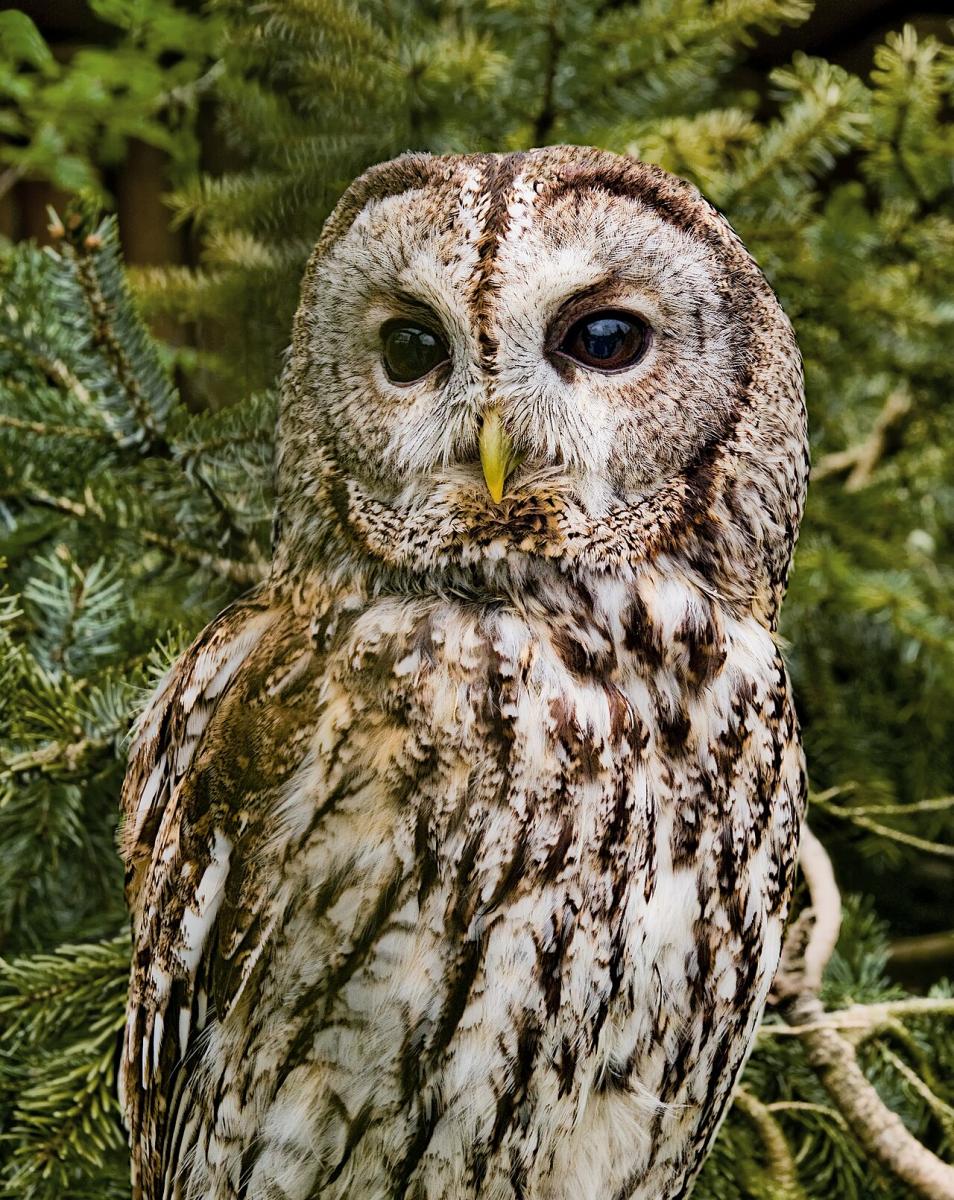
The classic 'twit-twoo' owl of Dumfries gardens and woodland, actually a male's hoot answered by a female's sharp call.
The tawny owl is the source of the classic 'twit-twoo' — though that's really two birds, not one: the sharp kewick is the female, answered by the male's soft hooting twoo-oo. A stocky, round-headed owl with no ear tufts and mottled brown plumage, it's far more often heard than seen, roosting hidden against a tree trunk by day and hunting small mammals from a low perch after dark. Tawny owls are strictly resident and sedentary — a pair will hold the same patch of woodland, parkland or leafy garden for life, rarely moving far at all. They're most vocal as autumn nights draw in, when young birds and neighbouring adults call to stake out territory, and again in late winter as pairs duet ahead of breeding. A walk near mature trees at dusk in September or October is the best chance of hearing the full exchange.
Behaviour
Tawny owls hunt from a low perch, dropping silently onto voles, mice and shrews located almost entirely by sound in the dark. By day they roost tight against a tree trunk, relying on camouflage rather than flight to avoid mobbing songbirds. Pairs are strongly territorial and monogamous, often staying together and holding the same wood for several years.
When to see it
Quick facts
- Family
- Owls (Strigidae)
- Size
- 37–39cm · pigeon-sized and stocky
- UK status
- Amber-listed
Photo by Michael Gäbler, CC BY 3.0, via Wikimedia Commons