Teal
Anas crecca
Print fact sheet (PDF)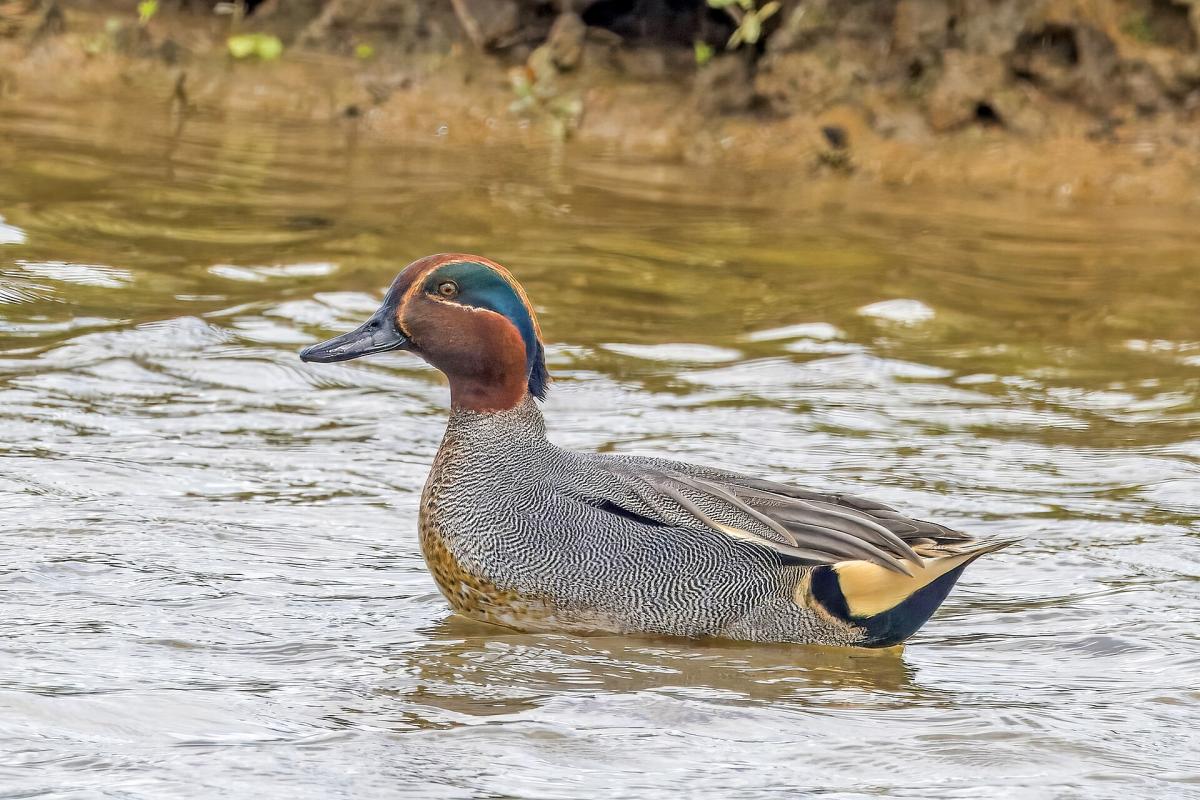
Our smallest duck, and the one that springs vertically off the water when flushed.
A tiny, neat dabbling duck. Drakes have a chestnut head with a bottle-green comma through the eye, finely vermiculated grey flanks, a horizontal white stripe and a creamy-yellow triangle under the tail; females are mottled brown with a green wing patch. Teal winter in large numbers on the Solway marshes, flooded fields and quiet pools, with only small numbers breeding locally.
Behaviour
Teal feed by dabbling and up-ending in very shallow water and on wet mud, sieving out tiny seeds and invertebrates. When disturbed a flock 'springs' — leaping almost vertically off the water and twisting away fast and low in tight formation, which is where the collective name a spring of teal comes from. Drakes give a distinctive short, clear, bell-like whistle through the winter.
Migration
Teal breeding across northern Europe and Russia move west and south for the winter, and the Solway's mild, shallow, food-rich marshes hold them in numbers that make the estuary nationally important for the species.
When to see it
Quick facts
- Family
- Ducks, geese and swans (Anatidae)
- Size
- 34–38 cm · Britain's smallest duck
- UK status
- Amber-listed
Photo by Charles J. Sharp, CC BY-SA 4.0, via Wikimedia Commons