Tree Sparrow
Passer montanus
Print fact sheet (PDF)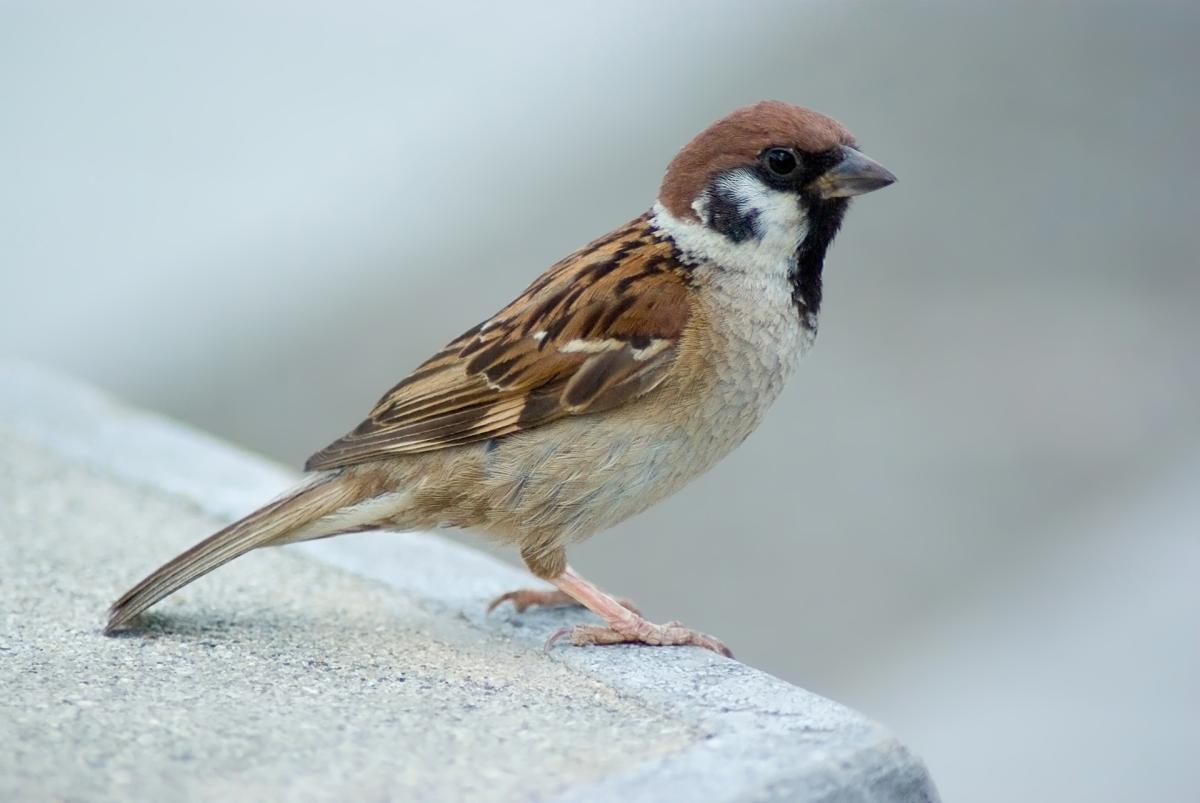
Like a house sparrow drawn more carefully — chestnut cap, and a black comma on a white cheek.
Smaller and neater than the house sparrow, with a wholly chestnut crown, a clean white cheek marked by a bold black spot, and a smaller black bib. Both sexes look alike, unlike house sparrows. Tree sparrows are birds of farmland with old hedges, mature trees and nest boxes rather than of town centres, and around Dumfries they are patchy and local — a species worth stopping for.
Behaviour
Tree sparrows nest in tree holes, wall cavities and boxes, often in small loose colonies, and will use a house sparrow box that is slightly smaller than standard. They feed on seed and grain, taking insects for their young, and in winter join mixed flocks with finches and buntings around farmyards and set-aside. The call is a sharper, more clipped version of the house sparrow's chirp.
When to see it
Quick facts
- Family
- Old World sparrows (Passeridae)
- Size
- 12.5–14 cm · smaller than a house sparrow
- UK status
- Red-listed
Public domain, via Wikimedia Commons