Willow Warbler
Phylloscopus trochilus
Print fact sheet (PDF)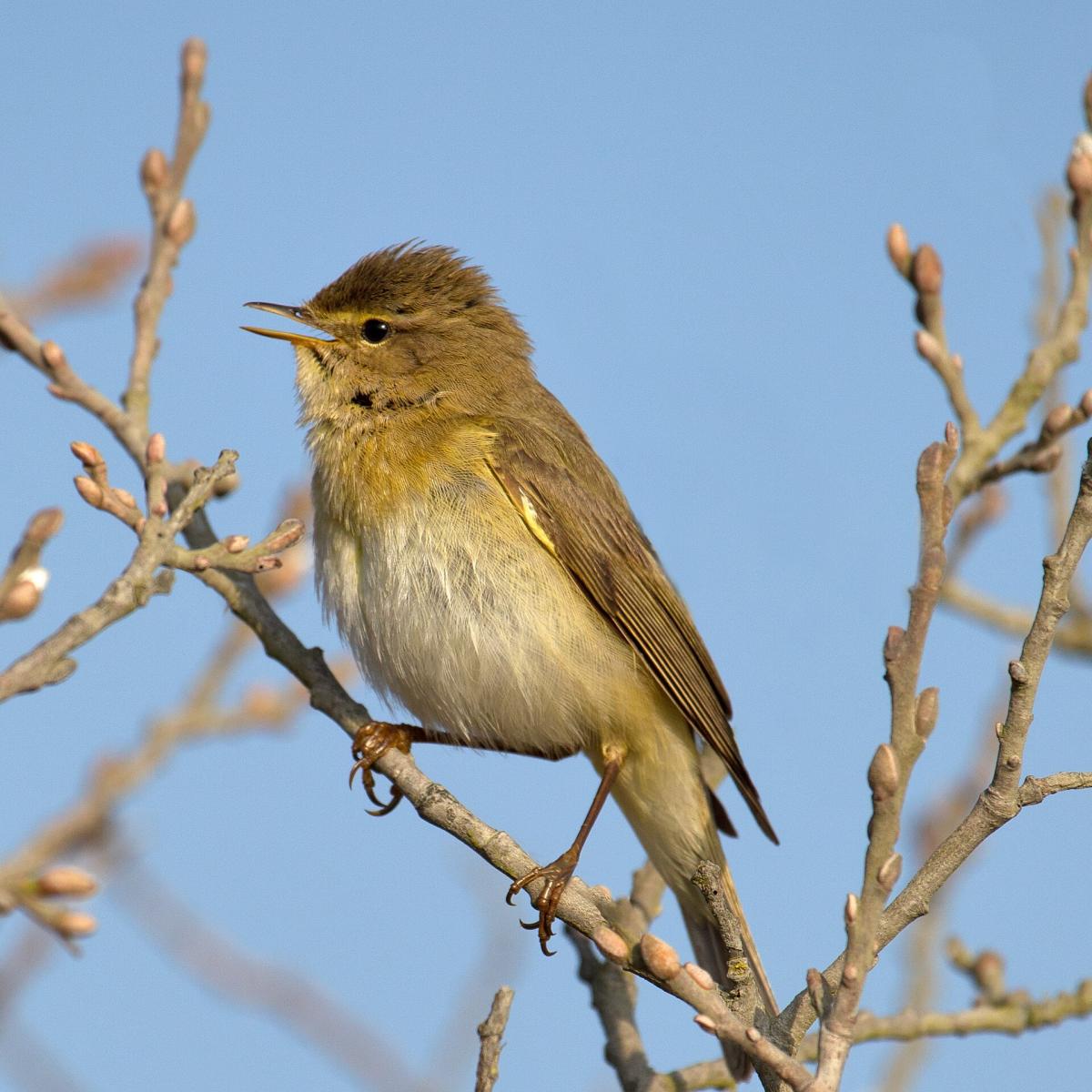
A soft, descending cascade of notes that fades away at the end — the sound of April birchwoods.
Almost identical to a chiffchaff to look at — small, olive above and pale yellow below — but usually cleaner and yellower, with a more obvious pale stripe over the eye and, most usefully, pale pinkish legs rather than dark ones. Willow warblers are common summer birds of birch scrub, young plantation and damp woodland edge around Dumfries, and are far more numerous in Scotland than in southern England.
Behaviour
The song settles the identification instantly: a gentle, wistful series of notes that runs down the scale and dies away, quite unlike the chiffchaff's flat repetition. Willow warblers feed on small insects gleaned from foliage, working through birch and willow with quick, light movements. They are unusual among British birds in moulting all their feathers twice a year, once here and once in Africa.
Migration
Willow warblers winter in sub-Saharan Africa and arrive in Dumfries through April. Birds breeding in Scotland travel further than most European populations — some to southern Africa — and the round trip for a bird weighing under ten grams runs to many thousands of miles.
When to see it
Quick facts
- Family
- Leaf warblers (Phylloscopidae)
- Size
- 10.5–11.5 cm · smaller than a sparrow
- UK status
- Amber-listed
Photo by Andreas Trepte, CC BY-SA 2.5, via Wikimedia Commons