Wren
Troglodytes troglodytes
Print fact sheet (PDF)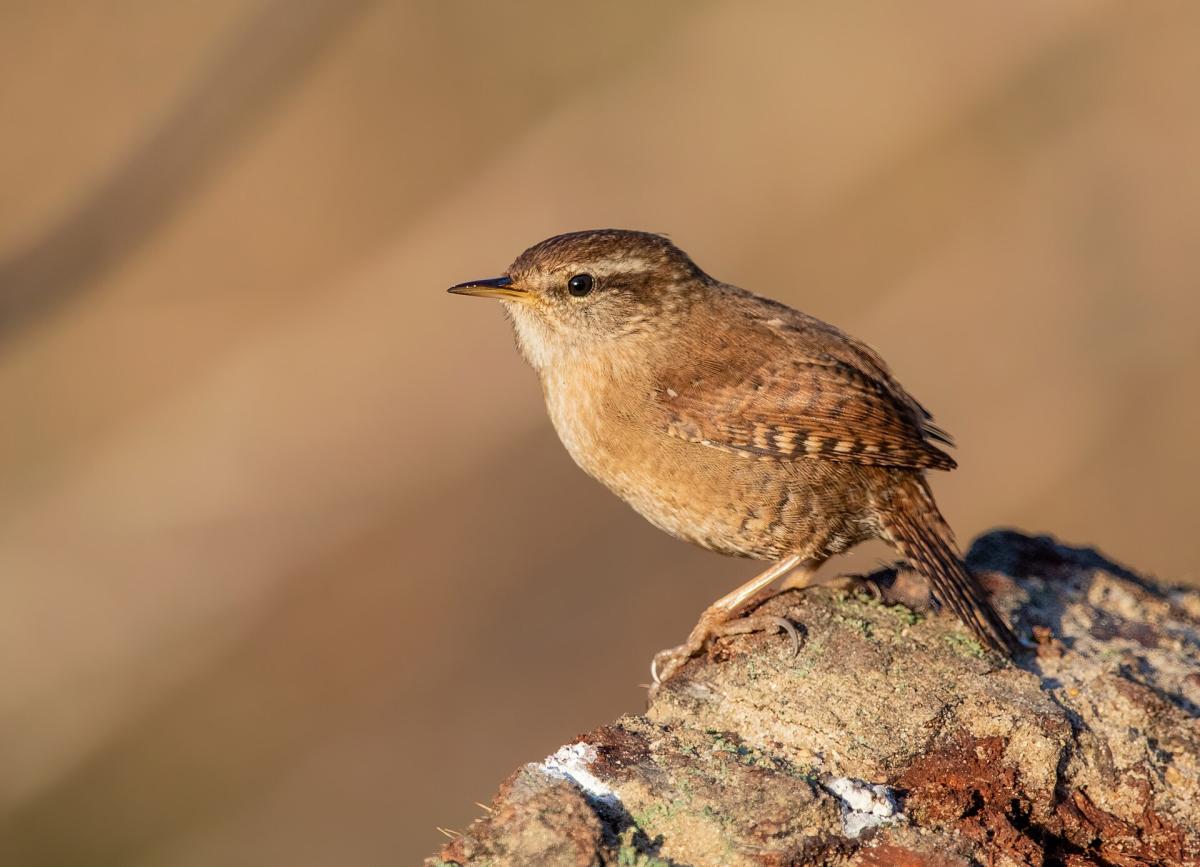
Britain's commonest bird, and one of its smallest — a brown scrap with a startlingly loud voice.
A tiny, round, rust-brown bird with a finely barred back and a stubby tail usually cocked upright. Wrens are everywhere in Dumfries — garden walls, ivy, riverbank scrub, the tangled bottoms of hedges — but they keep low and move fast, so they are heard far more often than seen. The song is extraordinary for the size of the bird: a hurried, ringing torrent ending in a hard trill, audible right across a garden.
Behaviour
Wrens creep mouse-like through dense cover, working over stonework and root tangles for spiders and small insects. Males build several domed nests and the female chooses one to line. Hard winters hit them badly because they are too small to hold much heat, and they respond by roosting communally — dozens have been recorded packed into a single nest box or wall cavity on the coldest nights.
When to see it
Quick facts
- Family
- Wrens (Troglodytidae)
- Size
- 9–10 cm · one of Britain's smallest birds
- UK status
- Green-listed
Photo by Alexis Lours, CC BY 4.0, via Wikimedia Commons