Allis Shad
Alosa alosa
Print fact sheet (PDF)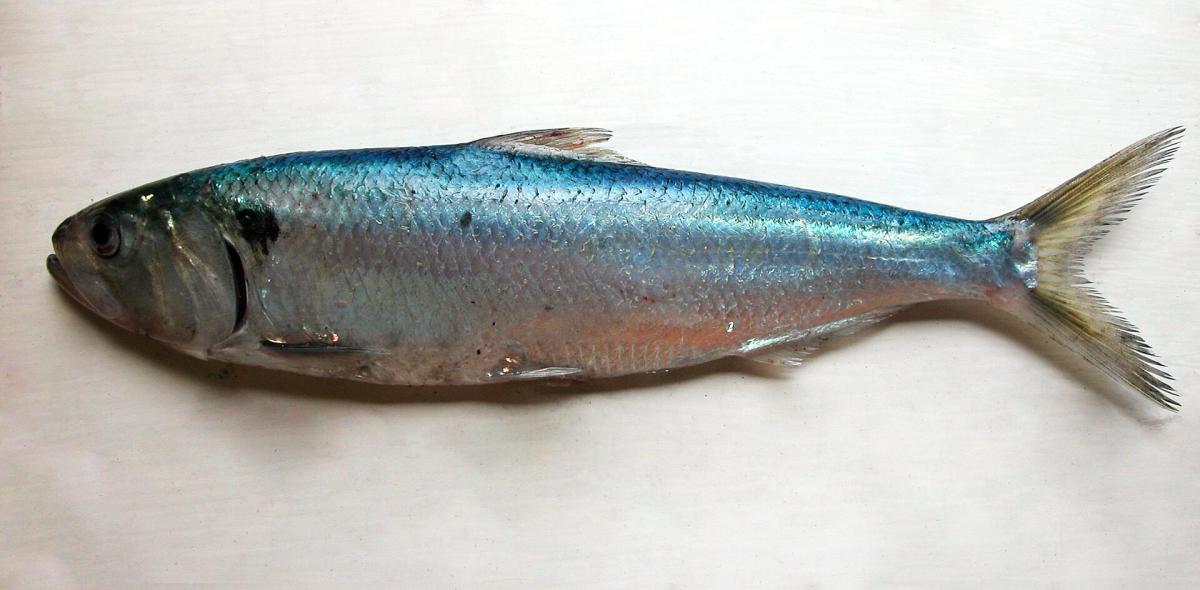
The rarer of our two shads — usually just one dark shoulder spot, and very few left anywhere.
Similar to the twaite shad but larger and deeper-bodied, with finer and more numerous gill rakers and typically a single dark spot behind the gill cover rather than a row. Allis shad are considerably rarer than twaite in British waters and there are few confirmed spawning rivers; records from the Solway are occasional rather than routine, which makes any sighting notable.
Behaviour
Like the twaite it is a plankton feeder at sea, sieving with very fine gill rakers, and enters fresh water in spring to spawn in gravel in the middle and lower reaches. Most allis shad die after spawning. The species has been lost from many European rivers through barriers, pollution and overfishing, and its remaining populations are closely protected.
Migration
Allis shad live in coastal Atlantic waters and enter rivers in spring to spawn. Historic British runs have largely collapsed, so fish appearing in Solway rivers may well originate from populations elsewhere in Europe.
When to see it
Quick facts
- Family
- Herrings and shads (Clupeidae)
- Size
- Typically 40–60 cm · larger than twaite shad
- UK status
- Protected; very rare in British rivers
Photo by Isabelle Cheret, Luisa Malaval / Ifremer, CC BY 4.0, via Wikimedia Commons