Arctic Charr
Salvelinus alpinus
Print fact sheet (PDF)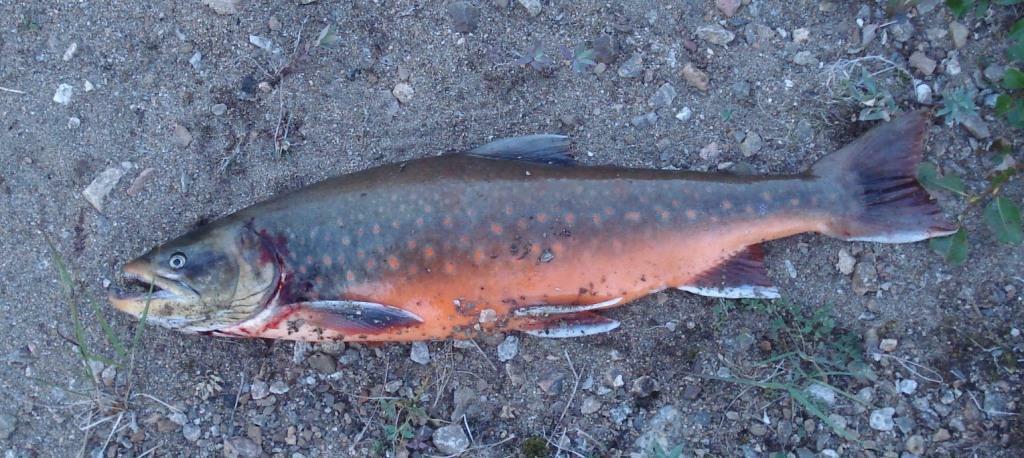
An ice-age relic marooned in deep, cold lochs when the glaciers left — and each loch's fish are their own.
A slender salmonid with pale cream or pink spots on a dark olive back — the reverse of a trout's dark spotting — a white leading edge to the lower fins, and, in spawning males, a blazing orange-red belly. Arctic charr live in a small number of deep, cold, clean lochs in the region, keeping to the coldest deep water for most of the year.
Behaviour
British charr are landlocked relics: at the end of the last ice age sea-run charr were cut off in deep lochs and have been isolated ever since, so populations in different lochs have diverged and are treated as distinct and irreplaceable. They feed on plankton and invertebrates in cold deep water, moving into the shallows to spawn over gravel in late autumn. They are extremely sensitive to warming and nutrient enrichment.
When to see it
Quick facts
- Family
- Salmon and trout (Salmonidae)
- Size
- Typically 20–35 cm in British lochs
- UK status
- A conservation priority; isolated loch populations are irreplaceable
Photo by Alison Copeland, CC BY 4.0, via Wikimedia Commons