Brook Lamprey
Lampetra planeri
Print fact sheet (PDF)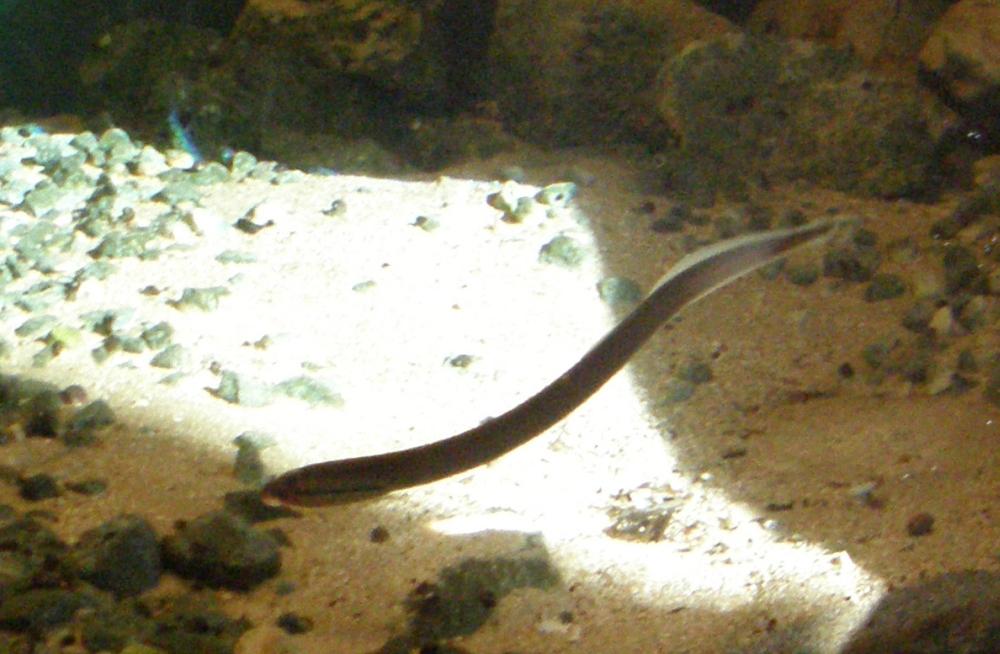
Spends its whole life in one burn, never feeds as an adult, and dies within weeks of spawning.
The smallest of our three lampreys and the only one that never goes to sea. It is eel-shaped, jawless and scaleless, a dull grey-brown, with the same seven gill pores and sucker mouth as its relatives but a much smaller, weaker one. Brook lampreys live in the clean burns and tributaries of the Nith catchment, and are easily overlooked because the larvae spend years buried in silt.
Behaviour
Uniquely among British lampreys, the brook lamprey is non-parasitic: the adult's gut degenerates at metamorphosis and it never feeds at all, living only long enough to spawn. Adults gather in small groups in spring, clearing a gravel nest and spawning in a writhing mass, then die within days. All the growing is done in the larval stage, filtering organic matter from soft sediment for up to seven years.
When to see it
Quick facts
- Family
- Northern lampreys (Petromyzontidae)
- Size
- Typically 12–16 cm
- UK status
- Protected; widespread in clean burns but easily overlooked
Photo by Ra Boe, CC BY-SA 3.0, via Wikimedia Commons