Brown Trout
Salmo trutta
Print fact sheet (PDF)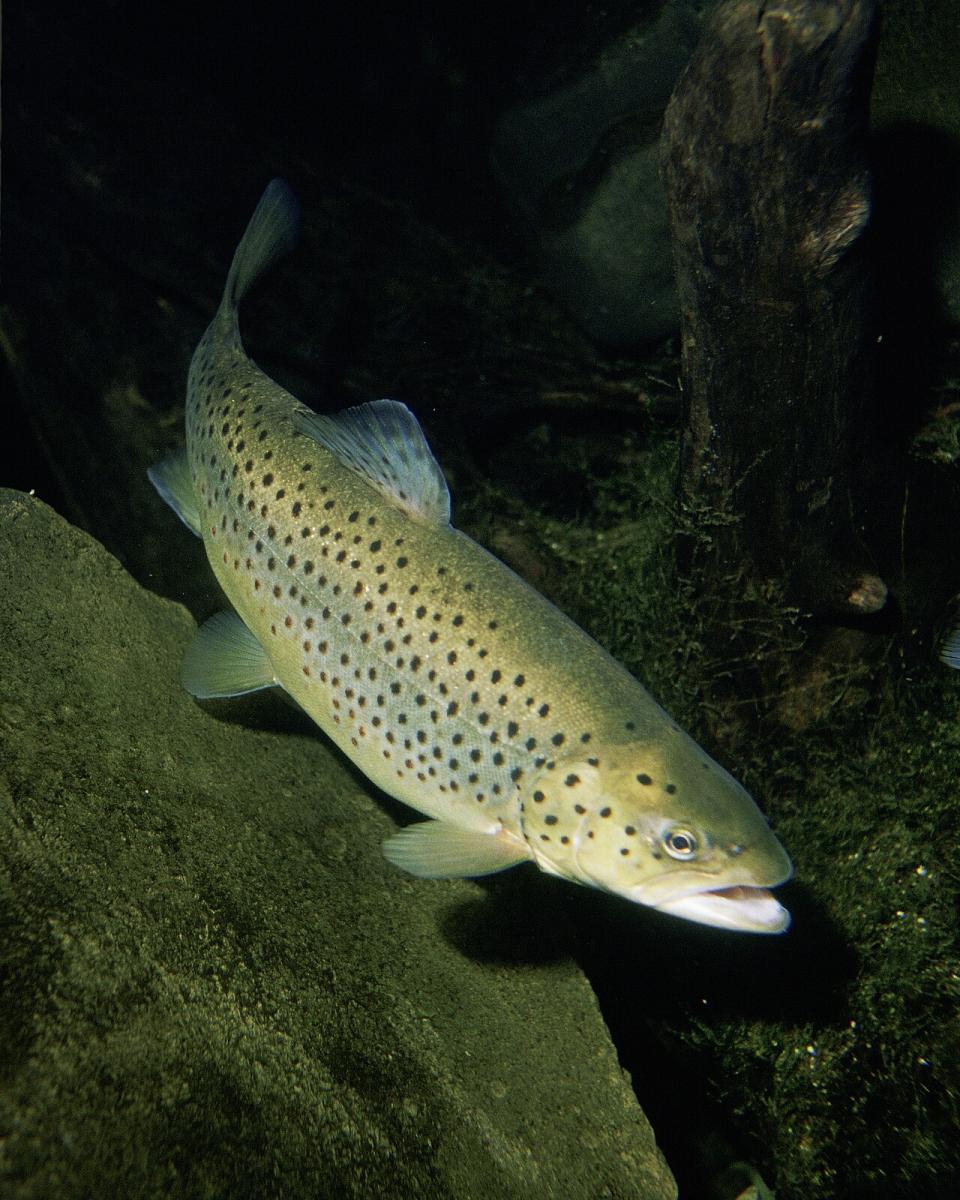
A native river fish that shelters in gravel-bed pools of the Nith and its burns.
Brown trout are Scotland's native river and loch trout, found throughout the Nith catchment and its smaller tributary burns, from fast-flowing gravelly stretches to still, deep pools. Colouring varies hugely with habitat — river fish are typically golden-brown with red and black spots, while loch-dwelling and larger 'ferox' trout can turn silvery — but all belong to the same species. They're territorial and opportunistic, sheltering under banks and stones by day and feeding on invertebrates, with larger fish taking small fish too. Brown trout spawn in autumn and early winter, cutting shallow nests called redds into clean gravel beds in the shallows of rivers and burns. To protect them while spawning, Scotland runs a statutory closed season for angling running roughly 7 October to 14 March, meaning the open season runs mid-March to early October — the same window that's best for spotting fish rising or holding station in clear water.
Behaviour
Holds station facing upstream in the current, darting out to snatch invertebrates drifting past before returning to the same spot — a habit anglers call 'holding a lie'. Feeding activity peaks around dawn and dusk, with rises visible on calm pools in warmer months. In autumn, spawning fish move into shallow gravel riffles to cut redds and lay eggs.
When to see it
Quick facts
- Family
- Salmonidae
- Size
- Typically 20–40cm in rivers; loch and 'ferox' forms can reach several kg
- UK status
- Native; statutory closed season protects spawning fish
Public domain, via Wikimedia Commons