Common Carp
Cyprinus carpio
Print fact sheet (PDF)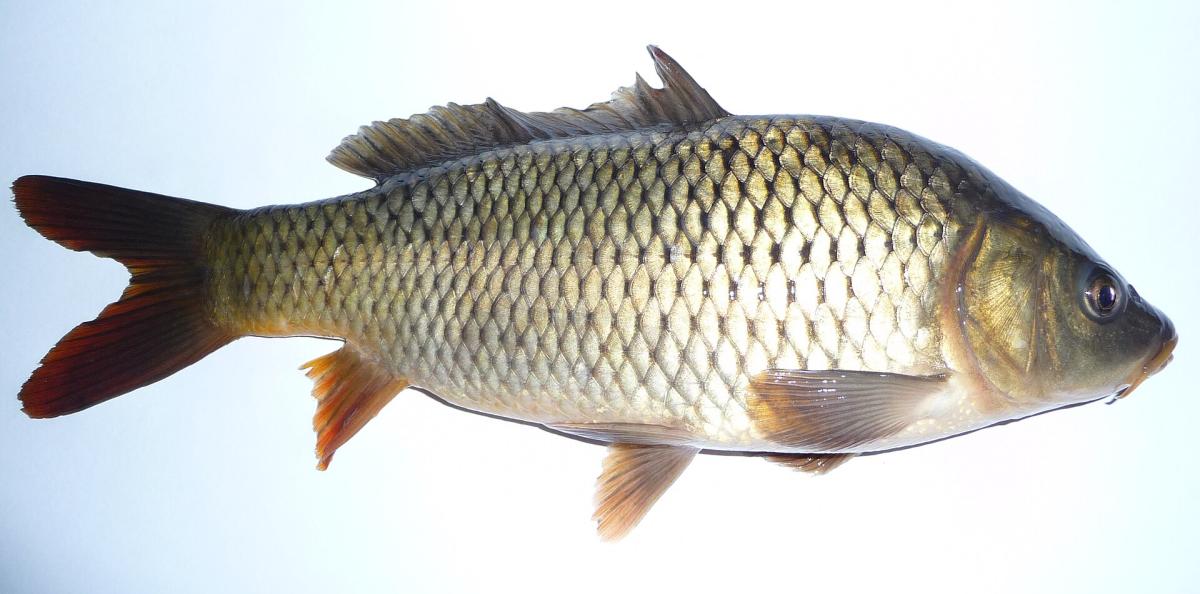
Farmed by monks, moved around Europe for centuries, and capable of living for decades.
A large, heavy, deep-bodied fish with thick lips, four barbels around the mouth and a long dorsal fin. Centuries of domestication have produced several forms: the fully scaled common carp, the mirror carp with a scatter of large irregular scales, and the almost scaleless leather carp. Carp live in the warmer, richer still waters of the region, having been introduced for food and later for angling.
Behaviour
Carp feed by rooting in soft bottoms, using their barbels to locate invertebrates and sucking up mouthfuls of silt to sift, which clouds the water and can strip a shallow pond of plants where numbers are high. They tolerate low oxygen and warm water well. They are long-lived — individuals of several decades are documented — and are wary and quick to learn to avoid a bait.
When to see it
Quick facts
- Family
- Carps and minnows (Cyprinidae)
- Size
- Commonly 40–70 cm · can exceed 20 kg
- UK status
- Long-established introduction; illegal to move between waters without consent
Photo by George Chernilevsky, CC BY-SA 3.0, via Wikimedia Commons