Grayling
Thymallus thymallus
Print fact sheet (PDF)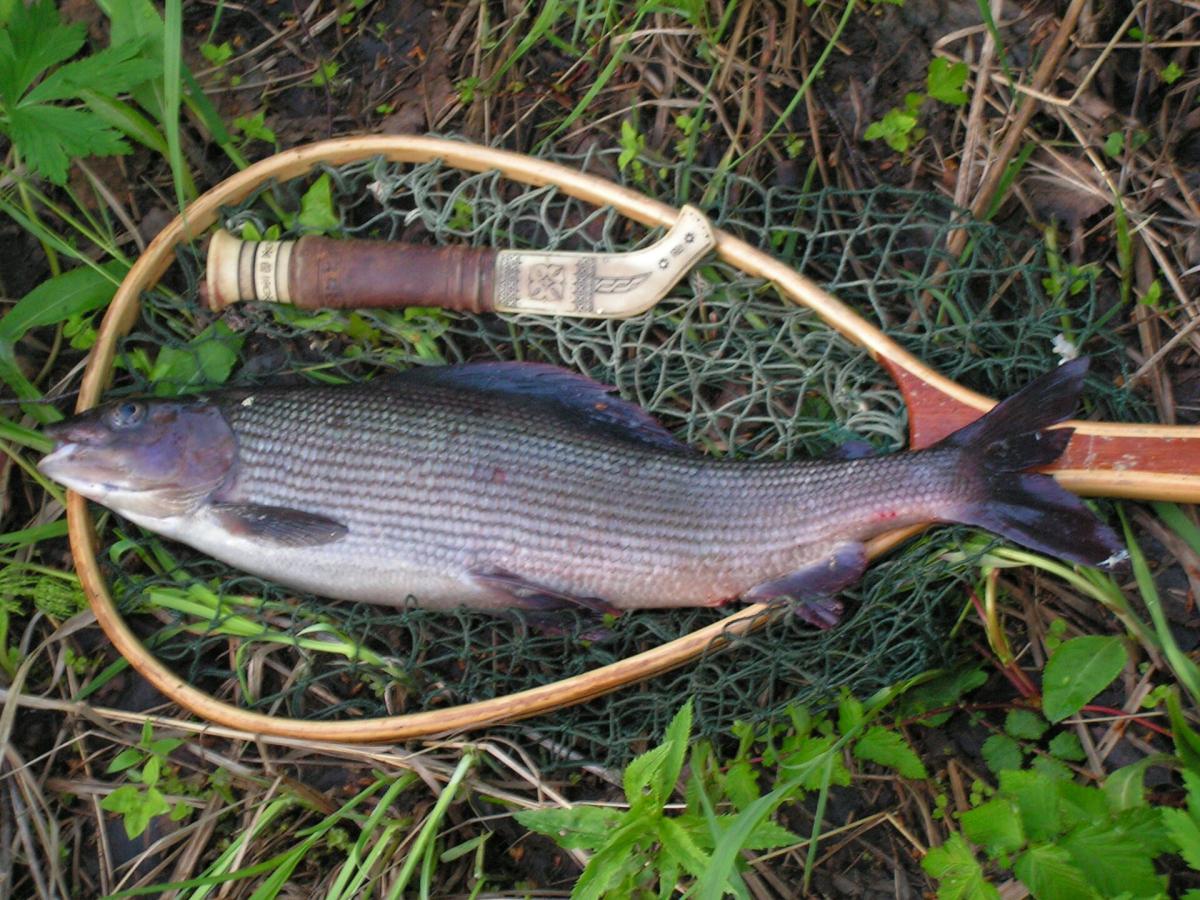
'The lady of the stream' — and that huge sail of a dorsal fin is unmistakable.
A handsome, silvery fish with a small head, an adipose fin marking it as a salmonid relative, and an enormous dorsal fin that the male raises like a sail, marked with rows of iridescent purple and red spots. Grayling need clean, cool, well-oxygenated flowing water over gravel. They are native to parts of Britain and introduced elsewhere, and are found in some of the region's rivers.
Behaviour
Grayling hold station close to the bed in fast, gravelly runs, feeding on nymphs and larvae and rising freely to surface flies. That great dorsal fin is used in courtship, the male draping it over the female during spawning in spring. Unlike trout they spawn in spring rather than autumn, and they remain active and feeding through the winter, which makes them a cold-weather angler's fish.
When to see it
Quick facts
- Family
- Graylings (Salmonidae)
- Size
- Commonly 25–40 cm
- UK status
- Native to parts of Britain; needs clean, cool, gravelly rivers
Photo by Orjatar, CC BY-SA 3.0, via Wikimedia Commons