Nine-spined Stickleback
Pungitius pungitius
Print fact sheet (PDF)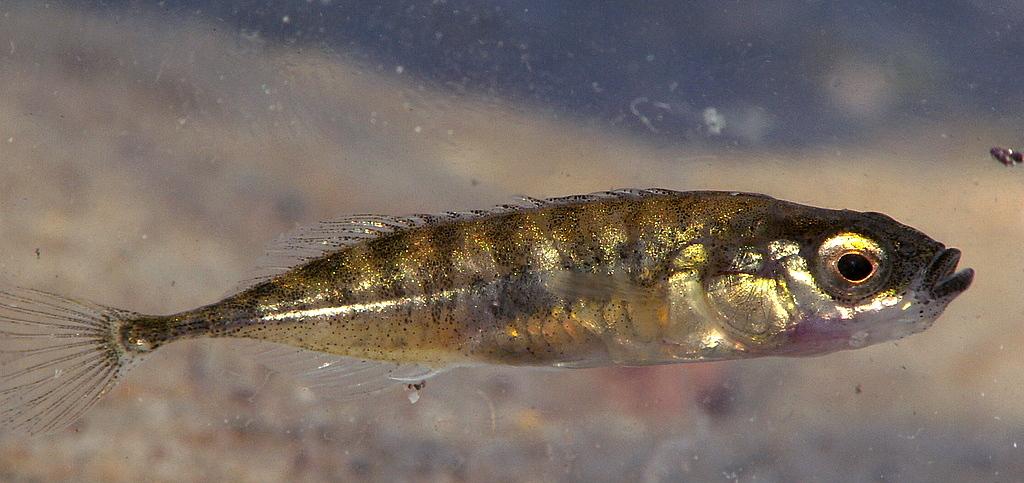
Slimmer and shyer than its three-spined cousin, and the breeding male goes black, not red.
A smaller, more slender stickleback with seven to eleven short spines along the back — usually nine — a very narrow tail stalk and a mottled olive-brown colour. Breeding males turn dark, almost black, with white pelvic spines, rather than developing the red throat of the three-spined. It favours weedy, well-vegetated ditches, ponds and slow, silty water around Dumfries.
Behaviour
Nine-spined sticklebacks are more secretive than the three-spined and keep to dense vegetation, which is where they build their nests — the male constructs a tunnel of plant material suspended among weed stems, rather than on the bottom, and guards it alone. They tolerate low oxygen and brackish water well, and often persist in ditches and ponds where few other fish can live.
When to see it
Quick facts
- Family
- Sticklebacks (Gasterosteidae)
- Size
- Typically 4–6 cm
- UK status
- Native; local and patchy, favouring weedy ditches
Public domain, via Wikimedia Commons