River Lamprey
Lampetra fluviatilis
Print fact sheet (PDF)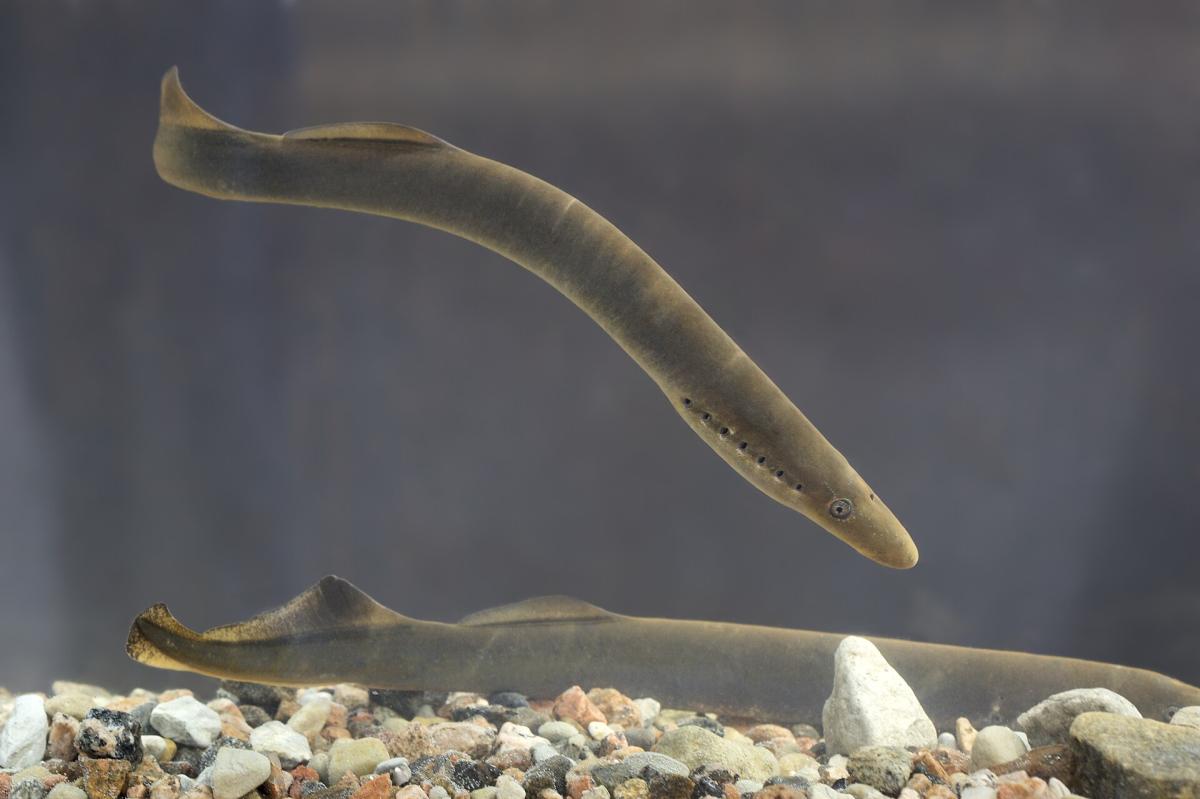
A jawless fish older than dinosaurs, with a rasping sucker instead of a mouth.
An eel-shaped fish with no jaws, no paired fins and no scales, with seven circular gill openings behind each eye and a round sucker-like mouth ringed with horny teeth. Lampreys are survivors of an ancient lineage that predates jawed fishes entirely. River lampreys run the Nith from the Solway in autumn and winter to spawn the following spring, and the Solway rivers are important for the species.
Behaviour
Adults are parasitic at sea, attaching to herring, shad and other fish with the sucker and rasping through the skin to feed on blood and tissue. In fresh water they stop feeding and spawn in gravel, then die. The larvae — called ammocoetes — are blind and toothless and spend several years buried in silt beds filtering food, which is why soft, undisturbed river sediment matters as much to them as clean gravel.
Migration
River lampreys move between the Solway and fresh water on an annual cycle, entering the Nith from autumn and moving up to spawn in spring. Weirs and barriers are a particular problem for them, as they are far weaker swimmers than salmon.
When to see it
Quick facts
- Family
- Northern lampreys (Petromyzontidae)
- Size
- Typically 25–40 cm
- UK status
- Protected; a qualifying feature of several Scottish river designations
Photo by Tiit Hunt, CC BY-SA 3.0, via Wikimedia Commons