Sand Eel
Ammodytes tobianus
Print fact sheet (PDF)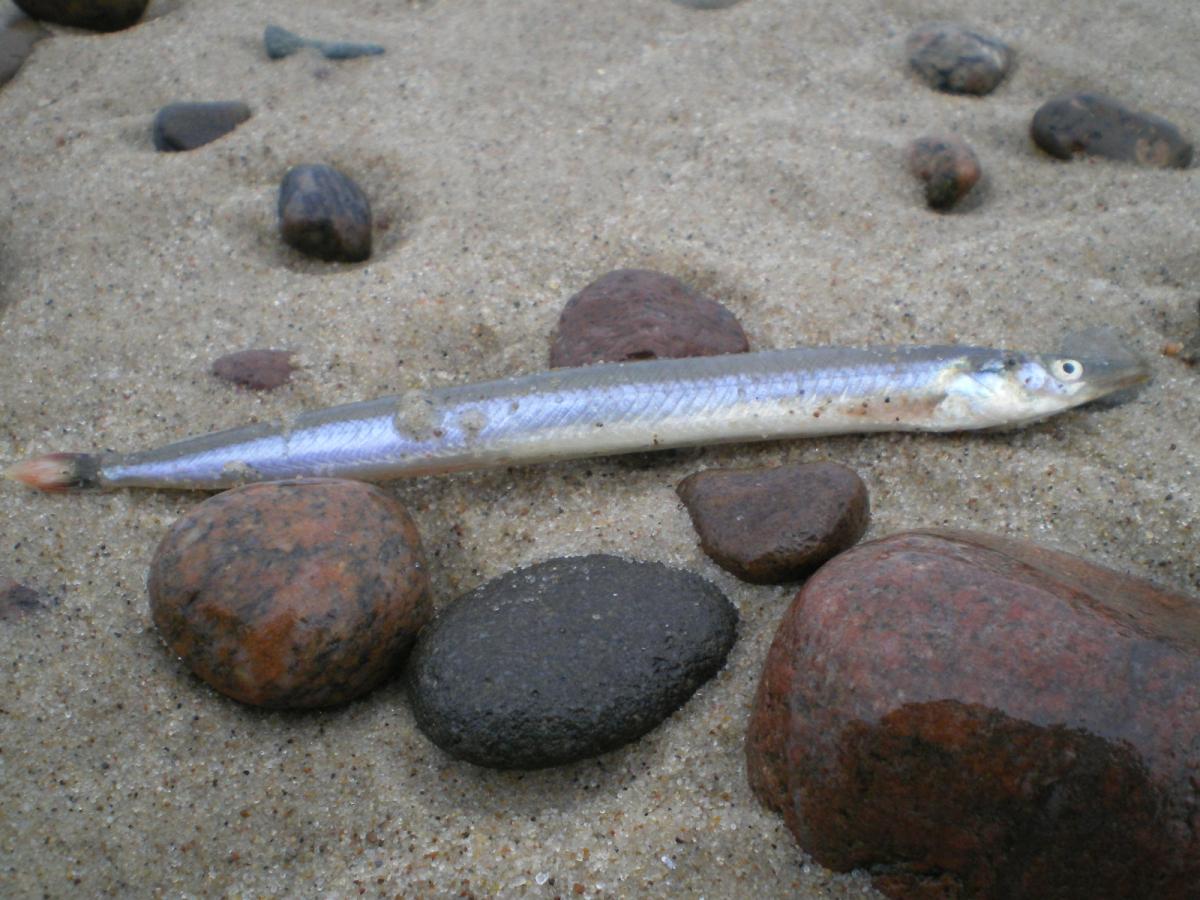
Dives into wet sand to hide — and half the seabirds in the Solway depend on it.
A very slender, elongated silver fish with a pointed lower jaw, a long low dorsal fin running most of the back and a deeply forked tail. Despite the name it is not an eel at all. Sand eels live in clean, coarse sand around the Solway and shoal in vast numbers in the water column when feeding, burying themselves in the sand to rest.
Behaviour
Sand eels dive head-first into wet sand and can lie buried for hours or, in winter, for weeks at a time — turn over sand at low tide and they sometimes wriggle out. When feeding they rise into open water in dense shoals to take plankton. They are the keystone prey of the inshore food web: terns, guillemots, puffins, cod, bass and porpoises all depend heavily on them, so a poor sand eel year is felt right up the chain.
When to see it
Quick facts
- Family
- Sand lances (Ammodytidae)
- Size
- Typically 12–20 cm
- UK status
- Native; a keystone prey species for seabirds and fish
Public domain, via Wikimedia Commons