Sand Goby
Pomatoschistus minutus
Print fact sheet (PDF)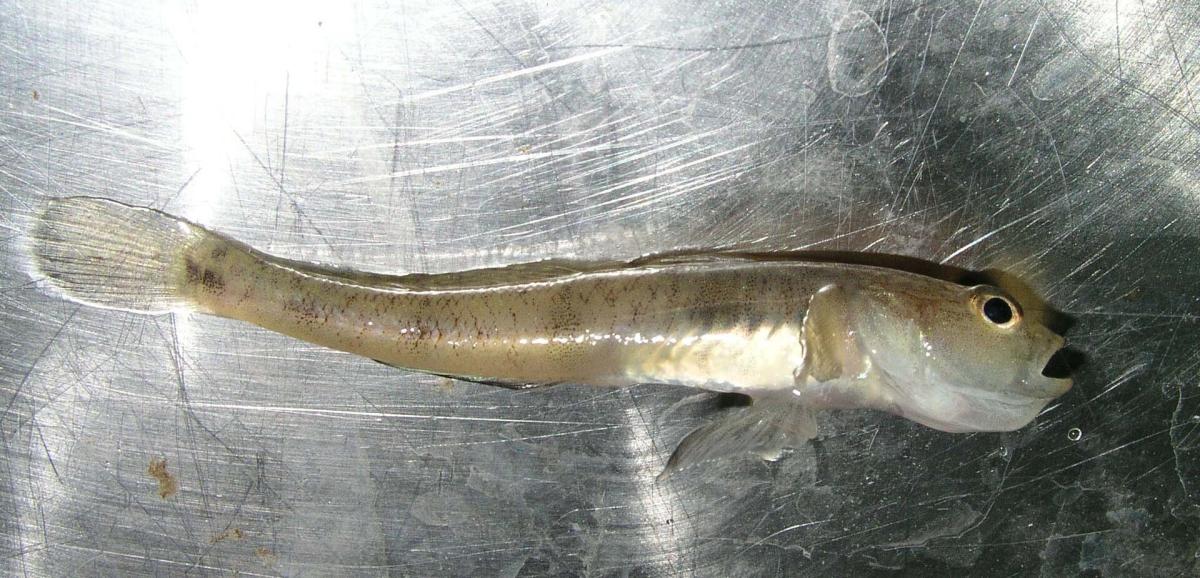
Almost invisible against clean sand — and a critical link in the estuary food chain.
A small, pale, semi-transparent goby, sandy with fine dark speckling and, in males, a dark spot at the rear of the first dorsal fin. It is very similar to the common goby but is generally slightly larger, paler and found on cleaner sand in more saline water. Sand gobies are abundant over the Solway's sandflats and in the shallow subtidal.
Behaviour
Sand gobies sit on clean sand, superbly camouflaged, and often partly bury themselves. They feed on small crustaceans, worms and larvae. Their real significance is as prey: gobies are eaten in enormous numbers by cod, whiting, bass, terns and cormorants, so they form one of the main routes by which the estuary's small invertebrates reach larger predators.
When to see it
Quick facts
- Family
- Gobies (Gobiidae)
- Size
- Typically 5–8 cm
- UK status
- Native; abundant, and important prey for larger fish and seabirds
Photo by Yuriy Kvach, CC BY-SA 3.0, via Wikimedia Commons