Sea Bass
Dicentrarchus labrax
Print fact sheet (PDF)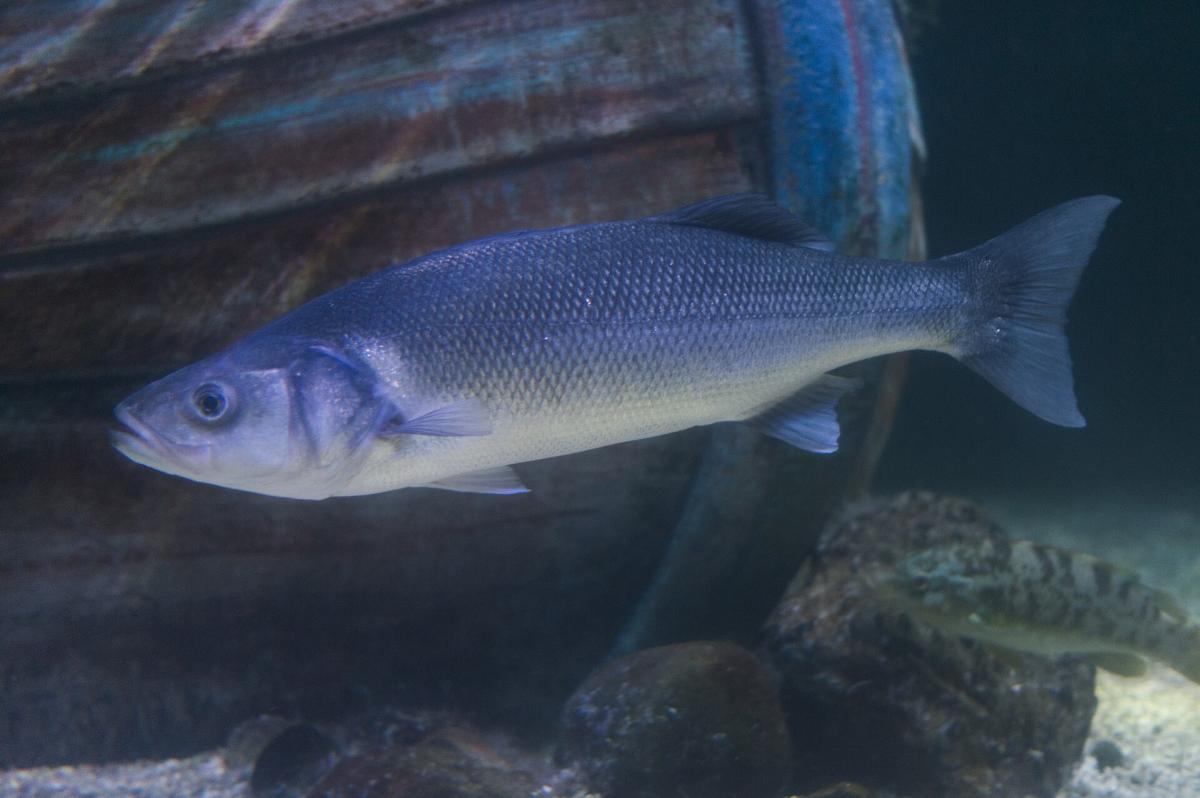
Silver, spiky-finned and pushing steadily further north as the sea warms.
A handsome, streamlined predator, silver with a darker grey-green back, a white belly and two dorsal fins, the first sharply spined. Sea bass move into the Solway and the tidal Nith through the summer, hunting in surf, around structure and over sandbanks. They have become steadily more numerous in Scottish waters as sea temperatures have risen.
Behaviour
Bass hunt small fish, crabs, prawns and sandeels, often in the broken water of surf and around the turn of the tide, and will follow a flooding tide right up over sand and mud to feed. They are slow-growing and long-lived — a large bass may be twenty years old — which makes populations vulnerable to overfishing, and catch limits and minimum sizes are set accordingly.
Migration
Sea bass move inshore and north with warming summer water and retreat to deeper offshore grounds to spawn in late winter and spring. Their increasing presence in the Solway is one of the more visible local signs of a warming sea.
When to see it
Quick facts
- Family
- Temperate basses (Moronidae)
- Size
- Commonly 40–70 cm · slow-growing and long-lived
- UK status
- Native; subject to strict catch limits and minimum sizes
Photo by Miguel Mendez from Malahide, Ireland, CC BY 2.0, via Wikimedia Commons