Sea Lamprey
Petromyzon marinus
Print fact sheet (PDF)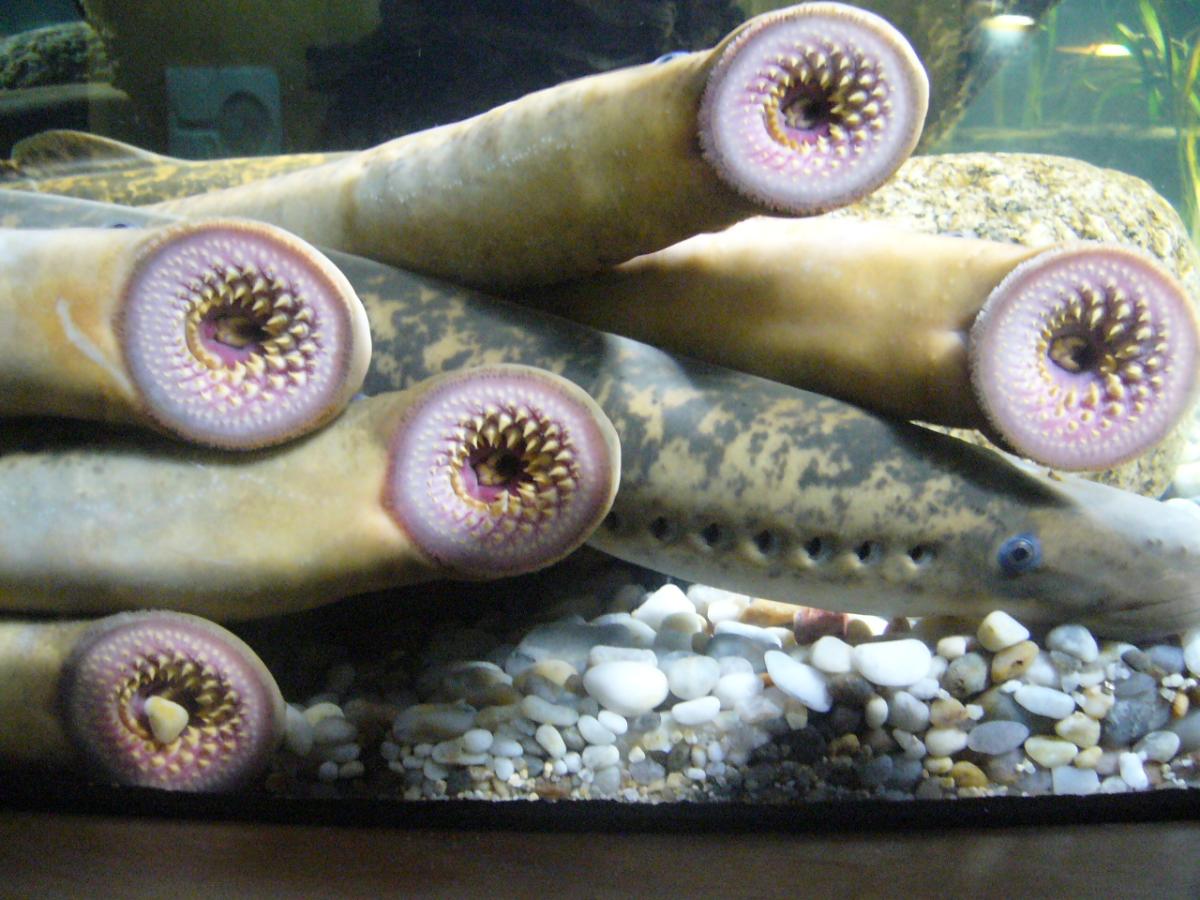
The largest of our lampreys, marbled like old stone, and a sight that stops people mid-walk.
Much larger than the river lamprey and unmistakable: a heavy, eel-shaped, jawless fish with a mottled olive-and-black marbled pattern, seven gill pores each side and a big sucker mouth lined with concentric rings of teeth. Sea lampreys enter the Nith from the Solway in late spring and spawn in early summer, and the sight of them building nests in shallow gravel is genuinely striking.
Behaviour
At sea the adults are parasites of large fish and even cetaceans, attaching with the sucker to feed. On entering fresh water they stop feeding, and pairs build a nest by lifting stones with the sucker to make a shallow depression in gravel — visible from the bank in low summer water — before spawning and dying. Larvae then spend years buried in silt as filter feeders before migrating to sea.
Migration
Sea lampreys spend their adult life in the Atlantic and coastal waters, returning to fresh water in late spring to spawn once and die. Solway rivers, including the Nith, carry regular runs.
When to see it
Quick facts
- Family
- Northern lampreys (Petromyzontidae)
- Size
- Typically 60–90 cm · our largest lamprey
- UK status
- Protected; a qualifying feature of several Scottish river designations
Photo by Fernando Losada Rodríguez, CC BY-SA 4.0, via Wikimedia Commons