Sea Trout
Salmo trutta
Print fact sheet (PDF)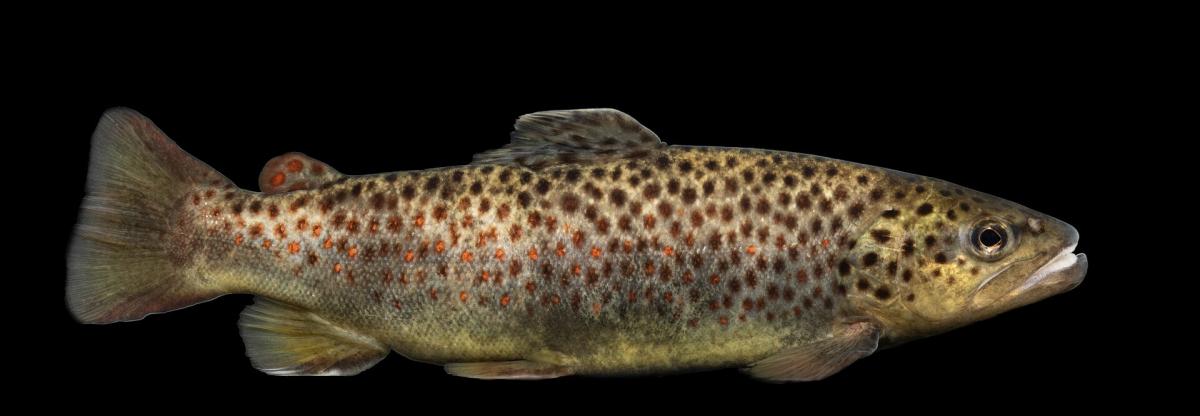
The same species as the brown trout — it simply chose to go to sea and came back bigger.
Sea trout are brown trout that migrate to sea to feed and then return to fresh water to spawn. The sea-run fish are chrome-silver with fine black spots and a squarer tail than a salmon's, and are much heavier than their river-resident siblings. They run the Nith and its tributaries chiefly through the summer, and are most often encountered by anglers fishing at night.
Behaviour
The decision to migrate is not genetic but a response to conditions — the same parents can produce both resident brown trout and sea-going fish, with females more likely to go. At sea they feed on sandeels, sprats and crustaceans and grow rapidly. Unlike salmon, sea trout feed in fresh water and can survive spawning to return several times, so an old fish may have made the journey repeatedly.
Migration
Sea trout from the Solway rivers stay far closer to home than salmon, feeding in coastal waters and the Irish Sea rather than crossing the Atlantic. They enter fresh water from spring onwards, with the main runs in summer.
When to see it
Quick facts
- Family
- Salmon and trout (Salmonidae)
- Size
- Typically 40–70 cm · far larger than river-resident brown trout
- UK status
- Native; the migratory form of the brown trout, with close seasons in law
Public domain, via Wikimedia Commons