Three-spined Stickleback
Gasterosteus aculeatus
Print fact sheet (PDF)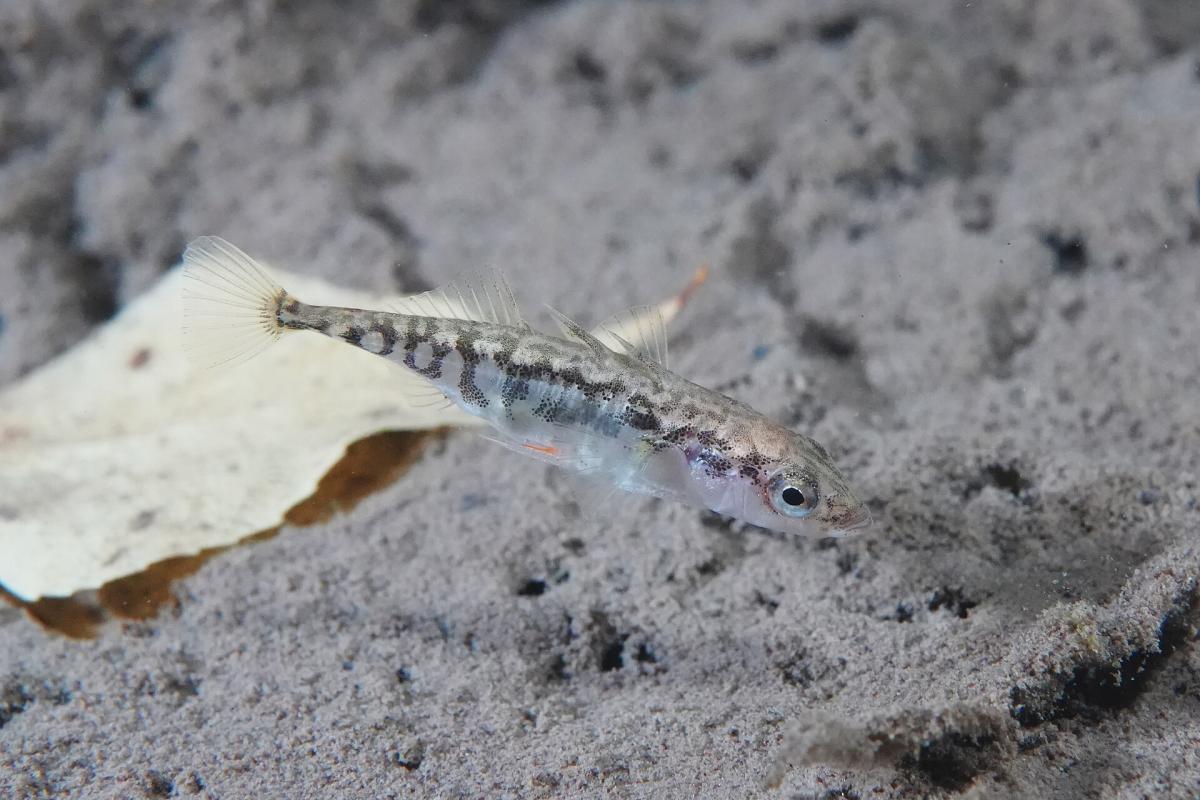
The fish everyone catches first — and one of the most studied animals in all of biology.
A small, slim fish with three sharp spines along the back, bony plates instead of scales along the flank, and a narrow tail stalk. In the breeding season the male is unmistakable: throat and belly flush brilliant red and the eyes turn blue. Sticklebacks are abundant in ponds, ditches, burns and the tidal margins around Dumfries, tolerating both fresh and brackish water.
Behaviour
The male builds a tunnel-shaped nest of plant fragments glued together with a secretion from his kidneys, then performs a zig-zag dance to lead females in to lay, and guards and fans the eggs alone. That courtship sequence made the stickleback a foundation species of animal behaviour research. Different populations vary strikingly in armour plating, making it a textbook example of evolution in action.
When to see it
Quick facts
- Family
- Sticklebacks (Gasterosteidae)
- Size
- Typically 4–7 cm
- UK status
- Native; abundant and widespread
Photo by Lorenz Seebauer, CC BY-SA 4.0, via Wikimedia Commons