Twaite Shad
Alosa fallax
Print fact sheet (PDF)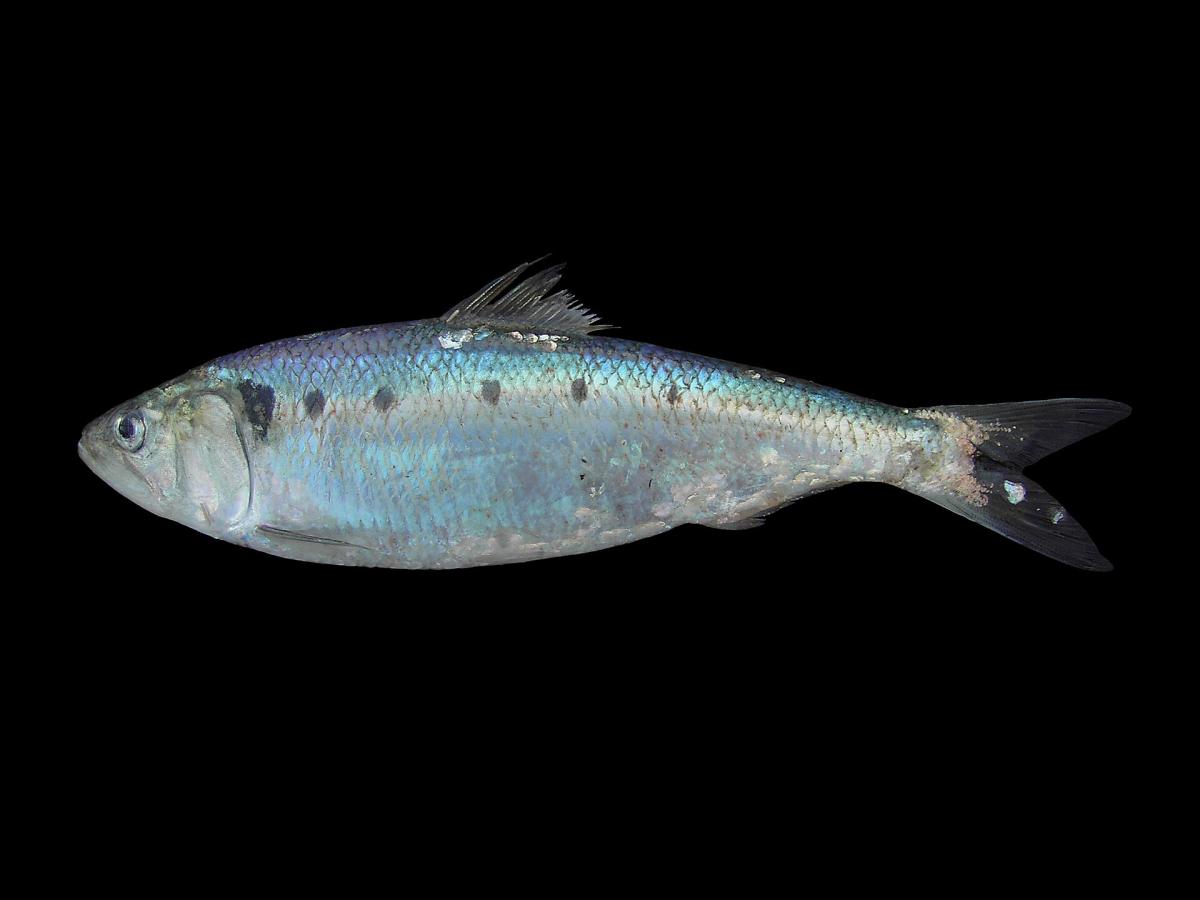
A sea-going herring relative that comes into fresh water to spawn — and spawns noisily, at night.
A deep-bodied, strongly compressed silver fish with a blue-green back, a deeply forked tail and a row of dark spots along the flank behind the gill cover — usually several, which helps separate it from the allis shad. Twaite shad enter the Solway rivers in late spring to spawn. They are far scarcer than they were and are a protected species across their range.
Behaviour
Shad spawn at night in the tidal and lower reaches, and the spawning itself is audible from the bank — groups of fish thrashing at the surface in the dark. Unlike salmon, some survive to spawn again in later years. At sea they feed on plankton and small fish, sieving with fine gill rakers. Weirs that block access to historic spawning reaches are one of the main reasons for their decline.
Migration
Twaite shad spend most of their lives in coastal waters and the Irish Sea, entering fresh water only briefly in May and June to spawn before dropping back downstream.
When to see it
Quick facts
- Family
- Herrings and shads (Clupeidae)
- Size
- Typically 30–45 cm
- UK status
- Protected; scarce and declining
Photo by Hans Hillewaert, CC BY-SA 4.0, via Wikimedia Commons